Philippine Senate Standoff: ICC Suspect's Arrest Bid Ignites Crisis
A dramatic standoff unfolded at the Philippine Senate as Senator Ronald dela Rosa, wanted by the ICC for crimes against humanity, faced an imminent arrest attempt. Gunshots and chaos erupted as security forces entered the building, highlighting the deep tensions between national sovereignty and international justice. This incident underscores the Philippines' complex relationship with the ICC and its 'war on drugs' legacy.
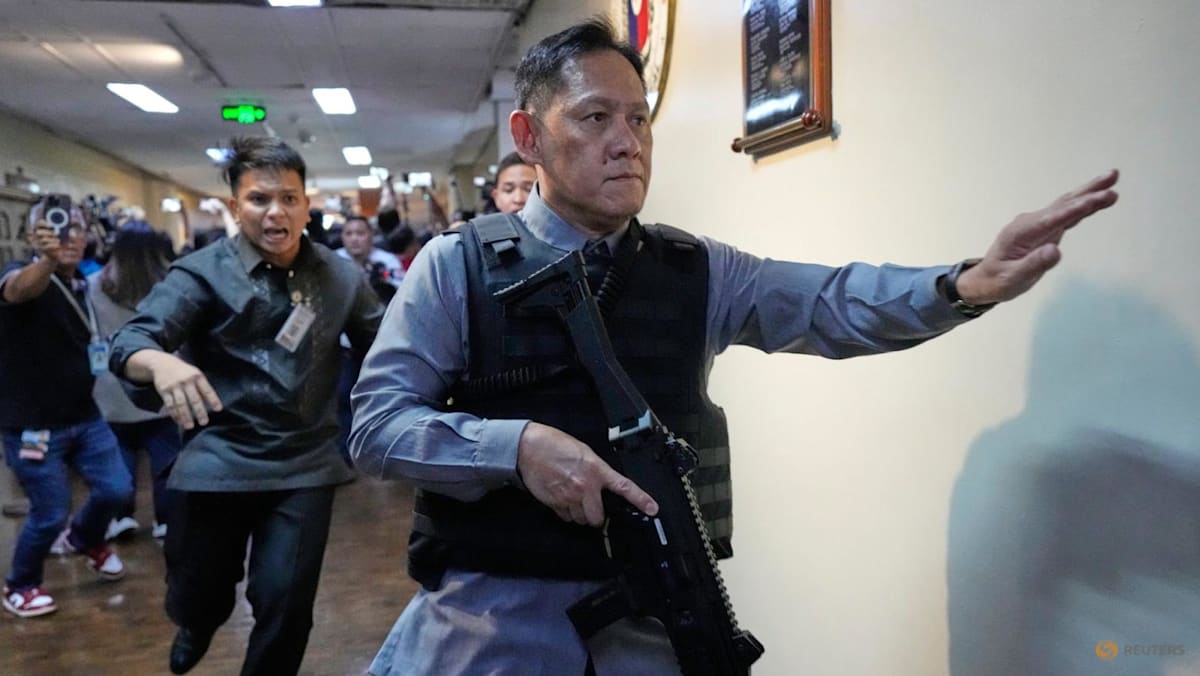
The tranquil halls of the Philippine Senate were shattered on Wednesday, May 13, by the cacophony of gunshots and the panicked scramble of people seeking cover. The catalyst for this unprecedented scene was Senator Ronald "Bato" dela Rosa, a figure whose name resonates with both fervent support and international condemnation. Wanted by the International Criminal Court (ICC) for alleged crimes against humanity, dela Rosa's declaration of an imminent arrest attempt sent shockwaves through the legislative chamber, prompting security forces to storm the building and igniting a high-stakes standoff that captivated the nation and drew global attention.
The Precipice of Arrest: A Senator's Defiance
Senator dela Rosa, a former national police chief and a key architect of former President Rodrigo Duterte's controversial "war on drugs," had been a vocal critic of the ICC's jurisdiction over Philippine affairs. His public defiance, often echoing the sentiments of the previous administration, set the stage for a dramatic confrontation. On that fateful Wednesday, intelligence reports suggested that an ICC-backed warrant for his arrest was about to be served, triggering a rapid deployment of security personnel – both loyal to the senator and those tasked with upholding the law – to the Senate complex. The initial reports of gunfire, though later clarified as possibly warning shots or accidental discharges amidst the chaos, instantly escalated the tension, turning a political dispute into a potentially violent crisis. The sight of lawmakers and staff diving for cover, their faces etched with fear, painted a stark picture of the gravity of the situation. This event wasn't merely about the arrest of an individual; it was a symbolic clash between national sovereignty, as championed by dela Rosa and his allies, and the imperative of international justice.
The ICC's Long Shadow: A History of Accountability
The International Criminal Court's involvement in the Philippines stems from the thousands of deaths associated with Duterte's anti-drug campaign, which critics allege involved extrajudicial killings and widespread human rights abuses. The ICC initiated a preliminary examination in 2018 and authorized a full investigation in 2021, focusing on alleged crimes against humanity committed between 2016 and 2019. Despite the Philippines' withdrawal from the Rome Statute, the treaty that established the ICC, in 2019, the court maintains jurisdiction over crimes committed while the country was still a member. This legal nuance has been a constant point of contention, with the Philippine government arguing that the ICC has no authority over its domestic affairs. However, human rights organizations and victims' families have consistently called for international intervention, citing a lack of accountability within the Philippine justice system. The potential arrest of a high-profile figure like dela Rosa would represent a significant step for the ICC, demonstrating its resolve to pursue justice even in the face of state resistance.
Political Ramifications and Domestic Divides
The standoff at the Senate immediately sent ripples through the Philippine political landscape. Supporters of dela Rosa and the former administration rallied against what they perceived as foreign interference, framing the ICC's actions as an assault on national pride and sovereignty. Conversely, opposition figures and human rights advocates lauded the ICC's efforts, viewing it as a crucial mechanism for justice where domestic avenues have allegedly failed. The incident highlighted the deep ideological fissures within the country, particularly concerning human rights, law enforcement, and international relations. President Ferdinand Marcos Jr.'s administration has walked a tightrope, initially indicating a willingness to re-engage with the ICC but later reiterating the government's stance against its jurisdiction. The Senate crisis placed immense pressure on the current government to articulate a clear and consistent policy regarding the ICC, balancing domestic political considerations with international legal obligations and the global perception of the Philippines' commitment to human rights. The events underscored the volatile nature of Philippine politics, where historical grievances and ongoing debates over justice and accountability often intersect with personal loyalties and power struggles.
Expert Analysis: Sovereignty vs. Justice
Legal experts and political analysts have weighed in on the complex interplay between national sovereignty and international criminal justice embodied by this incident. "The Philippines' withdrawal from the Rome Statute does not retroactively erase its obligations for crimes committed while it was a member," explains Dr. Elena Ramirez, an international law professor at the University of the Philippines. "The ICC's mandate is to act when national courts are unwilling or unable to genuinely investigate and prosecute. This principle of complementarity is at the heart of the court's existence." The standoff, therefore, is not just a legal battle but a test of the international community's ability to enforce human rights norms against resistant states. Analysts also point to the potential for the incident to further polarize public opinion, with implications for future elections and the stability of democratic institutions. The narrative surrounding the "war on drugs" remains deeply divisive, and any action perceived as an external challenge to its architects is bound to ignite strong reactions, both supportive and condemnatory. The incident also serves as a stark reminder of the global trend where populist leaders challenge international institutions, often appealing to nationalist sentiments to deflect external scrutiny.
The Aftermath and Future Implications
While the immediate crisis at the Senate eventually de-escalated without a confirmed arrest or further violence, the reverberations are far from over. The incident has intensified calls for clarity on the Philippine government's stance on the ICC and its commitment to human rights investigations. It has also underscored the vulnerability of high-profile individuals implicated in the "war on drugs" to international prosecution. The global community will be watching closely to see how Manila navigates this delicate balance, particularly as the ICC continues its investigations. For the victims and their families, the Senate standoff represents a renewed, albeit fraught, hope for justice. For the Philippines, it is a critical juncture that will define its relationship with international law and its standing on the global stage. The events of May 13 serve as a powerful reminder that the pursuit of justice, particularly for alleged crimes against humanity, can transcend national borders and challenge even the most entrenched political powers, leaving an indelible mark on the nation's history and its future trajectory. The path forward remains uncertain, but the dramatic events at the Senate have ensured that the question of accountability for the "war on drugs" will not easily fade from the national and international consciousness.
Stay Informed
Get the world's most important stories delivered to your inbox.
No spam, unsubscribe anytime.
Comments
No comments yet. Be the first to share your thoughts!