Columbia University's Credit Rating Downgrade: A Bellwether for US Higher Education?
Moody's Ratings recently revised Columbia University's credit outlook to negative, citing escalating risks tied to the 'federal environment for higher education.' This move signals potential financial vulnerabilities for one of America's most prestigious institutions, raising concerns about its long-term stability and operational flexibility. The downgrade reflects broader challenges facing the sector, including political pressures, enrollment shifts, and evolving financial models. Experts are now scrutinizing whether this is an isolated incident or a harbinger of wider financial instability across the US higher education landscape.
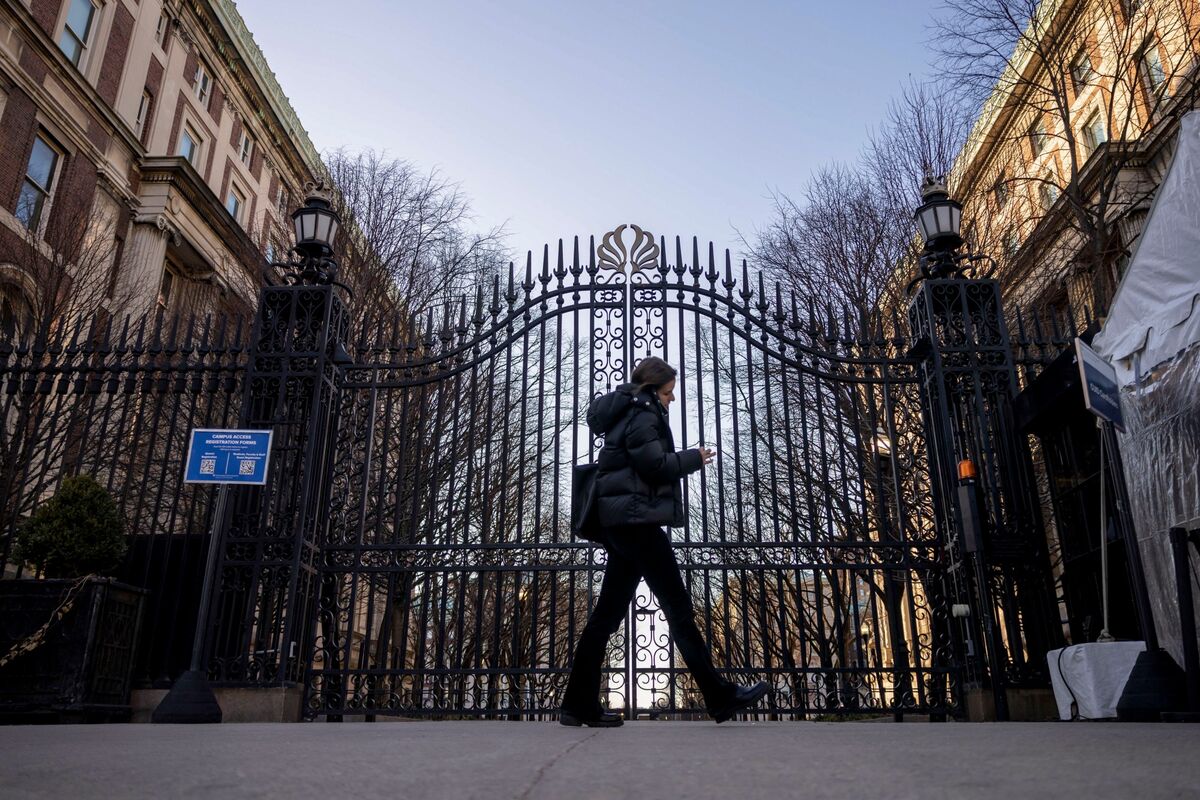
The hallowed halls of Columbia University, a beacon of academic excellence and intellectual pursuit for over two centuries, are now echoing with a new, unsettling sound: the clang of a negative credit outlook. Moody's Ratings, one of the world's leading credit rating agencies, recently delivered this sobering assessment, citing rising risks tied to the “federal environment for higher education.” This isn't merely an administrative footnote; it's a significant development that casts a shadow over the financial stability of one of America's most prestigious institutions and, potentially, the entire higher education sector.
Unpacking Moody's Decision: Beyond the Headlines
Moody's decision to revise Columbia's outlook from stable to negative is a complex one, rooted in a confluence of factors. While the immediate trigger is the 'federal environment,' this encompasses a broad spectrum of challenges. The agency specifically highlighted the potential for weaker finances and Columbia’s “lower wealth and liquidity relative to peers with similar ratings.” This implies that while Columbia is undoubtedly a wealthy institution, its financial buffers might not be as robust as those of other top-tier universities, especially when faced with unforeseen economic or political headwinds.
The 'federal environment' itself is a multifaceted beast. It includes potential changes in federal research funding, which elite universities like Columbia heavily rely on. Shifts in student aid policies, including Pell Grants and federal loan programs, could impact enrollment and tuition revenue. Moreover, the political climate, particularly discussions around higher education accountability and affordability, can influence public perception and, consequently, philanthropic donations and legislative support. The recent political rhetoric from figures like Donald Trump, often critical of universities' perceived liberal leanings and administrative bloat, adds another layer of uncertainty, hinting at potential policy shifts that could impact federal funding or regulatory oversight.
The Broader Context: A Sector Under Pressure
Columbia's situation is not entirely unique. The US higher education sector has been grappling with significant pressures for years. Demographic shifts are leading to declining numbers of traditional college-aged students in many regions. The rising cost of tuition has fueled public skepticism and calls for greater value. The student debt crisis remains a national concern, prompting debates about the economic return on a college degree. Furthermore, the post-pandemic landscape has accelerated trends towards online learning and flexible educational models, forcing institutions to adapt or risk obsolescence.
For elite institutions like Columbia, the challenges are often different from those facing regional public universities. While they benefit from strong endowments and global reputations, they are not immune to external shocks. Their reliance on international student enrollment, for instance, can be a double-edged sword, providing diversity and revenue but also exposing them to geopolitical tensions and visa policy changes. Their substantial research enterprises, while prestigious, also come with significant overheads and dependence on often fluctuating federal grants.
Financial Implications and Operational Adjustments
A negative credit outlook, while not a downgrade of the rating itself, signals that a downgrade is more likely in the future if conditions do not improve. For Columbia, this could have several practical implications:
* Increased Borrowing Costs: If its credit rating were to drop, Columbia might face higher interest rates when borrowing money for capital projects, such as new buildings or research facilities. This directly impacts its financial flexibility and ability to invest in future growth. * Donor Confidence: While less direct, a negative outlook could subtly influence donor confidence. Philanthropists often look for institutions with strong financial footing to ensure their contributions are used effectively and sustainably. * Strategic Planning: The university will likely need to re-evaluate its financial strategies, potentially looking for ways to diversify revenue streams, optimize operational costs, and strengthen its balance sheet. This could involve difficult decisions regarding program offerings, staffing, and investment portfolios.
Columbia's substantial endowment, one of the largest in the world, provides a significant buffer. However, the endowment is often restricted by donor intent and cannot be freely tapped for operational expenses. Its investment performance is also subject to market volatility, as demonstrated by recent economic downturns.
Expert Analysis: A Canary in the Coal Mine?
Financial analysts and higher education experts are closely watching Columbia's situation. Dr. Eleanor Vance, a leading economist specializing in higher education finance, notes, “Moody's revision is a significant warning shot. It's not just about Columbia; it's about the increasing scrutiny on the financial health of even the most well-resourced universities. The 'federal environment' is a convenient umbrella term for a host of interconnected political, economic, and social pressures.”
She adds, “Universities are complex organizations, often operating like small cities. They manage vast real estate portfolios, employ thousands, conduct groundbreaking research, and educate future leaders. Their financial models need to be robust enough to withstand external pressures, and the current climate is testing those models like never before.”
The political rhetoric surrounding higher education, particularly from figures like former President Trump, often frames universities as overly expensive, politically biased, or inefficient. This narrative, whether fully accurate or not, can translate into policy decisions that impact funding, accreditation, and regulatory oversight. For institutions like Columbia, which are often at the forefront of social and political discourse, navigating this environment requires not just academic excellence but also astute political and financial management.
Looking Ahead: Resilience and Adaptation
The negative outlook for Columbia University serves as a stark reminder that even the most venerable institutions are not immune to the shifting sands of the economic and political landscape. For Columbia, the path forward will involve a careful recalibration of its financial strategy, a keen eye on federal policy developments, and perhaps a renewed focus on demonstrating its value proposition to a skeptical public.
For the broader higher education sector, Columbia's experience could be a bellwether. It underscores the urgent need for universities to:
* Diversify revenue streams beyond tuition and traditional endowments. * Control costs without compromising academic quality. * Innovate in program delivery to meet evolving student and workforce needs. * Engage proactively with policymakers to advocate for stable and supportive federal policies. * Communicate transparently about their financial health and societal contributions.
The future of higher education in the US, particularly for its elite institutions, hinges on their ability to adapt and demonstrate resilience in the face of unprecedented challenges. Columbia's journey through this negative outlook will undoubtedly offer valuable lessons for many others navigating similar turbulent waters. The question remains: will this be a temporary squall, or the beginning of a prolonged storm for American academia?
Stay Informed
Get the world's most important stories delivered to your inbox.
No spam, unsubscribe anytime.
Comments
No comments yet. Be the first to share your thoughts!