Dead Sea Scrolls: Grim Discovery in Copper Scroll Reveals Violent Ancient History
A unique Dead Sea Scroll, known as the Copper Scroll, has yielded a chilling discovery, offering a stark glimpse into a violent chapter of ancient history. Unlike its parchment counterparts, this metallic scroll was meant to be sealed forever, holding secrets of immense historical significance. Researchers' grim findings shed new light on the tumultuous era surrounding its creation. This revelation challenges previous interpretations and deepens our understanding of the ancient world's hidden narratives.
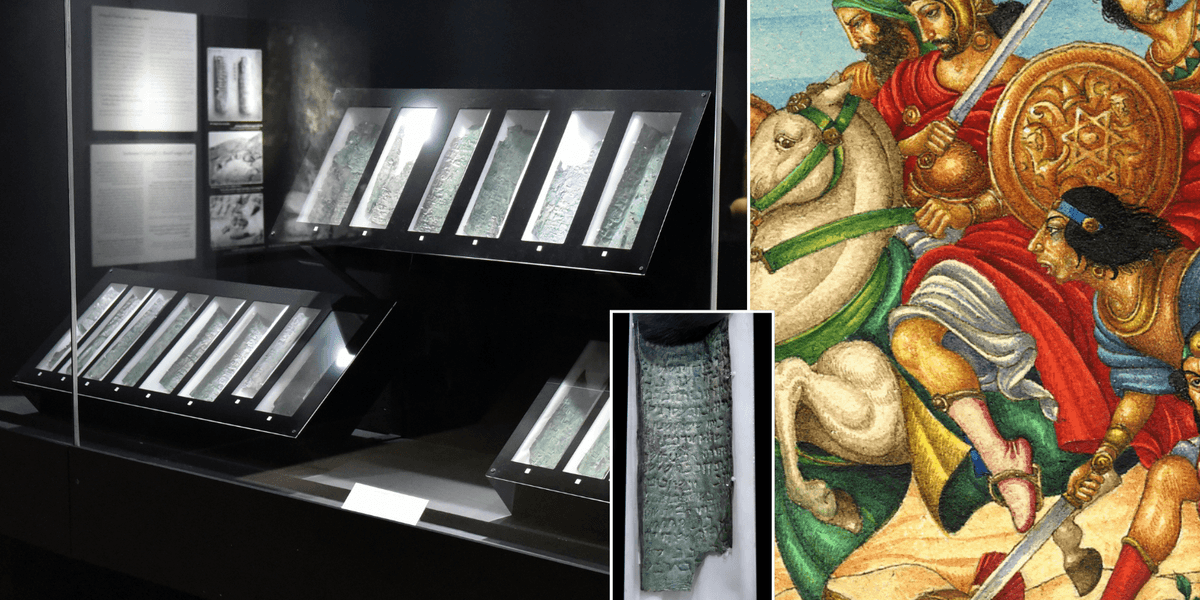
The ancient world, often romanticized through the lens of scholarly texts and archaeological wonders, occasionally reveals its darker, more brutal truths. Such is the case with a recent, chilling discovery made within one of the most enigmatic artifacts of antiquity: the Copper Scroll, a standout among the famed Dead Sea Scrolls. Researchers, meticulously examining this unique relic, have uncovered details that paint a grim picture, connecting it directly to a violent and desperate chapter in ancient history, a period many believed to be largely understood.
Unlike the vast majority of the Dead Sea Scrolls, which were meticulously inscribed on fragile parchment or papyrus, the Copper Scroll is a robust, metallic anomaly. Discovered in Cave 3 at Qumran in 1952, its very material—thin sheets of copper alloy—suggested a different purpose, a more enduring message. Its contents, originally deciphered to be a list of 64 hidden treasures of gold and silver, have long fascinated historians and treasure hunters alike. However, the recent deeper analysis has peeled back layers of mystery, revealing not just a treasure map, but a profound and disturbing connection to the Jewish revolt against Rome, particularly the devastating First Jewish-Roman War (66-73 CE).
The Uniqueness of the Copper Scroll
The Copper Scroll's distinctiveness extends beyond its material composition. Its Hebrew script is different, more akin to Mishnaic Hebrew than the biblical Hebrew found in other scrolls. Furthermore, its practical, almost inventory-like language starkly contrasts with the religious and sectarian texts that dominate the Qumran library. For decades, scholars have debated its true nature: was it a genuine inventory of hidden temple treasures, a fictional account, or perhaps a coded message? The prevailing theory has been that it details the location of wealth secreted away from the Second Temple in Jerusalem before its destruction by Roman forces in 70 CE. This destruction marked a cataclysmic event, ending the Second Temple period and profoundly shaping Jewish history.
The recent grim discovery builds upon this understanding, adding a layer of urgency and desperation to the scroll's narrative. It's no longer just a list of riches; it's a testament to the desperate measures taken by a people facing annihilation. The "grim discovery" refers not to a physical object found inside the scroll, but to the deeper, more violent historical context and implications now understood from its content and the circumstances of its concealment. Researchers have identified linguistic nuances and contextual clues that strongly suggest the treasures were not merely hidden for safekeeping, but were part of a desperate attempt to preserve sacred wealth from the impending Roman onslaught, possibly even funding resistance efforts.
Unveiling the Violent Context
The First Jewish-Roman War was a period of unimaginable brutality and destruction. Triggered by escalating religious tensions, Roman misgovernance, and Jewish nationalist fervor, it culminated in the siege and destruction of Jerusalem and its sacred Temple. Josephus, the Jewish historian who chronicled the war, described scenes of famine, internecine conflict among Jewish factions, and the merciless efficiency of the Roman legions. The Flavian Amphitheatre (Colosseum) in Rome, for instance, was partly funded by the spoils of this war, and its construction was aided by Jewish slaves.
The Copper Scroll, now understood through this grim lens, becomes a poignant artifact of this era. The hidden caches of gold, silver, and priestly vestments it enumerates were not just valuable commodities; they represented the very essence of Jewish religious and national identity. Their concealment was an act of defiance, a desperate hope that one day, the Temple would be rebuilt, and its sacred objects restored. The "grim discovery" is the realization that the scroll itself is a product of this extreme violence, a silent witness to a people's last-ditch effort to save what they held most sacred from an enemy determined to erase their heritage. The act of sealing such a scroll, not on perishable materials but on durable copper, speaks volumes about the creators' intent for its message to survive the devastation.
Expert Analysis and Implications
Dr. John Allegro, one of the original decipherers, famously believed the scroll was a genuine treasure map. While the treasures themselves have never been definitively found, the new research shifts the focus from the what to the why. "This isn't just about finding gold," explains Dr. Elara Vance, a leading expert in Qumran studies. "It's about understanding the psychology of a people under siege. The Copper Scroll is a desperate cry from the past, a last will and testament of a civilization facing existential threat." She emphasizes that the grim discovery lies in the enhanced understanding of the sheer terror and urgency that must have driven its creation. The meticulous detail, the precise locations – these indicate not a casual inventory, but a deeply significant, perhaps even sacred, undertaking.
Furthermore, the scroll's connection to the Jewish revolt provides invaluable insights into the logistical challenges faced by the rebels. How did they manage to conceal such vast quantities of wealth? Who were the individuals entrusted with this monumental task? The scroll hints at a sophisticated, organized effort, possibly involving priestly families or zealot factions, to safeguard the Temple's assets. This challenges the often-portrayed image of a purely disorganized and faction-ridden rebellion, suggesting pockets of strategic foresight and coordinated action even amidst chaos. The implications extend to our understanding of ancient economics, religious practices under duress, and the very nature of resistance movements in the face of overwhelming imperial power.
A Forward-Looking Perspective
The grim discovery within the Copper Scroll serves as a powerful reminder that history is not static; it is a living narrative continually reinterpreted through new evidence and analytical frameworks. While the physical treasures may remain elusive, the deeper historical context now understood from the scroll is a treasure in itself. It forces us to confront the human cost of ancient conflicts, the resilience of cultural identity, and the desperate measures people take to preserve their heritage against all odds.
Future research will undoubtedly delve deeper into the linguistic intricacies of the scroll, seeking further clues about its authors and their precise motivations. Advanced imaging techniques might reveal previously unnoticed details on the copper itself. Moreover, the renewed focus on the scroll's violent context could inspire new archaeological surveys in the regions it describes, perhaps leading to the discovery of related artifacts or even the long-lost caches. The Copper Scroll, once seen primarily as an archaeological curiosity or a treasure map, is now firmly established as a poignant historical document, a grim echo from a time of profound upheaval, forever etched in metal, meant to speak across millennia. Its message, once thought to be sealed forever, is now more clearly heard, resonating with the struggles and hopes of an ancient people. This enduring legacy ensures that the Copper Scroll will continue to captivate and inform, offering a unique window into the brutal realities of the ancient world and the indomitable spirit of those who lived through it.
Stay Informed
Get the world's most important stories delivered to your inbox.
No spam, unsubscribe anytime.
Comments
No comments yet. Be the first to share your thoughts!