Starmer's Dire Warning: Leadership Challenge Could Plunge Labour into 'Chaos'
British Prime Minister Keir Starmer has issued a stark warning, asserting that any leadership challenge against him would throw the Labour Party into 'chaos.' This declaration comes amidst mounting speculation following the party's disappointing performance in recent local elections. Starmer's future as leader is now under intense scrutiny, with internal factions reportedly weighing their options in a bid to stabilize the party's direction.
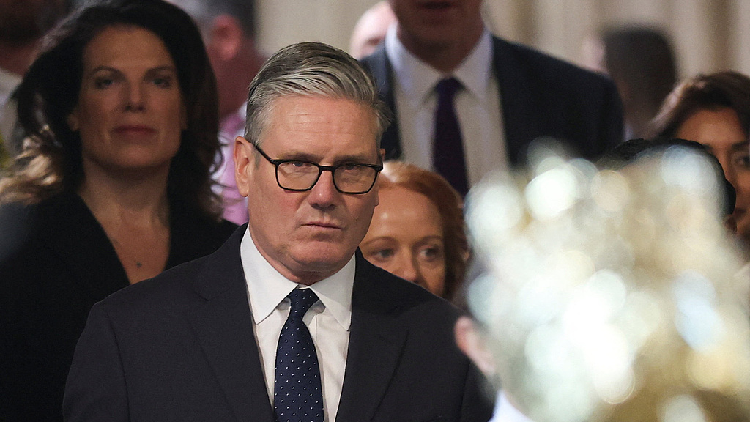
British Prime Minister Keir Starmer issued a stark and unequivocal warning on Wednesday, declaring that any leadership challenge against him would plunge the Labour Party into "chaos." This forceful statement arrives amidst a swirling vortex of speculation regarding his future at the helm, ignited by the party's underwhelming performance in the recent local elections. The results, widely perceived as a setback, have emboldened internal critics and fueled whispers of a potential move to replace him, raising fundamental questions about Labour's stability and its path to a general election.
Starmer's remarks, delivered with an air of defiance, underscore the precarious position he finds himself in. Having taken over the leadership in 2020, promising to restore Labour's electoral fortunes after its devastating 2019 general election defeat, the current climate suggests that promise remains unfulfilled in the eyes of many within his own ranks. The local election outcomes, while not a complete rout, failed to deliver the decisive gains many had anticipated, particularly in key battleground areas, leading to a renewed sense of introspection and discontent.
The Echoes of Past Leadership Battles
The specter of leadership challenges is not new to the Labour Party. Its history is replete with instances where internal dissent has boiled over, often leading to protracted and damaging contests. From the ousting of James Callaghan in the late 1970s to the more recent, tumultuous periods under Jeremy Corbyn, the party has a well-documented tendency for internal strife. Starmer's warning of "chaos" is a deliberate invocation of this historical precedent, aiming to deter potential challengers by highlighting the disruptive and often self-defeating nature of such contests.
Historically, leadership challenges, particularly mid-term, have rarely ended well for the challenging party. They consume vast amounts of political capital, divert attention from policy development and opposition to the government, and often leave deep, unhealing schisms within the party's ranks. For a party like Labour, which has struggled to regain public trust and present a united front, such an internal battle could be catastrophic, potentially cementing its position in opposition for the foreseeable future. The memory of the deep divisions under Corbyn's leadership and the subsequent electoral drubbing still looms large, serving as a cautionary tale.
The Local Election Aftermath: A Catalyst for Discontent
The recent local election results served as the primary catalyst for the current leadership speculation. While Labour did make some gains, they were not as significant or widespread as the party leadership had hoped. Crucially, they failed to demonstrate a clear and convincing path to power, particularly in the "Red Wall" seats that flipped to the Conservatives in 2019. This failure has reignited concerns among some Labour MPs and party members about Starmer's ability to connect with traditional working-class voters and articulate a compelling vision for the country.
Key areas where Labour had invested significant resources and expectations yielded mixed results, leading to a sense of frustration. Analysts point to several factors: a perceived lack of a clear, distinctive policy platform, Starmer's relatively low public profile compared to some of his predecessors, and the lingering impact of the party's internal divisions. The narrative emerging from these elections is one of a party struggling to define itself and its purpose in a post-Brexit, post-pandemic Britain, leaving an opening for those who believe a change in leadership is necessary to re-energize the base and broaden its appeal.
Potential Challengers and Their Agendas
While no one has yet publicly declared an intention to challenge Starmer, several names are frequently mentioned in Westminster circles as potential contenders. These individuals often represent different ideological wings of the party, each with their own vision for Labour's future. The prospect of a leadership contest would inevitably force these factions into the open, potentially leading to a bruising internal debate over the party's core values, economic policy, and approach to issues like national security and social justice.
* Shadow Cabinet Members: Several prominent figures within Starmer's own shadow cabinet are often cited as potential leaders, possessing varying degrees of experience and public recognition. Their decisions would be crucial, as a challenge from within the top ranks would be seen as a direct repudiation of Starmer's leadership. * Backbench MPs: A number of influential backbenchers, particularly those who feel the party has strayed too far from its socialist roots or, conversely, not moved far enough towards the center, could also emerge as challengers. Their campaigns would likely focus on ideological purity or a more radical policy agenda. * The 'Next Generation': There is also speculation about younger, rising stars within the party who might see this as an opportune moment to make their mark, promising a fresh start and a new direction for Labour.
Each potential challenger would bring their own strengths and weaknesses, and the ensuing debate would undoubtedly be fierce, potentially leaving the party more fractured than before. Starmer's warning is a strategic attempt to remind these individuals of the collective cost of such an endeavor.
The Road Ahead: Unity or Further Division?
Starmer's immediate challenge is to quell the internal unrest and reassert his authority. This will likely involve a combination of strategic reshuffles, clearer policy announcements, and a renewed effort to unite the disparate factions within the party. He must demonstrate that he has a credible plan to turn Labour's fortunes around and present a compelling alternative to the current government.
The coming months will be critical for the Labour Party. The decision to either rally behind Starmer or initiate a leadership challenge will have profound implications not only for the party's internal dynamics but also for the broader British political landscape. A united Labour Party, even in opposition, can exert significant pressure on the government and offer a viable alternative to the electorate. A fractured party, however, risks becoming irrelevant, further entrenching the current Conservative dominance.
Starmer's warning is not just a defensive maneuver; it's a call for unity in the face of adversity. Whether his party heeds this call, or chooses to embark on another period of internal conflict, remains to be seen. The stakes are incredibly high, not just for Keir Starmer, but for the very future of the Labour Party as a credible force in British politics. The path chosen will define Labour's trajectory for years to come, either towards renewed hope or deeper despair.
Stay Informed
Get the world's most important stories delivered to your inbox.
No spam, unsubscribe anytime.
Comments
No comments yet. Be the first to share your thoughts!