Escalating Tensions: Israeli Strikes Kill Paramedics in Lebanon Amidst 'Flagrant Crime' Accusations
A series of Israeli strikes in southern Lebanon has resulted in the deaths of at least three paramedics, sparking international condemnation and accusations of deliberately targeting health workers. One of the victims had recently been featured in a BBC report, highlighting the human cost of the escalating conflict. This incident underscores the precarious situation for humanitarian aid workers in war zones and further inflames an already volatile regional dynamic.
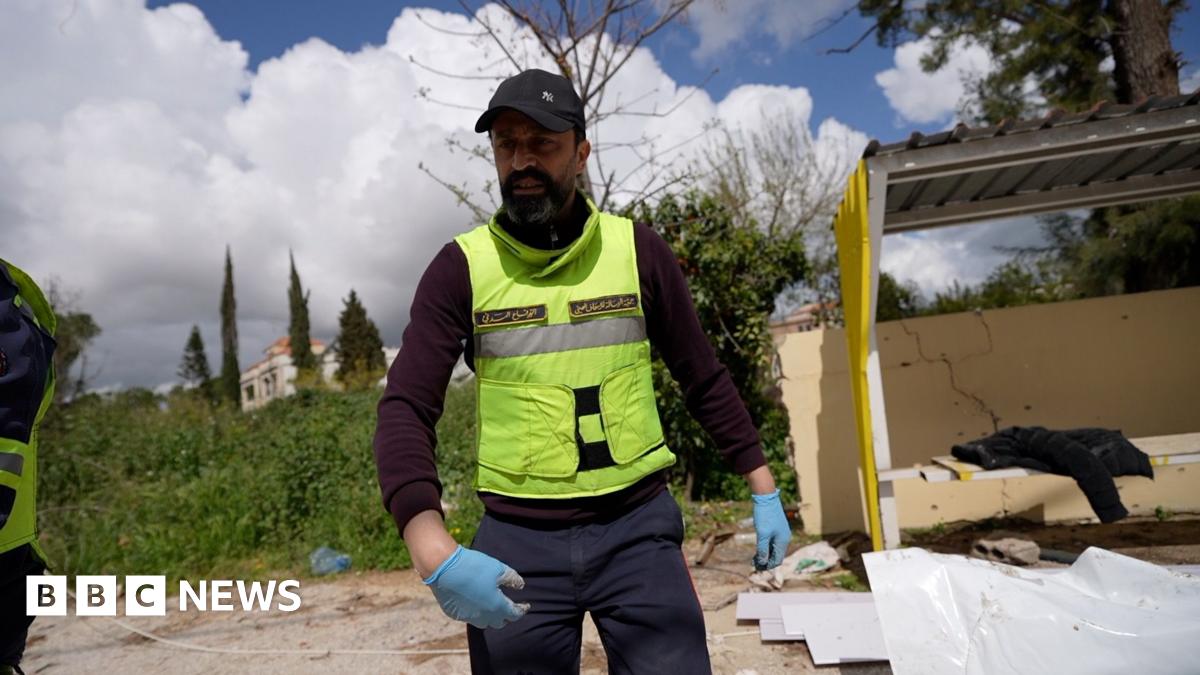
In a deeply disturbing escalation of cross-border hostilities, a series of Israeli attacks in southern Lebanon has led to the tragic deaths of at least three paramedics, prompting immediate and forceful condemnation from the Lebanese government. Described as a “flagrant crime,” these incidents have cast a harsh spotlight on the precarious and often perilous conditions faced by humanitarian workers operating in conflict zones. The fact that one of the deceased paramedics had recently been featured in a BBC report, offering a poignant human face to the crisis, amplifies the gravity of the situation and raises serious questions about the adherence to international humanitarian law.
The Triple-Tap Tragedy and Official Condemnation
The incidents, which occurred in quick succession, involved what Lebanese officials termed a “triple-tap” strike, a military tactic often criticized for its potential to target first responders. According to reports, the paramedics were responding to an earlier strike when they themselves became victims. The Lebanese Ministry of Public Health swiftly issued a statement denouncing the attacks, asserting that they constitute a deliberate targeting of medical personnel, a direct violation of international conventions designed to protect healthcare workers in armed conflicts. Such accusations are not new in the context of the Israeli-Palestinian and Israeli-Lebanese conflicts, but each new incident reignites debates about accountability and the rules of engagement.
The international community, including various humanitarian organizations, has been quick to echo these concerns, calling for a thorough and independent investigation into the circumstances surrounding the deaths. The targeting of medical personnel, ambulances, and healthcare facilities is explicitly prohibited under the Geneva Conventions, which stipulate that medical units and establishments must be respected and protected at all times. Breaches of these conventions can be classified as war crimes, underscoring the severe legal and ethical implications of such alleged actions. The incident adds another layer of complexity to the already strained relations between Israel and Lebanon, and by extension, with Hezbollah, the powerful Shiite political party and militant group that controls significant influence in southern Lebanon.
A Pattern of Peril for Aid Workers
This tragic event is not an isolated occurrence but rather fits into a broader, deeply troubling pattern of violence against aid workers and medical professionals in conflict zones globally. From Ukraine to Sudan, and particularly across the Middle East, healthcare providers frequently find themselves on the front lines, often becoming unintended – or, as alleged in this case, deliberate – targets. Data from organizations like the World Health Organization (WHO) and Physicians for Human Rights consistently document hundreds of attacks on healthcare facilities and personnel each year, highlighting a systemic failure to uphold the sanctity of medical neutrality.
For instance, in the ongoing conflict in Gaza, numerous reports have detailed strikes on hospitals, ambulances, and medical convoys, leading to widespread condemnation. The rationale often cited by military forces, including the IDF, is that these facilities or vehicles are being used by militants for military purposes, thereby forfeiting their protected status. However, international law is clear: even if such claims are made, specific precautions must be taken to ensure civilian and medical personnel safety, and the burden of proof rests heavily on the attacking force. The deliberate targeting of an individual known to be a paramedic, especially one recently highlighted for their humanitarian work, raises critical questions about intelligence gathering and targeting protocols.
Historical Context of Israeli-Lebanese Tensions
To understand the current climate, one must look at the long and often violent history between Israel and Lebanon. The two nations have technically been in a state of war since 1948, punctuated by major conflicts in 1982, 2000, and 2006, as well as numerous smaller skirmishes and cross-border incidents. Southern Lebanon, in particular, has long been a flashpoint, serving as a battleground for proxy wars and direct confrontations. Hezbollah, established in the 1980s with Iranian backing, emerged as a dominant force, positioning itself as a resistance movement against Israeli occupation and influence.
The current wave of hostilities is largely a spillover from the ongoing conflict in Gaza, which erupted following the October 7th attacks. Since then, Hezbollah has engaged in daily, albeit often limited, exchanges of fire with Israeli forces across the border, ostensibly in solidarity with Palestinians. These exchanges, while initially contained, have gradually intensified, leading to deeper incursions and more significant casualties on both sides. The targeting of paramedics, if proven deliberate, marks a dangerous escalation, suggesting a potential broadening of targets beyond purely military objectives.
Implications for Regional Stability and International Law
The killing of the paramedics carries grave implications, not just for the immediate humanitarian response but for the broader regional stability. Such incidents fuel narratives of injustice and oppression, strengthening the resolve of militant groups and further radicalizing populations. They also undermine the already fragile trust in international legal frameworks and institutions designed to protect civilians and non-combatants during wartime. When the very individuals dedicated to saving lives become casualties, it sends a chilling message about the erosion of humanitarian principles.
Expert analysis suggests that these events could lead to several outcomes. Firstly, increased international pressure on Israel to adhere strictly to international humanitarian law and to conduct transparent investigations. Secondly, a potential for Hezbollah to retaliate more forcefully, further drawing Lebanon into a full-scale conflict that its already beleaguered economy and political system can ill afford. Thirdly, a renewed focus on the protection of humanitarian workers, potentially leading to stronger advocacy and mechanisms for accountability from international bodies like the UN and ICRC.
Moving Forward: The Imperative for Protection and Peace
The tragic deaths of these paramedics serve as a stark reminder of the devastating human cost of conflict and the urgent need for all parties to respect international humanitarian law. The principle of medical neutrality is not merely an abstract concept; it is a cornerstone of civilized warfare, designed to ensure that aid can reach those in desperate need, regardless of their affiliation. The deliberate targeting of those who wear the emblem of aid is an attack on humanity itself.
As the situation remains volatile, the international community must intensify its efforts to de-escalate tensions, protect civilians, and ensure accountability for violations of international law. For humanitarian organizations, the challenge is immense: how to continue providing life-saving assistance in environments where their own safety is increasingly compromised. The memory of these fallen paramedics must galvanize a renewed commitment to upholding the principles of protection and working towards a lasting peace, however distant it may seem, in a region perpetually plagued by conflict. The world watches, hoping that such sacrifices will not be in vain, and that the fundamental rights of those who heal will be universally respected.
Stay Informed
Get the world's most important stories delivered to your inbox.
No spam, unsubscribe anytime.
Comments
No comments yet. Be the first to share your thoughts!