EU's Carbon Border Tax: Unpacking CBAM's Global Impact and Green Ambitions
The EU's Carbon Border Adjustment Mechanism (CBAM) is a groundbreaking policy designed to level the playing field for European industries by imposing a carbon price on imports. This article delves into the mechanism's intricate workings, its far-reaching implications for global trade and climate policy, and the challenges and opportunities it presents for businesses worldwide. From its origins in the European Green Deal to its potential to reshape supply chains, we explore how CBAM is setting a new precedent for environmental accountability in international commerce.
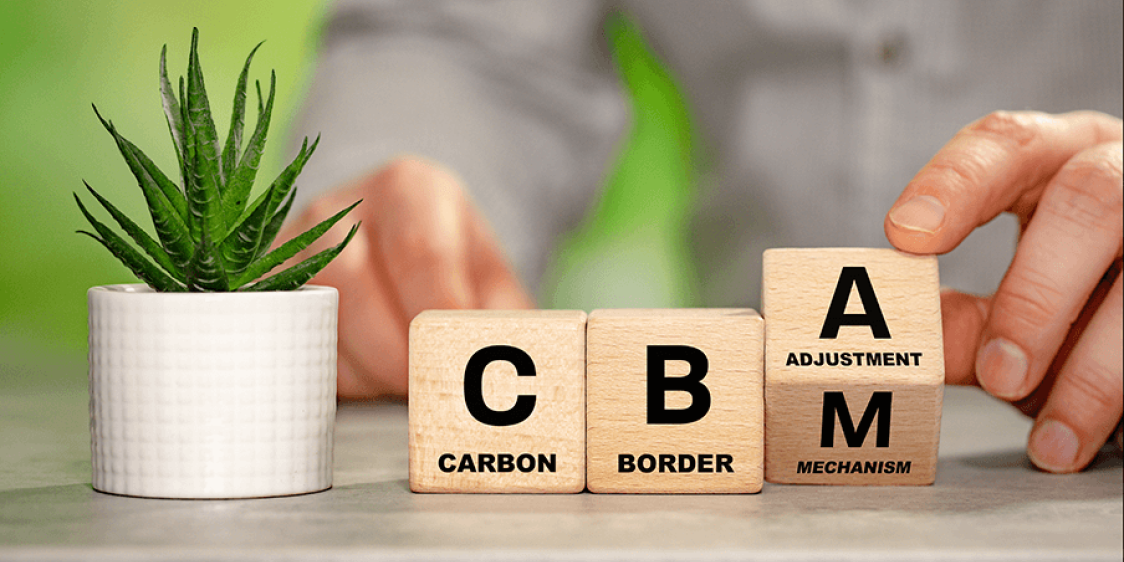
In the relentless pursuit of climate neutrality, the European Union has unveiled a policy instrument poised to fundamentally reshape global trade dynamics: the Carbon Border Adjustment Mechanism (CBAM). More than just a tariff, CBAM is a pioneering environmental policy designed to put a fair price on the carbon emissions embedded in carbon-intensive goods entering the EU. Launched in its transitional phase on October 1, 2023, this mechanism is a cornerstone of the European Green Deal, aiming to prevent 'carbon leakage' – the relocation of production to countries with less stringent climate policies – and encourage cleaner industrial practices worldwide. Its implementation marks a significant escalation in the EU's commitment to climate action, sending a clear signal that environmental costs will increasingly be factored into international commerce.
The Genesis of CBAM: A Response to Climate Imperatives
The concept of a carbon border tax has been debated for years, gaining traction as the EU intensified its climate ambitions. The EU's Emissions Trading System (ETS), a cap-and-trade scheme, has been instrumental in driving down industrial emissions within the bloc. However, it also placed EU industries at a competitive disadvantage against producers in countries without comparable carbon pricing. This disparity created the risk of carbon leakage, undermining the effectiveness of the EU's climate efforts. CBAM was conceived as a direct response to this challenge, designed to complement the ETS by ensuring that the carbon price paid by EU producers is mirrored by importers. It's a strategic move to safeguard the competitiveness of European industries while simultaneously promoting global decarbonization.
The mechanism initially targets a select group of carbon-intensive sectors: cement, iron and steel, aluminium, fertilisers, electricity, and hydrogen. These industries are not only significant emitters but also face considerable international competition. The phased introduction of CBAM allows for a learning period, with companies initially only required to report their embedded emissions. From 2026, financial adjustments will begin, requiring importers to purchase CBAM certificates corresponding to the carbon price difference between the country of origin and the EU. This gradual approach aims to provide businesses with ample time to adapt, understand the reporting requirements, and adjust their supply chains.
How CBAM Works: A Deeper Dive into its Mechanics
At its core, CBAM operates on a principle of equivalence. When goods from the targeted sectors are imported into the EU, their embedded carbon emissions are calculated. If a carbon price has already been paid in the country of origin, this amount can be deducted. The importer then purchases CBAM certificates to cover any remaining carbon cost, effectively mirroring the price that would have been paid had the goods been produced under the EU ETS. The price of these certificates will be linked to the average weekly auction price of EU ETS allowances.
Key operational aspects include: * Reporting Obligations: During the transitional phase (October 2023 - December 2025), importers must report the embedded emissions of their goods quarterly, without financial payments. This includes direct and indirect emissions, though indirect emissions (from electricity consumption) will only be included for cement and fertilisers initially. * Verification: Importers will need to ensure the accuracy of their reported emissions, potentially requiring verification by accredited third parties. This adds a layer of complexity and cost to compliance. * CBAM Declarants: Importers will need to register as 'CBAM declarants' with national authorities, responsible for purchasing and surrendering CBAM certificates. * Scope Expansion: While starting with six sectors, the EU has indicated that the scope of CBAM could expand to other carbon-intensive industries over time, including organic chemicals and polymers, and eventually encompass all sectors covered by the EU ETS.
This intricate system is designed to incentivize non-EU producers to decarbonize their operations. Faced with the prospect of paying a carbon price at the EU border, companies may find it more economically viable to invest in greener production methods, thereby reducing their CBAM liability and enhancing their competitiveness.
Global Implications: Reshaping Trade and Climate Diplomacy
CBAM is not merely an EU policy; it's a global game-changer. Its introduction has sparked considerable debate and concern among trading partners, particularly those heavily reliant on exports to the EU. Developing nations, in particular, fear that CBAM could act as a protectionist measure or a barrier to trade, potentially hindering their economic growth. However, the EU maintains that CBAM is fully compliant with World Trade Organization (WTO) rules, as it does not discriminate between domestic and imported goods and aims to address a legitimate environmental concern.
* Impact on Developing Economies: Countries with less developed carbon pricing mechanisms or higher carbon intensity in their production processes will likely face higher CBAM costs. This could spur investment in green technologies and carbon pricing schemes in these nations, or it could lead to trade diversion if businesses seek alternative markets. * Supply Chain Restructuring: Companies with complex global supply chains will need to meticulously map their emissions data from raw materials to finished products. This could lead to a re-evaluation of sourcing strategies, favoring suppliers with lower carbon footprints. * Diplomatic Pressure: CBAM is expected to exert diplomatic pressure on other major economies to adopt their own carbon pricing mechanisms or enhance existing ones. This could pave the way for a more harmonized global approach to carbon pricing, fostering a level playing field for climate action. * Innovation and Green Investments: The financial incentive to reduce embedded emissions will likely drive innovation in low-carbon technologies and processes, accelerating the global transition to a green economy.
Challenges and Opportunities for Businesses
For businesses, CBAM presents a dual landscape of challenges and opportunities. Compliance will undoubtedly be complex, requiring significant investment in data collection, reporting systems, and potentially new production technologies.
Challenges: * Data Collection and Reporting: Accurately measuring and reporting embedded emissions across diverse supply chains, especially for complex products, will be a monumental task. This requires robust internal systems and collaboration with suppliers. * Cost Implications: The direct cost of purchasing CBAM certificates, coupled with the administrative burden of compliance, could impact profitability, particularly for smaller businesses or those with high carbon intensity. * Competitive Disadvantage (initial): Companies that are slow to adapt or unable to secure low-carbon inputs might temporarily face a competitive disadvantage.
Opportunities: * Competitive Edge: Early adopters of decarbonization strategies stand to gain a significant competitive advantage, offering lower-carbon products that incur fewer CBAM costs. * Supply Chain Optimization: CBAM can be a catalyst for optimizing supply chains, identifying efficiencies, and fostering stronger relationships with environmentally conscious suppliers. * Innovation and Market Leadership: Investing in green technologies and processes can position companies as leaders in the sustainable economy, attracting environmentally conscious consumers and investors. * Enhanced Brand Reputation: Demonstrating commitment to reducing carbon footprint can significantly enhance a company's brand image and appeal.
The Road Ahead: A New Era of Climate Governance
As CBAM moves from its transitional phase to full implementation in 2026, its true impact will begin to unfold. It represents a bold step by the EU, signaling a new era where environmental considerations are inextricably linked to trade policy. While challenges remain, particularly in ensuring equitable implementation and avoiding unintended consequences for developing nations, the mechanism holds immense potential to drive global decarbonization efforts.
The success of CBAM will depend on its ability to strike a delicate balance between environmental ambition and economic practicality. Its evolution will be closely watched by policymakers, industries, and environmentalists worldwide, as it sets a precedent for how international trade can be leveraged as a powerful tool in the fight against climate change. The EU's carbon border tax is not just about protecting its own industries; it's about exporting its climate ambition, fostering a global race to the top in environmental performance, and ultimately, securing a more sustainable future for all.
Stay Informed
Get the world's most important stories delivered to your inbox.
No spam, unsubscribe anytime.
Comments
No comments yet. Be the first to share your thoughts!