Fact Check: Unraveling the Myth of Prabowo's Diplomatic Invitation to Mediate US-Iran-Israel Talks
Recent viral social media claims alleging that Indonesian President-elect Prabowo Subianto received a special invitation to mediate talks between Iran, the United States, and Israel have been definitively debunked. A thorough fact-check reveals no official confirmation or credible evidence supporting these widespread assertions. This article delves into the origins of the misinformation, its potential implications, and the broader context of Indonesia's role in global diplomacy.
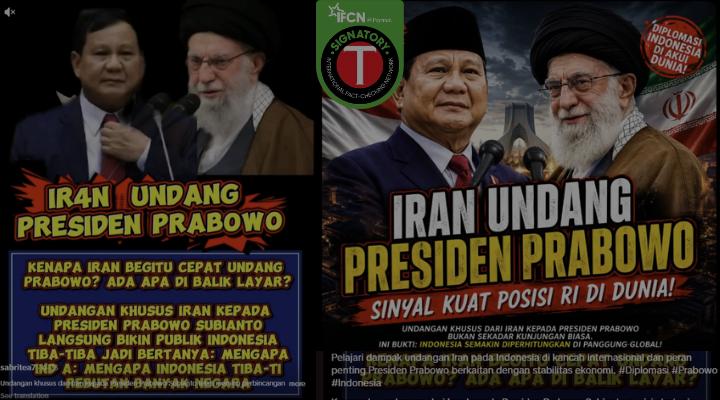
In an era saturated with information, the line between fact and fiction often blurs, particularly in the rapid-fire world of social media. A recent flurry of posts across Instagram, Facebook, and TikTok ignited a considerable buzz, claiming that Indonesian President-elect Prabowo Subianto had been extended a special invitation to facilitate a crucial dialogue between three geopolitical titans: Iran, the United States, and Israel. Such a development, if true, would represent a seismic shift in regional diplomacy and a significant elevation of Indonesia's international standing. However, a meticulous examination of these claims reveals a stark reality: there is no credible evidence to support these widespread assertions. The narrative, while compelling, appears to be entirely unfounded, serving as a potent reminder of the pervasive nature of misinformation in the digital age.
The Genesis of a Geopolitical Rumor
The claims, which gained rapid traction, suggested that Prabowo Subianto, a figure increasingly prominent on the global stage, was uniquely positioned to bridge the deep-seated divides between these nations. The allure of such a story is understandable: Indonesia, as the world's most populous Muslim-majority nation and a steadfast proponent of non-alignment, often seeks to play a constructive role in international conflicts. Its historical stance on Palestinian independence and its generally cordial relations with various global powers might, to some, make it a plausible mediator. However, the viral posts lacked any official source, specific details, or corroborating statements from any of the involved parties or their diplomatic representatives. They often relied on vague language and speculative interpretations, typical hallmarks of unverified content.
Investigations into the origins of these posts indicate a pattern common to many misinformation campaigns. They often start with a single, unverified claim, which is then amplified through shares and reposts by users who may not scrutinize the information's veracity. The sheer volume of engagement can create an illusion of credibility, leading more people to believe and further disseminate the false narrative. In this particular instance, the posts frequently cited unnamed sources or presented the claim as a self-evident truth, bypassing the need for official confirmation. This phenomenon underscores the critical need for media literacy and critical thinking when consuming news from social media platforms.
Official Denials and Lack of Confirmation
Crucially, no official statements from the Indonesian Ministry of Foreign Affairs, the US State Department, the Iranian Foreign Ministry, or the Israeli Ministry of Foreign Affairs have corroborated these claims. Diplomatic channels, which would typically be abuzz with news of such a high-profile mediation effort, have remained silent on the matter. Furthermore, Prabowo Subianto's own team or spokespersons have not issued any statements confirming such an invitation. The absence of official acknowledgment from any party directly involved is perhaps the most definitive indicator that the claims are baseless.
In international diplomacy, major initiatives like mediating talks between such significant global players are rarely kept secret for long. Preparatory meetings, public announcements, and official invitations are standard procedures. The lack of any such public record or even leaked information from diplomatic circles strongly refutes the notion of a special invitation. Experts in international relations and Middle Eastern affairs have also expressed skepticism, noting the immense complexity and sensitivity of the US-Iran-Israel dynamic, which typically requires multilateral efforts rather than a single mediator, especially one without a long-standing, direct engagement in this specific conflict resolution.
Indonesia's Diplomatic Aspirations and Realities
While the specific claim about mediation is false, it's important to contextualize Indonesia's broader diplomatic ambitions. Under various administrations, including the current one and the incoming Prabowo presidency, Indonesia has consistently advocated for peaceful resolution of conflicts, multilateralism, and a balanced foreign policy. Indonesia is a member of the G20, ASEAN, and the Organization of Islamic Cooperation (OIC), and has often used these platforms to voice its concerns and offer its services in de-escalating tensions, particularly in the Middle East, given its strong support for the Palestinian cause.
Prabowo Subianto himself has expressed a desire for Indonesia to play a more significant role on the global stage. His recent visits to various countries and his emphasis on strengthening Indonesia's defense capabilities are part of a broader strategy to enhance the nation's international presence. However, aspiring to a larger diplomatic role is distinct from receiving an unsolicited, high-stakes invitation to mediate between adversaries as complex as the US, Iran, and Israel. Such a role would typically be the culmination of years of sustained, strategic diplomatic engagement and trust-building with all parties, a process that is ongoing for Indonesia but has not yet reached this specific juncture.
The Dangers of Misinformation in Geopolitics
The propagation of false narratives, even seemingly innocuous ones, carries significant risks, particularly in the sensitive realm of international relations. Firstly, it can create unrealistic expectations among the public about a nation's diplomatic capabilities or specific foreign policy initiatives. When these expectations are not met, it can lead to disillusionment and distrust in official communications.
Secondly, such claims can potentially complicate genuine diplomatic efforts. If one party believes a mediator has been chosen or is about to intervene, it can alter their strategic calculations or create confusion. While in this specific case the claims were quickly debunked, in other scenarios, misinformation can inadvertently sow discord or undermine delicate negotiations.
Thirdly, it erodes trust in information sources. When social media platforms become conduits for unverified news, the public's ability to discern truth from falsehood diminishes, making it harder for legitimate news organizations and official bodies to convey accurate information. This erosion of trust is a significant challenge for democracies worldwide.
Conclusion: A Call for Vigilance and Verified Information
The viral claims regarding Prabowo Subianto's alleged invitation to mediate talks between Iran, the US, and Israel serve as a stark illustration of the challenges posed by misinformation in the digital age. While the idea of Indonesia playing such a pivotal role might appeal to national pride and aspirations for global leadership, the reality is that such an invitation has not been extended. The absence of any official confirmation, coupled with the reliance of the claims on unverified social media posts, firmly places this narrative in the realm of fiction.
For citizens, the takeaway is clear: vigilance and critical assessment of information sources are paramount. For media organizations, the responsibility to fact-check and report accurately is more crucial than ever. Indonesia's diplomatic ambitions are real and commendable, but they must be built on a foundation of truth and verifiable progress, not on the shifting sands of social media rumors. As the world navigates increasingly complex geopolitical landscapes, the demand for verified, contextualized information will only grow, making the role of responsible journalism and an informed public indispensable.
Stay Informed
Get the world's most important stories delivered to your inbox.
No spam, unsubscribe anytime.
Comments
No comments yet. Be the first to share your thoughts!