Iran's Oil Lifeline: How Tankers Evaded Hormuz Blockade, Redrawing Geopolitical Lines
Two Iranian Very Large Crude Carriers successfully bypassed the U.S. Navy's Strait of Hormuz blockade, traversing the Lombok Strait to deliver 3.8 million barrels of oil. This audacious maneuver highlights the limitations of traditional naval power in enforcing sanctions and underscores Iran's resilience in navigating global energy markets. The incident signals a potential shift in geopolitical strategies, forcing a reevaluation of maritime control and the efficacy of economic pressure.
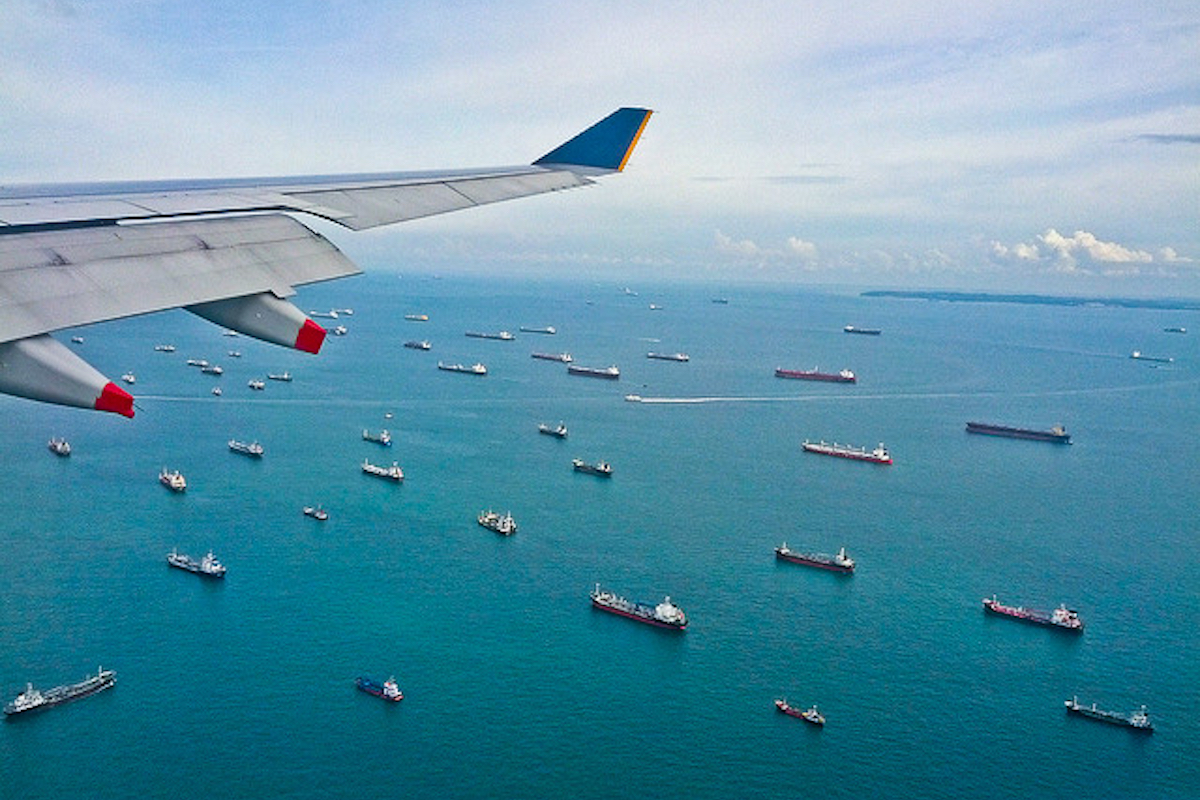
The high-stakes game of cat and mouse in global energy politics took a dramatic turn this weekend, revealing the inherent vulnerabilities in even the most formidable naval blockades. Two Iranian Very Large Crude Carriers (VLCCs), aptly named HUGE and DERYA, defied expectations and successfully navigated the U.S. Navy’s formidable presence in the Strait of Hormuz. Their clandestine journey, which saw them pass through Indonesia’s Lombok Strait, delivered a staggering 3.8 million barrels of crude oil to an undisclosed, yet undoubtedly 'desperate,' Asian buyer. This bold act is not merely an isolated incident; it represents a significant challenge to Washington's strategy of 'maximum pressure' against Tehran and forces a critical re-evaluation of maritime control in an increasingly interconnected world.
The Audacious Journey: A Breach in the Blockade
The successful transit of HUGE and DERYA through the Lombok Strait, a less-monitored but strategically vital waterway, exposed a critical flaw in the U.S. blockade strategy. For years, the Strait of Hormuz has been the primary chokepoint for Iranian oil exports, heavily patrolled by the U.S. Navy's Fifth Fleet. The assumption was that control over this narrow passage would effectively cripple Iran’s ability to sell its oil, thereby starving its economy. However, the move through the Lombok Strait demonstrates a sophisticated understanding of global shipping lanes and a willingness to take calculated risks on Iran's part. This route, while longer and potentially more costly, offers a bypass around the most heavily surveilled maritime zones.
The implications are profound. It suggests that Iran, with the likely assistance of its trading partners, has developed alternative logistical networks capable of circumventing direct naval interdiction. This isn't just about two ships; it's about a proof-of-concept for a resilient supply chain that can adapt to geopolitical pressures. The use of VLCCs, which are massive vessels designed for long-haul transport, further underscores the scale of this operation and the significant value of the cargo involved. The successful delivery of 3.8 million barrels represents a substantial financial lifeline for an economy under severe duress.
The Geopolitical Chessboard: Hormuz vs. Malacca
For the U.S. strategy of maximum pressure to truly be effective, it would require control over not just the Strait of Hormuz, but also other key maritime chokepoints, most notably the Strait of Malacca. The Malacca Strait, situated between Malaysia, Singapore, and Indonesia, is one of the world's busiest shipping lanes, connecting the Indian Ocean to the Pacific Ocean. It is a critical artery for global trade, particularly for oil and gas destined for East Asia.
The successful passage through the Lombok Strait, an alternative to Malacca, highlights this strategic dilemma. While the U.S. Navy maintains a significant presence in the Indo-Pacific, extending a full-scale, effective blockade across all potential routes to Asian markets would be an unprecedented and potentially unsustainable undertaking. Such an effort would require immense resources, raise international tensions, and could inadvertently disrupt global trade far beyond Iran's oil exports. The sheer scale of maritime traffic and the vastness of the oceans make a comprehensive, airtight blockade a logistical nightmare, if not an impossibility.
Economic Sanctions: A Double-Edged Sword
Economic sanctions are designed to exert pressure by limiting a nation's access to international markets and financial systems. However, the Iranian incident illustrates their inherent limitations when faced with determined adversaries and willing trade partners. The global demand for oil, particularly in rapidly growing Asian economies, creates powerful incentives for circumvention. For nations desperate for energy, the political risks of purchasing sanctioned oil can be outweighed by the economic benefits of cheaper, readily available supplies.
Furthermore, the use of complex financial arrangements, ship-to-ship transfers, and opaque ownership structures makes tracking and enforcing sanctions incredibly challenging. The 'dark fleet' of tankers operating outside conventional regulatory frameworks has grown significantly, enabling sanctioned entities to continue trading. This incident serves as a stark reminder that sanctions, while powerful, are not a silver bullet. Their effectiveness is directly tied to the ability to enforce them comprehensively, which, in the vast expanse of global maritime trade, is proving increasingly difficult.
Implications for Global Energy Security and Diplomacy
This development carries significant implications for global energy security and international diplomacy. For Iran, it's a propaganda victory and a tangible demonstration of its resilience. It provides a much-needed injection of revenue, potentially bolstering its domestic economy and its regional influence. For the U.S., it's a setback that necessitates a re-evaluation of its pressure campaign. The incident could prompt a more aggressive approach to maritime interdiction, or conversely, lead to a recognition that a purely coercive strategy has its limits.
Moreover, the successful evasion of the blockade by Iranian tankers could embolden other nations or entities facing similar sanctions to explore alternative shipping routes and methods. It sets a precedent that could complicate future attempts to use maritime blockades as a tool of foreign policy. The incident also highlights the growing influence of Asian markets as destinations for energy, potentially shifting the balance of power in global energy trade.
The Path Forward: Diplomacy or Escalation?
The incident with HUGE and DERYA forces a critical question: what is the path forward? Continued escalation of maritime interdiction efforts risks direct confrontation and could destabilize vital shipping lanes, impacting global commerce. Alternatively, the demonstrable limitations of the current strategy might open a window for renewed diplomatic engagement. If sanctions are proving less effective than intended, then perhaps a return to the negotiating table, offering incentives for compliance rather than solely relying on punitive measures, could be a more pragmatic approach.
The challenge for international policymakers will be to find a balance between maintaining pressure on Iran to curb its nuclear program and regional activities, while acknowledging the practical difficulties of completely isolating a major oil producer. The successful transit of these tankers is a wake-up call, signaling that the geopolitical landscape is constantly shifting, and strategies must evolve accordingly. The future of global energy security and regional stability in the Middle East may well depend on how this latest challenge is addressed. The 'leaky' blockade of Hormuz, bypassed by a strategic detour, has certainly added a new, complex layer to an already intricate geopolitical puzzle.
Stay Informed
Get the world's most important stories delivered to your inbox.
No spam, unsubscribe anytime.
Comments
No comments yet. Be the first to share your thoughts!