Giants of the Canopy: Unveiling the World's Six Largest Monkey Species
While great apes often steal the spotlight, the world of monkeys boasts its own impressive heavyweights. From the vibrant Mandrill to the elusive Gelada, this article explores the six largest monkey species, delving into their unique characteristics, habitats, and the critical conservation challenges they face. Discover the fascinating lives of these primate giants and their vital role in global ecosystems.
In the vast and diverse tapestry of life, primates command a special fascination. Often, our minds jump to the majestic great apes – gorillas, chimpanzees, orangutans – when we consider the giants of this order. Yet, within the equally captivating world of monkeys, there exist true behemoths, species that defy the common perception of these animals as smaller, more agile forest dwellers. These are the undisputed heavyweights, creatures of remarkable size, strength, and often, stunning beauty, whose lives are intricately woven into the fabric of their respective ecosystems. PulseWorld delves into the lives of the six largest monkey species on Earth, exploring their unique adaptations, social structures, and the urgent conservation efforts required to protect them.
The Mandrill: A Symphony of Color and Power
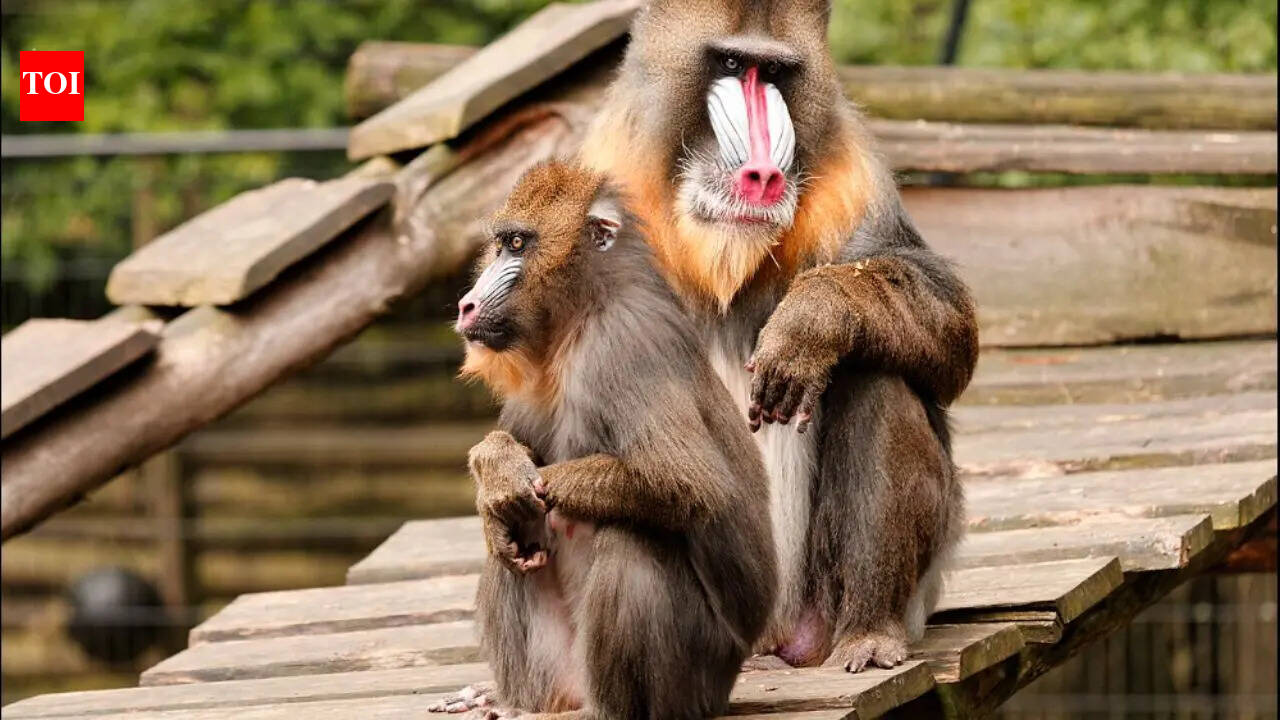
Perhaps the most visually striking of all monkeys, the Mandrill (Mandrillus sphinx) is an unmistakable icon of African rainforests. Native to Cameroon, Gabon, Equatorial Guinea, and Congo, adult males can weigh up to an astonishing 37 kg (82 lbs) and stand nearly a meter tall, making them the largest monkey species by weight. Their vibrant facial coloration – a brilliant scarlet stripe down the nose flanked by blue ridges – and a golden beard are not merely aesthetic; they play a crucial role in social signaling and dominance displays within their large, complex multi-male, multi-female groups, known as 'hordes,' which can number in the hundreds. These highly social omnivores forage on a diverse diet of fruits, seeds, insects, and small vertebrates, utilizing their powerful jaws and canine teeth. Despite their formidable appearance, Mandrills are shy and reclusive, making direct observation challenging. Their existence is increasingly threatened by habitat loss due to logging and agriculture, as well as bushmeat hunting, leading to their classification as 'Vulnerable' by the IUCN.
The Drill: Mandrill's Somber Cousin
Closely related to the Mandrill, the Drill (Mandrillus leucophaeus) presents a more subdued, yet equally powerful, presence. Found in a much smaller range in Nigeria, Cameroon, and Bioko Island, Drills are slightly smaller than Mandrills, with males reaching up to 32 kg (70 lbs). Their faces are characterized by a striking black coloration, framed by a white ruff, and they lack the vibrant blue and red hues of their cousins. Like Mandrills, Drills are terrestrial and arboreal, spending time both on the forest floor and in the trees. They live in multi-male, multi-female groups, though typically smaller than Mandrill hordes. Their diet is similarly omnivorous. The Drill is one of Africa's most endangered primates, classified as 'Endangered' by the IUCN, primarily due to severe habitat destruction and intense hunting pressure. Conservation efforts are critical, with protected areas and anti-poaching initiatives being paramount for their survival.
The Gelada: The Heart-Bleeding Baboon of the Highlands
Venturing into the high-altitude grasslands of the Ethiopian Highlands, we encounter the Gelada (Theropithecus gelada), often referred to as the 'heart-bleeding baboon' due to the distinctive bare patch of red skin on their chest, which becomes more prominent during mating season. While not a true baboon, they share many characteristics. Male Geladas can weigh up to 20 kg (44 lbs) and are distinguished by a magnificent cape of long, shaggy hair. Uniquely among primates, Geladas are almost exclusively graminivorous, meaning their diet consists primarily of grass. They spend their days grazing in large herds that can number in the hundreds, organized into smaller, stable 'one-male units' (OMUs) comprising a dominant male, several females, and their offspring. Their complex vocalizations and intricate social dynamics are a subject of ongoing scientific study. Despite their relatively stable population compared to other large monkeys, habitat encroachment from agriculture and livestock grazing poses a long-term threat, classifying them as 'Least Concern' but requiring careful monitoring.
The Chacma Baboon: Adaptable Survivor of Southern Africa
The Chacma Baboon (Papio ursinus) is one of the largest and most widespread baboon species, inhabiting a vast range across southern Africa. Males can reach weights of up to 31 kg (68 lbs) and possess powerful builds, long snouts, and impressive canine teeth. Highly adaptable, Chacma Baboons thrive in diverse environments, from deserts to savannas and even urban fringes. They are omnivores with an incredibly varied diet, consuming fruits, roots, insects, small mammals, and even carrion. Their social structure is complex, living in large troops of up to 100 individuals, characterized by strict dominance hierarchies among both males and females. This adaptability has allowed them to persist, but also brings them into frequent conflict with human populations, leading to retaliatory killings. While generally classified as 'Least Concern,' local populations face significant pressures, highlighting the challenges of human-wildlife coexistence.
The Olive Baboon: Widespread and Resilient
Spanning a broad belt across central Africa, the Olive Baboon (Papio anubis) is another prominent large monkey species. Males typically weigh up to 25 kg (55 lbs) and are characterized by their olive-greenish-brown fur, a dog-like muzzle, and a powerful build. Like other baboons, they are highly adaptable omnivores, thriving in savannas, grasslands, and even forest edges. Their diet includes a wide array of plant matter, insects, and small animals. Olive Baboons live in large, multi-male, multi-female troops, often numbering up to 150 individuals, with intricate social structures and communication systems. Their resilience and wide distribution have led to their classification as 'Least Concern' by the IUCN. However, as human populations expand, habitat fragmentation and human-wildlife conflict remain ongoing concerns, particularly regarding crop raiding and disease transmission.
The Hamadryas Baboon: The Sacred Baboon of the Deserts
Completing our list of primate heavyweights is the Hamadryas Baboon (Papio hamadryas), found in the arid regions of the Horn of Africa and the Arabian Peninsula. Males are particularly striking, weighing up to 22 kg (48 lbs) and sporting a magnificent silver-grey mane that can reach their waist. This species exhibits a unique social organization known as a 'one-male unit' (OMU) within larger 'clans' and 'bands,' where a single male herds and protects his harem of females. Their diet is adapted to their harsh, dry environment, consisting of grasses, roots, seeds, and insects. Hamadryas Baboons are highly revered in ancient Egyptian culture, often depicted as sacred animals. Despite their arid habitat, they are resourceful, often relying on water sources found in wadis and rock pools. While classified as 'Least Concern,' local populations face threats from habitat degradation and political instability in their regions. Their unique social structure and adaptation to extreme environments offer valuable insights into primate evolution.
Conservation Challenges and the Future of Monkey Giants
The lives of these magnificent monkey species are inextricably linked to the health of their ecosystems. While some, like the Chacma and Olive Baboons, show remarkable adaptability, others, such as the Mandrill and Drill, face severe threats that push them closer to extinction. The primary drivers of decline across these species include habitat loss and fragmentation due to agricultural expansion, logging, and infrastructure development. Hunting for bushmeat and traditional medicine also poses a significant threat, particularly for larger species. Furthermore, human-wildlife conflict, arising from crop raiding or perceived threats to livestock, often leads to retaliatory killings.
Protecting these primate heavyweights requires a multi-faceted approach. Establishing and enforcing protected areas is paramount, ensuring safe havens where these animals can thrive without human interference. Community engagement and education are vital to foster coexistence and reduce conflict, promoting sustainable land use practices. Anti-poaching initiatives and stronger legal frameworks are necessary to curb illegal hunting. Additionally, scientific research continues to provide crucial insights into their biology, behavior, and population dynamics, informing effective conservation strategies. As global citizens, understanding and appreciating these incredible creatures is the first step towards ensuring their survival. Their continued existence is not just about preserving biodiversity; it's about maintaining the delicate balance of the natural world and recognizing the intrinsic value of every species, especially these powerful, intelligent, and often breathtaking giants of the monkey kingdom.
Stay Informed
Get the world's most important stories delivered to your inbox.
No spam, unsubscribe anytime.
Comments
No comments yet. Be the first to share your thoughts!