Google Maps for Android Auto: Subtle Updates Revolutionize In-Car Navigation Experience
Google Maps, a two-decade veteran in navigation, continues to refine its Android Auto integration with subtle yet impactful updates. These enhancements promise a more intuitive and safer driving experience, addressing long-standing user requests for better glanceability and control. Discover how these seemingly minor changes are setting a new standard for in-car navigation.
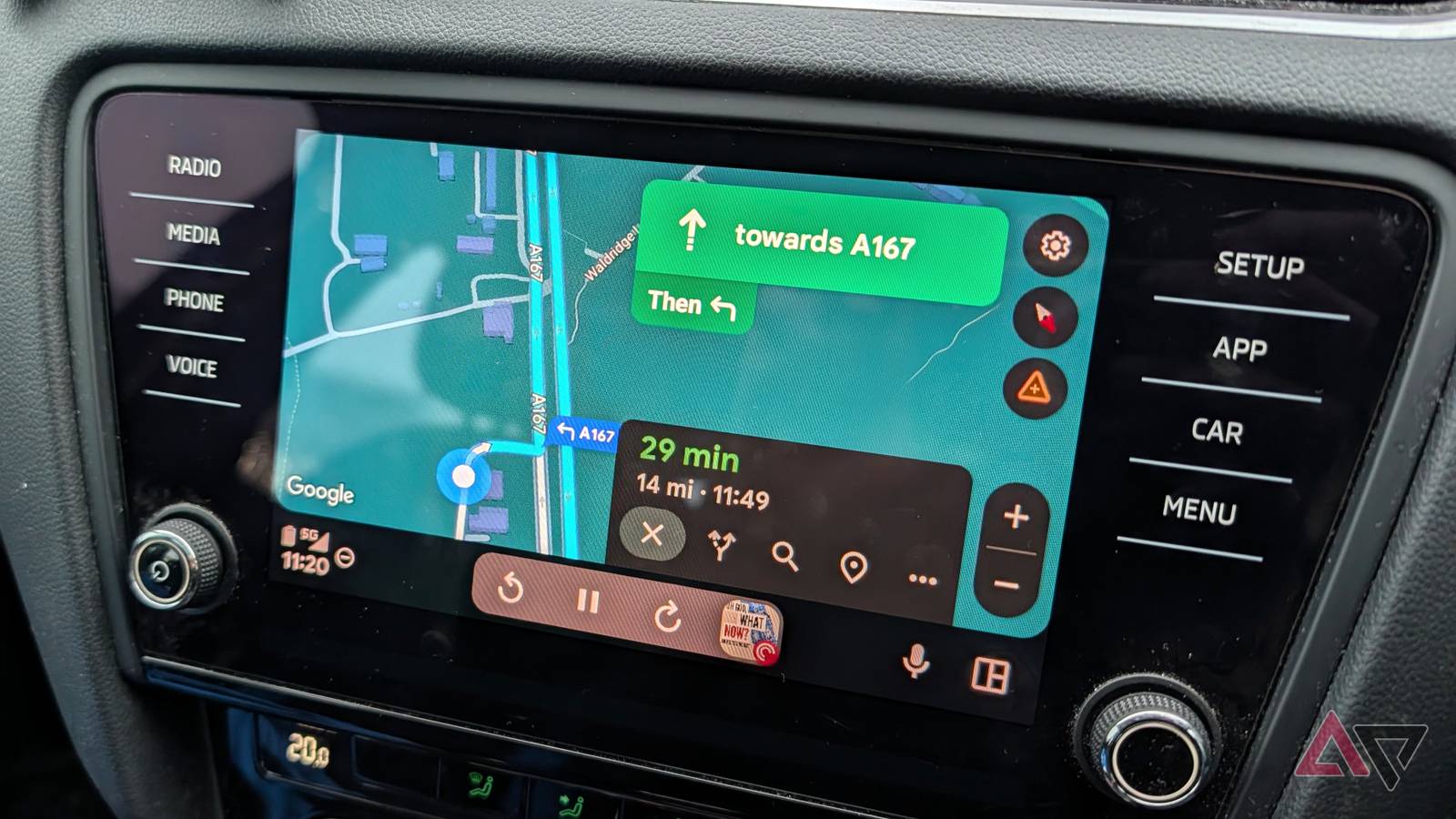
In an era defined by rapid technological advancement, it's often the grand, sweeping overhauls that capture headlines. Yet, sometimes, the most profound improvements stem from subtle refinements, meticulously crafted to enhance user experience without demanding a complete relearning curve. This philosophy appears to be at the heart of Google's latest updates to Google Maps for Android Auto, a platform that has quietly become indispensable for millions of drivers worldwide. While Google Maps itself boasts a venerable two-decade history, its evolution within the confines of a vehicle's dashboard presents unique challenges and opportunities, and these recent changes underscore Google's commitment to perfecting that delicate balance.
The Evolution of In-Car Navigation: A Brief History
Before diving into the specifics of the latest updates, it's crucial to appreciate the journey of in-car navigation. From rudimentary paper maps and printed directions to bulky, standalone GPS devices of the early 2000s, the path to today's integrated systems has been long and winding. Google Maps, initially launched in 2005, rapidly disrupted this landscape by offering a free, constantly updated, and globally comprehensive mapping solution. Its integration into smartphones transformed how people navigated, making turn-by-turn directions accessible to the masses. The advent of Android Auto and Apple CarPlay further revolutionized this by seamlessly extending the smartphone experience to the car's infotainment system, promising a safer, less distracting way to access essential apps like navigation, music, and communication.
However, this integration wasn't without its growing pains. Adapting a complex mobile application to a car's interface, with its inherent limitations in screen size, input methods, and the paramount need for driver focus, required continuous iteration. Early versions often felt like a direct port, sometimes overwhelming drivers with too much information or requiring too many taps. Over the years, Google has steadily refined this experience, but these latest updates signal a more mature understanding of the driver's cognitive load and the critical importance of glanceability.
Key Updates: Enhancing Glanceability and Control
The recent enhancements to Google Maps for Android Auto, though described as subtle, address fundamental aspects of in-car interaction. The core of these improvements revolves around making information more digestible at a glance and providing more intuitive control options. While specific details from the source are limited, general trends in such updates typically include:
* Improved Visual Clarity and Information Hierarchy: This often involves larger, bolder fonts for critical information (like the next turn), clearer iconography, and better contrast ratios. The goal is to reduce the time a driver spends interpreting visual cues, allowing them to keep their eyes on the road for longer. Think of it as optimizing the visual language for a high-speed, dynamic environment. * Smarter Route Overview and Lane Guidance: Updates frequently focus on making complex intersections or multi-lane highways easier to navigate. This could involve more prominent lane guidance indicators, a clearer display of upcoming turns, or even predictive lane suggestions that appear well in advance. The aim is to mitigate the stress of last-minute lane changes. * Enhanced Voice Command Integration: While not explicitly mentioned, subtle updates often go hand-in-hand with improved voice recognition and command processing. Reducing the need for physical interaction through more robust voice controls significantly boosts safety and convenience. * Customizable Layouts or Information Display: Giving drivers more control over what information is displayed and how it's prioritized can be a powerful refinement. For instance, allowing users to choose between a minimalist view and a more detailed one, depending on their familiarity with the route or driving conditions. * Better Integration with Vehicle Telemetry: As cars become more connected, future updates could leverage vehicle data (e.g., speed limits from the car's system, fuel levels) to provide more contextually relevant navigation advice, though this is often a deeper integration than a 'subtle update'.
The cumulative effect of these seemingly minor changes is a significant reduction in cognitive load. Drivers can process information faster, make decisions more confidently, and ultimately, focus more on the act of driving itself. This is not just about convenience; it's about safety.
The Psychology of In-Car Interfaces: Why 'Subtle' Matters
Designing for the automotive environment is a unique challenge. Unlike a smartphone or a desktop computer, where users can dedicate their full attention, an in-car interface must compete with the primary task of driving. This is where the concept of human-computer interaction (HCI) in automotive contexts becomes paramount. Researchers in this field emphasize:
* Minimizing Glance Time: The less time a driver spends looking away from the road, the safer the experience. Every millisecond counts. * Predictability and Consistency: Users should intuitively understand how the system works without extensive training. Consistent design patterns reduce mental effort. * Error Prevention and Forgiveness: Interfaces should be designed to prevent mistakes and allow for easy recovery if an error occurs. * Appropriate Information Density: Too much information is overwhelming; too little is unhelpful. The 'just right' amount varies by context.
Google's decision to focus on 'subtle refinements' suggests a deep understanding of these principles. Instead of introducing radical new features that might require drivers to adapt, they are honing the existing experience, making it more fluid and less demanding. This iterative approach, characteristic of mature software development, acknowledges that perfection often lies in the details.
Implications for Drivers and the Future of Navigation
For the everyday driver, these updates translate directly into a less stressful and potentially safer journey. Imagine approaching a complex interchange and instantly knowing which lane to be in, or quickly glancing at the screen to confirm your next turn without fumbling. These small victories accumulate, contributing to a more pleasant overall driving experience.
From a broader perspective, these refinements also highlight the ongoing trend towards proactive and predictive navigation. As AI and machine learning capabilities advance, we can expect Google Maps to become even more intelligent, anticipating driver needs and offering guidance before it's explicitly requested. This could include:
* Contextual routing: Adjusting routes based on real-time traffic, weather, but also personal preferences (e.g., avoiding left turns, preferring scenic routes). * Augmented reality overlays: Projecting navigation cues directly onto the windshield, further reducing the need to look down at a screen. * Seamless integration with smart city infrastructure: Receiving real-time updates on parking availability, traffic light timings, and public transport connections.
The future of in-car navigation is not just about getting from point A to point B; it's about creating a holistic, intelligent co-pilot that enhances safety, efficiency, and comfort. Google's commitment to refining the existing experience, rather than just adding new features, positions them well to lead this evolution. These 'small refinements' are, in fact, foundational steps towards a more intuitive and integrated driving future.
Conclusion: The Power of Iterative Perfection
In a world obsessed with the 'next big thing,' Google Maps' approach to Android Auto serves as a powerful reminder that sometimes, the most significant progress comes from continuous, thoughtful iteration. By focusing on the nuances of driver interaction and the critical need for glanceability and control, Google is not just updating an app; it's enhancing a fundamental aspect of modern mobility. These subtle changes, appreciated by drivers, are not merely cosmetic; they are strategic moves that improve safety, reduce stress, and pave the way for an even more intelligent and integrated in-car experience. As technology continues to weave itself into the fabric of our daily lives, it's these quiet, persistent efforts to perfect the familiar that truly make a difference.
Stay Informed
Get the world's most important stories delivered to your inbox.
No spam, unsubscribe anytime.
Comments
No comments yet. Be the first to share your thoughts!