Gulf on Edge: Iran's Drone Barrage Escalates Regional Tensions After US Threats
Tensions in the Persian Gulf have dramatically escalated following a fresh wave of Iranian drone attacks targeting Qatar, the UAE, and Kuwait, with a cargo vessel reportedly hit in Qatari waters. These strikes come swiftly after explicit threats from Tehran against US bases and "enemy ships" in the region. The incidents underscore a dangerous new phase in the long-standing geopolitical friction, raising alarms about potential wider conflict and disrupting vital global shipping lanes. Regional and international powers are now closely monitoring the volatile situation, bracing for potential repercussions.
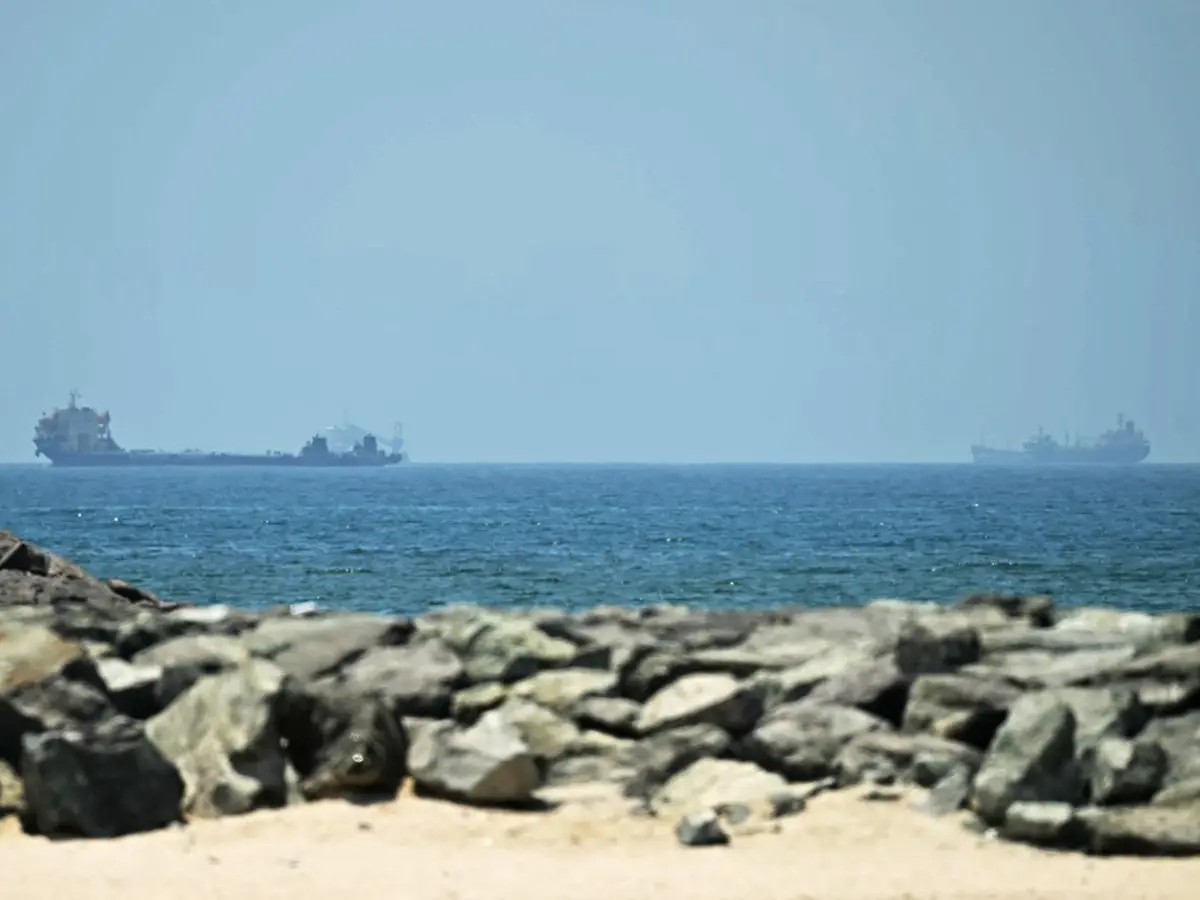
The tranquil blue waters of the Persian Gulf, a critical artery for global commerce and energy, are once again roiling with geopolitical tension. On a recent Sunday, the region was jolted by a fresh, audacious wave of drone attacks launched by Iran, targeting not only strategic maritime routes but also the sovereign territories of Qatar, the United Arab Emirates, and Kuwait. The audacious strikes, which included a direct hit on a cargo vessel in Qatari waters, followed closely on the heels of stark warnings from Tehran, explicitly threatening US bases and "enemy ships" operating in the Gulf. This latest escalation marks a perilous new chapter in the intricate and often volatile relationship between Iran and its regional adversaries, compounded by the enduring presence and interests of global powers.
The implications of these coordinated attacks are profound, sending ripples of concern through international capitals and global markets. The targeting of commercial shipping in the Strait of Hormuz, a choke point through which a significant portion of the world's oil supply passes, directly threatens economic stability. Simultaneously, the direct targeting of Gulf states signals a widening of the conflict's scope, moving beyond proxy warfare to direct engagement that risks drawing in more actors. As the international community grapples with the fallout, the immediate focus is on de-escalation, though the path to stability remains fraught with historical grievances and contemporary power struggles.
A Pattern of Provocation: Iran's Evolving Strategy
Iran's recent drone attacks are not isolated incidents but rather fit into a discernible pattern of escalating assertiveness, particularly following periods of perceived external pressure or internal instability. For years, Tehran has been developing a sophisticated arsenal of unmanned aerial vehicles (UAVs), ranging from reconnaissance drones to kamikaze-style attack drones capable of carrying payloads. These drones have been deployed with increasing frequency by Iran and its proxies across the Middle East, from Yemen to Iraq and Lebanon, often targeting Saudi Arabian oil facilities or Israeli interests.
What distinguishes this latest series of attacks is their directness and breadth. Targeting multiple Gulf states simultaneously, and explicitly threatening US assets, suggests a deliberate and calculated shift in strategy. "This isn't just about sending a message; it's about demonstrating capability and resolve," explains Dr. Sarah Al-Mansoori, a senior analyst at the Gulf Security Institute. "Iran is showcasing its ability to project power across the Gulf, challenging the traditional security architecture dominated by the US and its allies." The choice of drones as the primary weapon system is also strategic: they are relatively inexpensive to produce, difficult to detect, and offer a degree of plausible deniability, though the provenance of these attacks is rarely truly ambiguous.
Historically, Iran has viewed the Persian Gulf as its backyard, asserting its right to influence regional security dynamics. The 1980-1988 Iran-Iraq War, which saw significant naval engagements and attacks on shipping, deeply ingrained in Iranian strategic thinking the importance of maritime control and the ability to disrupt enemy supply lines. More recently, the collapse of the Joint Comprehensive Plan of Action (JCPOA), or the Iran nuclear deal, and subsequent re-imposition of crippling US sanctions, have fueled a sense of grievance and a determination to resist what Tehran perceives as economic warfare. These attacks can thus be seen as a direct response, a form of asymmetrical retaliation designed to inflict economic pain and political pressure on its adversaries.
The Geopolitical Chessboard: Regional and International Implications
The immediate aftermath of these attacks has seen a flurry of diplomatic activity and heightened military readiness. Qatar, the UAE, and Kuwait, while condemning the attacks, are also navigating a complex web of alliances and rivalries. Their security is intrinsically linked to the stability of the Gulf, and any escalation threatens their economic prosperity and social cohesion. The UAE, for instance, has invested heavily in diversifying its economy beyond oil, making stability paramount for attracting foreign investment and tourism. Kuwait, historically a mediator in regional disputes, now finds itself directly targeted, complicating its diplomatic posture.
The United States, with its significant military presence in the region, including naval bases and airfields, finds itself in a precarious position. The threats against US bases are a direct challenge to American deterrence. "The US faces a dilemma," notes Professor Mark Jenkins, a Middle East security expert at Georgetown University. "Respond too forcefully, and risk a wider conflict; respond too weakly, and embolden Iran further." The Biden administration's approach has generally favored diplomacy over direct confrontation, but these attacks test the limits of that strategy. The potential for miscalculation remains high, especially in a region where multiple state and non-state actors operate with varying agendas.
Beyond the immediate actors, the ripple effects extend globally. China, a major importer of Gulf oil, and European nations, keen on preserving the remnants of the nuclear deal, have vested interests in de-escalation. Any prolonged disruption to shipping in the Strait of Hormuz would send oil prices soaring, impacting global economies already grappling with inflation and supply chain issues. The attacks also serve as a stark reminder of the proliferation of drone technology and its potential to destabilize regions even without conventional military might. The Houthis in Yemen, supported by Iran, have repeatedly demonstrated this capability against Saudi Arabia, and now Iran itself is directly employing it against other Gulf states.
Economic Vulnerabilities and the Human Cost
The economic fallout from such instability is immediate and severe. Insurance premiums for shipping through the Gulf skyrocket, increasing the cost of goods and impacting global trade. Foreign investment, crucial for the diversification efforts of Gulf economies, becomes riskier. The attacks on cargo vessels, even if not catastrophic, create an atmosphere of fear and uncertainty that deters maritime traffic and disrupts supply chains. For nations like Qatar, a major exporter of liquefied natural gas (LNG), secure shipping lanes are non-negotiable for its economic lifeline.
While the immediate human cost of these specific drone attacks has not been widely reported as severe in terms of casualties, the broader human cost of regional instability is undeniable. Millions of people live in the Gulf states, their lives intertwined with the region's economic health and political stability. Escalation could lead to displacement, economic hardship, and a general decline in human security. The psychological toll of living under the constant threat of attack, whether from drones or missiles, cannot be overstated. Furthermore, the diversion of resources towards military expenditure, away from social services and economic development, represents a long-term drain on human potential.
A Precarious Future: The Path Forward
The recent drone attacks by Iran represent a dangerous intensification of regional tensions, pushing the Gulf closer to the precipice of a wider conflict. The international community's challenge is immense: how to de-escalate without appearing weak, how to deter future aggression without provoking an all-out war, and how to address the underlying grievances that fuel such actions. Dialogue, however difficult, remains the most viable path forward, potentially involving a renewed effort to revive the nuclear deal or establish a broader regional security framework that includes all stakeholders.
For PulseWorld readers, understanding this intricate geopolitical dance is crucial. The stability of the Gulf affects global energy prices, trade routes, and the broader international order. The coming weeks will be critical as regional powers and international actors weigh their responses. The stakes are incredibly high, and the world watches with bated breath to see if diplomacy can triumph over the drumbeat of war, or if the Gulf will once again be consumed by the flames of conflict. The future of global energy security, and indeed regional peace, hangs precariously in the balance, a testament to the enduring volatility of this pivotal part of the world.
Stay Informed
Get the world's most important stories delivered to your inbox.
No spam, unsubscribe anytime.
Comments
No comments yet. Be the first to share your thoughts!