Hisense's Micro LED Vision: A Glimpse into Television's Dazzling Future
Hisense recently showcased its groundbreaking Micro LED TV at a luxury London retailer, offering a tantalizing look at what many consider the true next frontier in display technology. While the price tag remains astronomical, this demonstration signals a pivotal moment, hinting at a future where unparalleled brightness, contrast, and color accuracy could redefine home entertainment. This article explores Micro LED's potential, its current challenges, and what Hisense's bold move means for the industry and consumers.
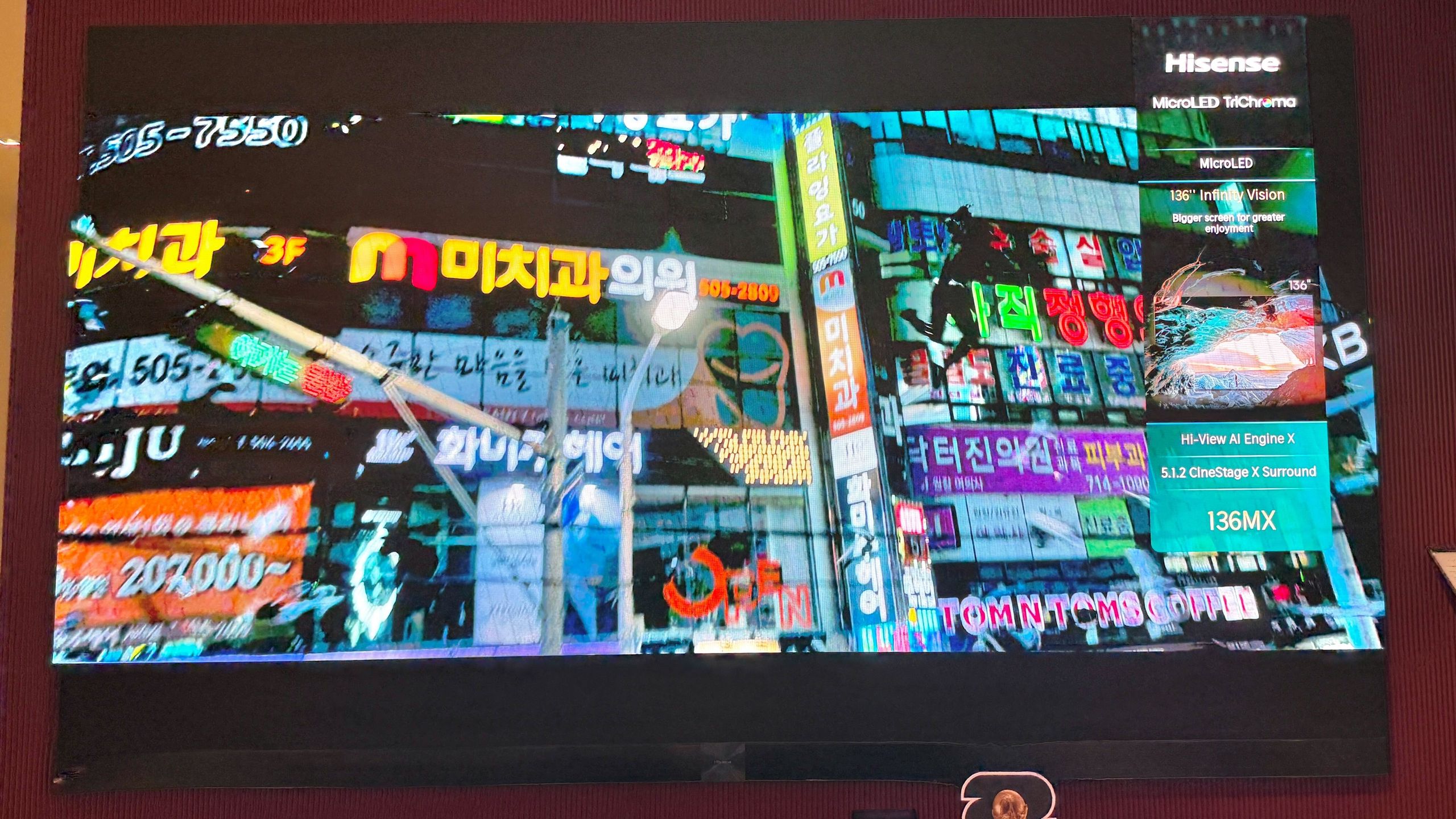
In an era saturated with incremental advancements in display technology – from Micro Lens Array OLED to RGB Mini LED – it's easy to lose sight of the truly revolutionary. Yet, a recent demonstration by Hisense, showcasing its flagship Micro LED television at a high-end London retail space, has cut through the noise, offering a dazzling glimpse into what many industry experts believe is the undisputed future of television. This wasn't just another TV; it was a statement, a bold declaration that Micro LED, despite its nascent stage and prohibitive cost, is here to stay and promises to redefine our visual experiences.
Micro LED represents a paradigm shift, moving away from traditional backlighting or organic emissive layers. Instead, it utilizes millions of microscopic, self-emissive inorganic LEDs, each capable of producing its own light and color. Imagine a display where every single pixel is its own light source, offering perfect blacks, infinite contrast, and unparalleled brightness without the risk of burn-in or the limitations of viewing angles. This is the promise of Micro LED, and Hisense's showcase, even if primarily a proof-of-concept for the ultra-luxury market, underscores the immense potential waiting to be unleashed.
The Technical Marvel of Micro LED
At its core, Micro LED technology is a miniaturized version of the large LED displays seen in sports arenas and concert venues. However, the challenge lies in scaling this down to consumer TV sizes, where pixels are measured in micrometers. Each sub-pixel (red, green, and blue) is an individual inorganic LED, meaning it doesn't degrade over time like organic materials in OLEDs. This inherent stability contributes to a longer lifespan and consistent performance.
Key technical advantages include: * Perfect Blacks and Infinite Contrast: Since each pixel can be individually turned off, Micro LED achieves true black levels, leading to an infinite contrast ratio, similar to OLED but with significantly higher peak brightness. * Exceptional Brightness: Unlike OLEDs, which have brightness limitations due to organic materials, Micro LEDs can achieve extremely high brightness levels, making them ideal for HDR content and well-lit environments. * Wider Color Volume: The inorganic nature of the LEDs allows for a broader and more accurate color reproduction across all brightness levels. * No Burn-in Risk: As inorganic LEDs, they are immune to the burn-in issues that can affect OLED panels, offering peace of mind for users who display static content for extended periods. * Modularity and Scalability: Micro LED displays are often constructed from smaller, seamless modules, allowing for custom sizes and aspect ratios, from massive home theater screens to unconventional commercial installations.
Hisense's demonstration highlighted these attributes, presenting an image quality that was reportedly breathtaking, combining the best aspects of OLED's contrast with the sheer luminosity of the best LCDs. This blend of characteristics positions Micro LED as a truly aspirational display technology, capable of delivering an immersive visual experience unlike any other.
The Roadblocks: Cost and Production Challenges
Despite its dazzling potential, Micro LED faces significant hurdles, primarily its astronomical cost and complex manufacturing process. The Hisense TV on display, for instance, carried a price tag that would make even the most affluent consumers pause. This is largely due to the intricate process of 'mass transferring' millions of microscopic LEDs onto a substrate with extreme precision. Imagine placing millions of tiny grains of sand onto a canvas, each in its exact position, without error – that's the scale of the challenge.
Historically, early adopters of cutting-edge display technologies have always paid a premium. Think back to the first plasma TVs or early large-screen LCDs. However, Micro LED's initial price point is in a league of its own, far exceeding even the most expensive consumer OLEDs. This suggests that widespread adoption is still years, if not a decade, away. Companies like Hisense, Samsung, and LG are investing heavily in research and development to refine the mass transfer process, improve yield rates, and reduce production costs.
Furthermore, the sheer power consumption of these early, large-format Micro LED displays can be considerable, although advancements in efficiency are constantly being made. The infrastructure required to support such a display – from installation to calibration – also adds to the overall complexity and cost.
Hisense's Strategic Play and Industry Implications
Hisense's decision to showcase its Micro LED TV at a luxury retailer is a shrewd strategic move. It positions the brand not just as a competitor in the mainstream TV market, but as an innovator at the cutting edge of display technology. By targeting the ultra-high-end segment first, Hisense can:
* Establish Brand Prestige: Associate itself with premium, future-proof technology, elevating its brand image globally. * Gather Real-World Feedback: Gain insights from discerning, affluent customers who are willing to invest in new technologies. * Drive R&D Investment: Justify continued investment in Micro LED development, knowing there's a market, however niche, for such products. * Signal Future Intent: Send a clear message to competitors and consumers that it is serious about leading the next generation of display technology.
This move also has broader implications for the industry. It intensifies the race among major manufacturers to perfect Micro LED. While Samsung has been a prominent player with its 'The Wall' series, Hisense's public demonstration suggests that competition is heating up. This rivalry is ultimately beneficial for consumers, as it drives innovation and, eventually, cost reduction.
The Future is Bright, but Distant
The dazzling display by Hisense serves as a powerful reminder of Micro LED's immense potential. It offers a vision of television that transcends current limitations, promising an unparalleled viewing experience. However, it's crucial to temper excitement with realism. For the average consumer, Micro LED remains a distant dream, a technology that will likely take years to trickle down to more affordable price points.
In the interim, technologies like Mini LED LCDs and advanced OLEDs will continue to dominate the premium market, offering excellent performance at increasingly competitive prices. Yet, the seeds of the future have been sown. As manufacturing processes mature, yields improve, and economies of scale take effect, Micro LED will gradually become more accessible. When it does, it will not just be another TV; it will be a window into a new dimension of visual reality, forever changing how we experience content. Hisense's bold showcase is not just about a TV; it's about the future of sight itself.
Stay Informed
Get the world's most important stories delivered to your inbox.
No spam, unsubscribe anytime.
Comments
No comments yet. Be the first to share your thoughts!