Linux: The Unsung Hero Resurrecting Your Aging Gaming PC Amidst Hardware Scarcity
In an era of soaring hardware costs and supply chain woes, many gamers find their older PCs struggling to keep up. This article explores how Linux, often overlooked, is emerging as the premier operating system for extending the life and gaming performance of aging hardware. Discover how its efficiency, open-source nature, and growing game compatibility offer a compelling alternative to Windows' increasing demands, providing a sustainable path for budget-conscious gamers.
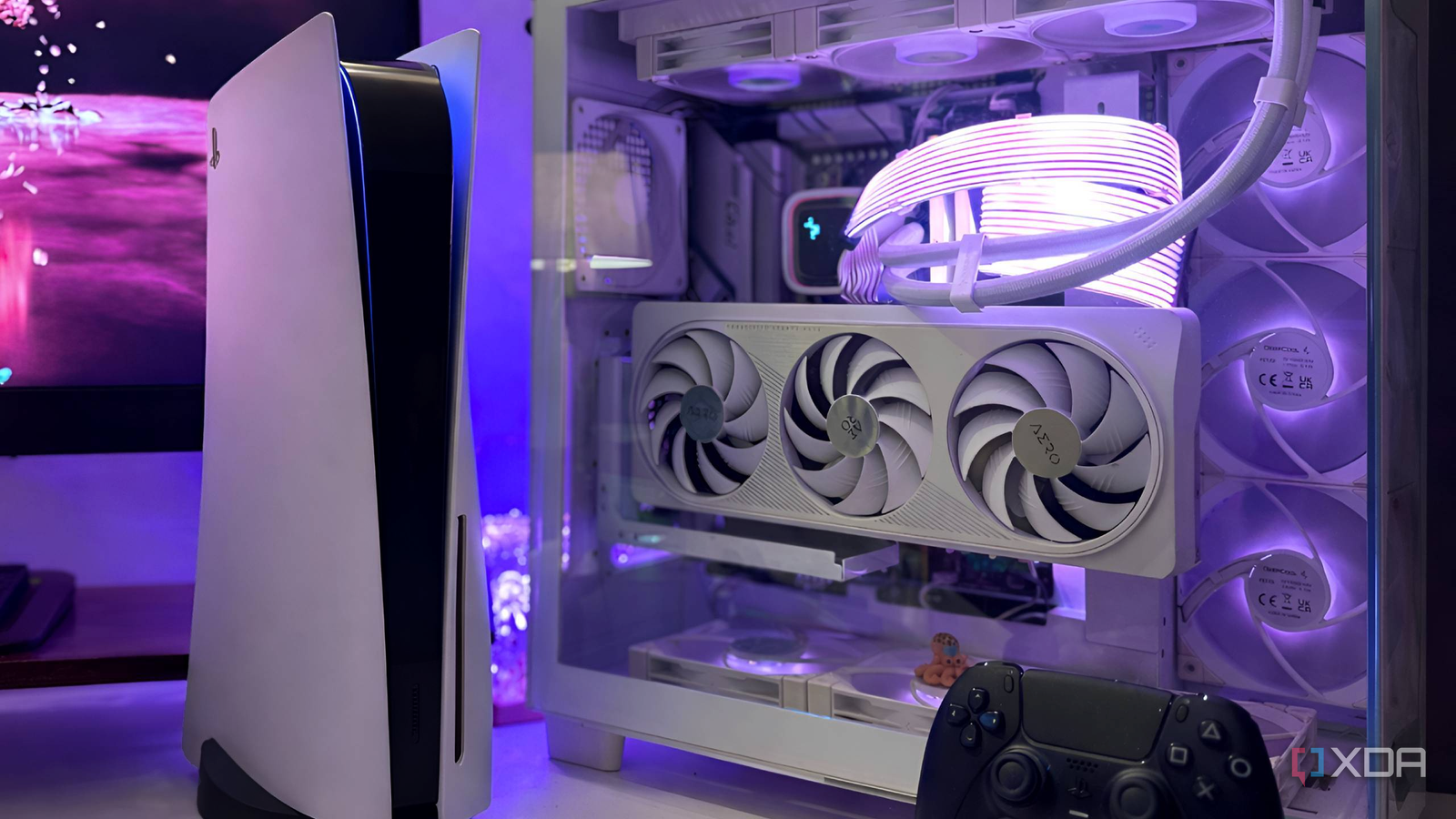
The digital world is in a perpetual state of flux, with technological advancements pushing the boundaries of what's possible at an ever-accelerating pace. Yet, amidst this relentless march forward, a significant challenge has emerged for consumers: the escalating cost and scarcity of computer hardware. From graphics cards to RAM modules, the market has seen unprecedented price hikes and supply chain disruptions, making upgrades a luxury rather than a given. In this landscape, many gamers are left contemplating the fate of their older machines, wondering if their years-old PC still has any fight left. While Windows, the dominant gaming OS, often demands the latest and greatest, an alternative operating system is quietly proving itself to be the true champion of longevity and efficiency: Linux.
The Hardware Conundrum: Why Your Old PC Feels Slow
For years, the cycle was predictable: a new generation of games arrived, demanding more powerful hardware, and gamers would dutifully upgrade. However, the current economic climate, coupled with chip shortages and cryptocurrency mining booms, has shattered this rhythm. A mid-range graphics card that once cost a few hundred dollars now commands exorbitant prices, if it's even available. This 'hardware crisis' has forced a re-evaluation of our relationship with technology. Your existing PC, which might have felt sluggish under Windows 10 or 11, isn't necessarily obsolete; it's often burdened by an operating system designed with an expectation of modern, abundant resources.
Microsoft's Windows, despite its ubiquity, has grown increasingly resource-intensive. Each new iteration brings with it more background processes, telemetry, and system overhead, all of which consume precious RAM, CPU cycles, and storage I/O. This bloat disproportionately affects older hardware, turning what was once a capable gaming rig into a stuttering mess. The result is a frustrating experience where games that should theoretically run well are hampered not by their own demands, but by the OS itself. This is where the lean, mean, and highly customizable world of Linux steps in, offering a breath of fresh air for struggling systems.
Linux's Efficiency: A New Lease on Life for Old Components
The fundamental difference between Linux and Windows, particularly concerning hardware utilization, lies in their architectural philosophies. Linux distributions (or 'distros') are renowned for their lightweight nature and efficiency. Unlike Windows, which bundles a vast array of services and applications by default, Linux allows users to install only what they need. This modularity means:
* Lower RAM Footprint: Many Linux distros can run comfortably on as little as 2GB or 4GB of RAM, leaving more memory free for games. Windows 10/11 often consumes 4GB-8GB just for the OS itself. * Reduced CPU Overhead: Fewer background processes translate to more CPU cycles dedicated to gaming, leading to smoother frame rates and less stuttering. * Optimized Storage I/O: Linux's file systems and kernel are often more efficient in handling disk operations, which can significantly improve loading times and overall system responsiveness, especially on older SATA SSDs or even HDDs. * Customization: Users can choose from a plethora of desktop environments (GNOME, KDE Plasma, XFCE, LXQt, etc.), each with varying resource demands, allowing them to tailor the OS precisely to their hardware's capabilities.
This inherent efficiency isn't just theoretical; it translates directly into tangible performance gains in games. Benchmarks often show Linux outperforming Windows on older hardware, simply because the OS itself is not bottlenecking the system as much. For a gamer clinging to an older Intel i5 or an AMD FX processor paired with a mid-range GPU from a few generations ago, switching to a well-optimized Linux distro can feel like a significant upgrade without spending a single dollar on new components.
The Gaming Landscape on Linux: From Niche to Mainstream
Historically, gaming on Linux was a niche pursuit, plagued by compatibility issues, driver problems, and a limited game library. However, the past few years have witnessed a paradigm shift, largely driven by Valve's significant investments in the Linux gaming ecosystem. Key developments include:
* Proton: Valve's compatibility layer, built upon Wine, allows Windows-exclusive games to run on Linux with remarkable performance. ProtonDB, a community-driven database, rates the compatibility of thousands of games, with many achieving 'Platinum' (flawless) or 'Gold' (minor tweaks) status. * Steam Deck: The success of Valve's handheld gaming PC, which runs on SteamOS (a Linux distribution), has further propelled Linux gaming into the mainstream. Developers are now more incentivized to ensure their games run well on Linux, knowing there's a growing market. * Improved Driver Support: Graphics card manufacturers (NVIDIA, AMD, Intel) have significantly improved their Linux driver support, offering more stable and performant options for gamers. * Native Linux Games: While still a smaller portion, more and more games are being released with native Linux clients, offering optimal performance without compatibility layers.
This evolution means that the vast majority of popular games, from AAA titles to indie darlings, are now playable on Linux. While some anti-cheat systems still pose challenges, the overall experience is light years ahead of where it was even five years ago. For gamers looking to squeeze every last frame out of their aging hardware, the robust and ever-improving Linux gaming stack is an undeniable advantage.
Beyond Gaming: A Sustainable Computing Philosophy
The benefits of embracing Linux extend beyond just gaming. In a world increasingly concerned with environmental sustainability and digital equity, Linux offers a compelling model for responsible computing. By extending the lifespan of hardware, it reduces electronic waste and the demand for new manufacturing, which has a significant carbon footprint. For individuals and institutions in developing nations, or those simply on a tight budget, Linux provides a powerful, free, and open-source operating system that can transform an otherwise discarded machine into a productive tool.
Furthermore, the open-source nature of Linux fosters a vibrant community of developers and users. This collaborative environment ensures continuous improvement, security updates, and a wealth of free software alternatives for almost any task. From office suites to video editing tools, the Linux ecosystem provides robust solutions without the recurring costs associated with proprietary software. This holistic approach makes Linux not just a gaming solution, but a philosophical choice for a more sustainable and accessible digital future.
Conclusion: Linux, The Future of Retro Gaming and Beyond
The current hardware crisis has inadvertently highlighted a profound truth: software optimization and efficiency are just as crucial as raw processing power. In this challenging environment, Linux stands out as the ultimate ally for aging gaming hardware. It offers a pathway to not only continue enjoying modern games but to do so with improved performance and stability on machines that Windows might have long since deemed obsolete.
As hardware prices remain elevated and the push for sustainability grows, the appeal of Linux will only intensify. It's more than just an operating system; it's a statement against planned obsolescence, a testament to the power of open-source collaboration, and a beacon of hope for gamers and users worldwide who wish to make their technology last longer and perform better. For those willing to embark on a small learning curve, the rewards are immense: a faster, more stable, and more sustainable computing experience that respects both your wallet and the planet. The era of Linux as the premier platform for maximizing hardware longevity has truly arrived, proving that old dogs can indeed learn new tricks, especially when powered by the right OS.
Stay Informed
Get the world's most important stories delivered to your inbox.
No spam, unsubscribe anytime.
Comments
No comments yet. Be the first to share your thoughts!