India's 'Ferrari' Market: Raamdeo Agrawal Predicts Sensex at 3 Lakh by 2036 Amidst Global Shifts
Motilal Oswal Financial Services Chairman Raamdeo Agrawal has boldly predicted the Sensex could reach 300,000 by 2036, positioning India as the 'Ferrari' among global markets. Speaking at the Groww India Investor Festival 2026, Agrawal highlighted India's robust compounding story, increasing financialization, and potential for multi-bagger stocks. This optimistic outlook comes despite prevailing global uncertainties and the transformative impact of AI, underscoring India's unique position for long-term wealth creation.
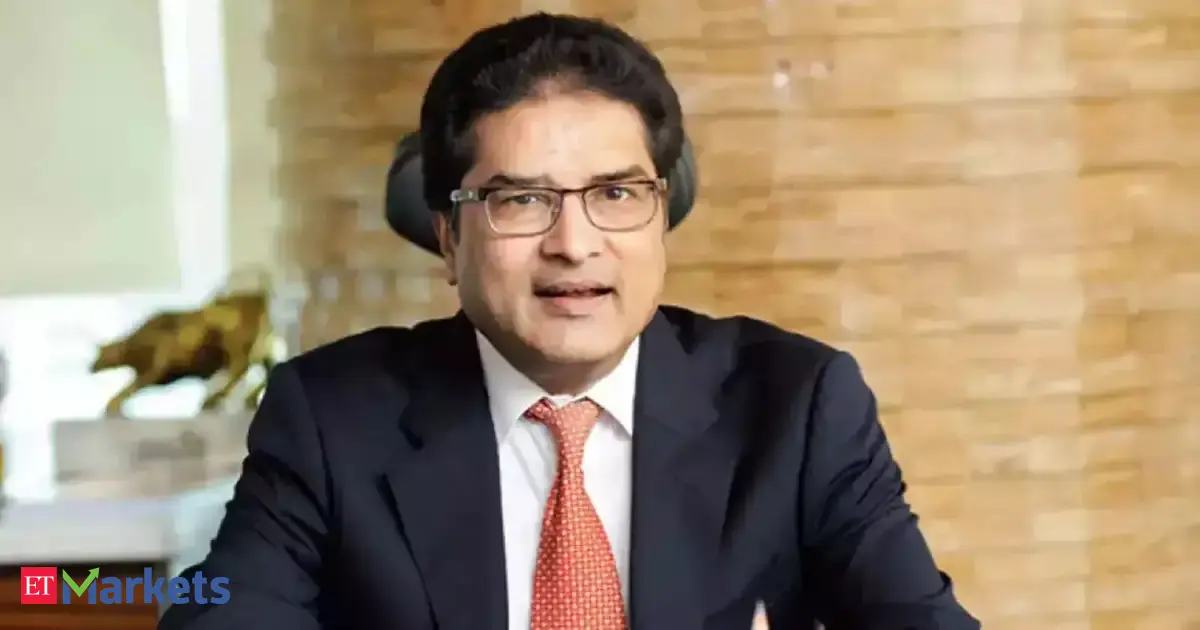
In an era defined by geopolitical turbulence, technological disruption, and economic volatility, a beacon of optimism shines brightly from the East. Raamdeo Agrawal, the astute Chairman of Motilal Oswal Financial Services, has made a resounding declaration that has sent ripples through the global investment community: India's benchmark Sensex could soar to an astonishing 300,000 by 2036. Agrawal, a revered figure in Indian finance, didn't just offer a number; he painted a vivid picture of India as the 'Ferrari' among global markets, a high-performance engine poised for unparalleled long-term wealth creation, even amidst the transformative shifts brought by artificial intelligence and lingering global uncertainties. His pronouncements at the Groww India Investor Festival 2026 have ignited conversations about India's enduring economic narrative and its potential to defy conventional wisdom.
The Unstoppable Compounding Story: India's Economic Engine
Agrawal's conviction stems from what he describes as India's 'unstoppable compounding story'. This isn't merely about short-term gains but a sustained, multi-decade trajectory of growth fueled by fundamental demographic and economic shifts. India, with its vast and young population, represents a colossal consumer base and a rapidly expanding workforce. This demographic dividend, unlike many aging Western economies, provides a powerful tailwind for domestic consumption and production. The nation's GDP growth, consistently among the fastest globally, is a testament to this inherent dynamism. Even as global growth projections are frequently revised downwards, India has often managed to surprise on the upside, demonstrating resilience and an intrinsic growth momentum.
Historically, India's economic journey has been one of gradual liberalization and increasing integration into the global economy. From the economic reforms of the early 1990s to the digital revolution of the 21st century, the country has steadily built a foundation for sustained expansion. This long-term perspective is crucial for understanding Agrawal's 2036 Sensex target. It's not a speculative bet but an extrapolation of deep-seated trends: a burgeoning middle class, increasing disposable incomes, and a government committed to infrastructure development and ease of doing business. The 'India story' is, at its core, a narrative of aspiration and opportunity on an unprecedented scale.
Financialization and the Rise of the Retail Investor
Another critical pillar supporting Agrawal's bullish outlook is the accelerating financialization of Indian savings. Traditionally, Indian households have had a strong preference for physical assets like gold and real estate. However, over the past decade, there's been a noticeable shift towards financial assets, including equities, mutual funds, and insurance. This trend is being driven by several factors:
* Increased Awareness: Financial literacy initiatives and the proliferation of investment platforms have made equity markets more accessible and understandable to the common person. * Digital Transformation: Fintech innovations have democratized investing, allowing individuals from smaller towns and cities to participate in the stock market with ease. * Formalization of Economy: Measures like demonetization and the Goods and Services Tax (GST) have pushed more economic activity into the formal sector, leading to greater transparency and trust in financial institutions. * Attractive Returns: The sustained outperformance of Indian equities compared to other asset classes has naturally drawn more investors.
This influx of domestic capital provides a robust and stable base for the stock market, reducing its vulnerability to foreign institutional investor outflows. The rise of the retail investor is a game-changer, transforming the market from one dominated by institutional players to a more diversified and resilient ecosystem. Agrawal believes this trend is still in its early stages, promising many more years of capital flowing into productive assets.
The Hunt for Multibaggers: Identifying Future Giants
For investors, the allure of the Indian market lies not just in broad index growth but in the potential to unearth multibagger stocks – companies whose share prices multiply many times over. Agrawal, a seasoned investor known for his deep fundamental analysis, emphasized that India's diverse and dynamic economy is a fertile ground for identifying such opportunities. Sectors like technology, consumer discretionary, financials, and manufacturing are brimming with companies poised for exponential growth.
Key characteristics of potential multibaggers in India often include:
* Strong Management: Visionary leadership with a proven track record. * Sustainable Competitive Advantage: Moats that protect businesses from competition. * Large Addressable Market: Companies operating in sectors with significant growth potential. * Scalable Business Models: The ability to expand operations efficiently. * Healthy Balance Sheets: Low debt and strong cash flows.
He highlighted that India's entrepreneurial spirit, coupled with a vast domestic market, allows innovative companies to scale rapidly. The focus on 'quality and growth at a reasonable price' remains paramount for long-term investors aiming to capitalize on India's structural growth story. The ongoing digital transformation across industries further creates new avenues for disruptive businesses to emerge and thrive, offering fertile ground for identifying tomorrow's market leaders.
Navigating Global Headwinds and AI's Impact
Agrawal's optimistic forecast is particularly noteworthy given the backdrop of significant global uncertainties. From geopolitical tensions and supply chain disruptions to inflationary pressures and interest rate hikes, the world economy faces numerous headwinds. Yet, India's domestic-consumption-driven model provides a degree of insulation from these external shocks. While not entirely immune, its reliance on internal demand makes it less susceptible to global trade fluctuations compared to export-oriented economies.
Furthermore, the advent of Artificial Intelligence (AI) is reshaping industries worldwide. While some view AI as a threat to jobs and traditional business models, Agrawal sees it as a powerful enabler for India. The country's strong IT services sector and growing pool of skilled engineers position it well to leverage AI for productivity gains and innovation. AI can enhance efficiency, reduce costs, and open up new markets for Indian businesses, further accelerating the growth trajectory. The integration of AI into various sectors, from healthcare to finance, will create new demand and foster an ecosystem of innovation that can drive the next wave of economic expansion.
The Road Ahead: A Vision for 2036
Raamdeo Agrawal's prediction of a 300,000 Sensex by 2036 is more than just a number; it's a powerful affirmation of India's long-term economic potential. It underscores a belief in the nation's ability to navigate challenges, harness demographic advantages, and embrace technological advancements to create enduring wealth. For investors, this vision calls for a strategic, long-term approach, focusing on quality businesses and staying invested through market cycles.
As India continues its journey towards becoming a developed economy, the compounding effect of its growth story, coupled with increasing financialization and the emergence of new-age businesses, positions its equity markets for significant appreciation. While the path will undoubtedly have its share of volatility, the underlying fundamentals suggest that India is indeed a 'Ferrari' – not just in terms of speed, but also in its robust engineering and capacity for sustained, powerful performance on the global economic stage. The next decade promises to be a transformative period, and those who align with India's growth story may well reap substantial rewards.
Stay Informed
Get the world's most important stories delivered to your inbox.
No spam, unsubscribe anytime.
Comments
No comments yet. Be the first to share your thoughts!