India's LPG Price Surge: Congress Labels PM Modi 'Inflation Man' Amid Economic Strain
India's political landscape is heating up as the Congress party sharply criticizes Prime Minister Narendra Modi's government over a steep hike in commercial LPG cylinder prices. Accusing the administration of burdening small businesses and fueling inflation, the opposition has dubbed Modi the 'inflation man'. This development sparks a broader debate on economic policy, household budgets, and the upcoming electoral cycle, raising concerns about the ripple effect on the nation's economy.
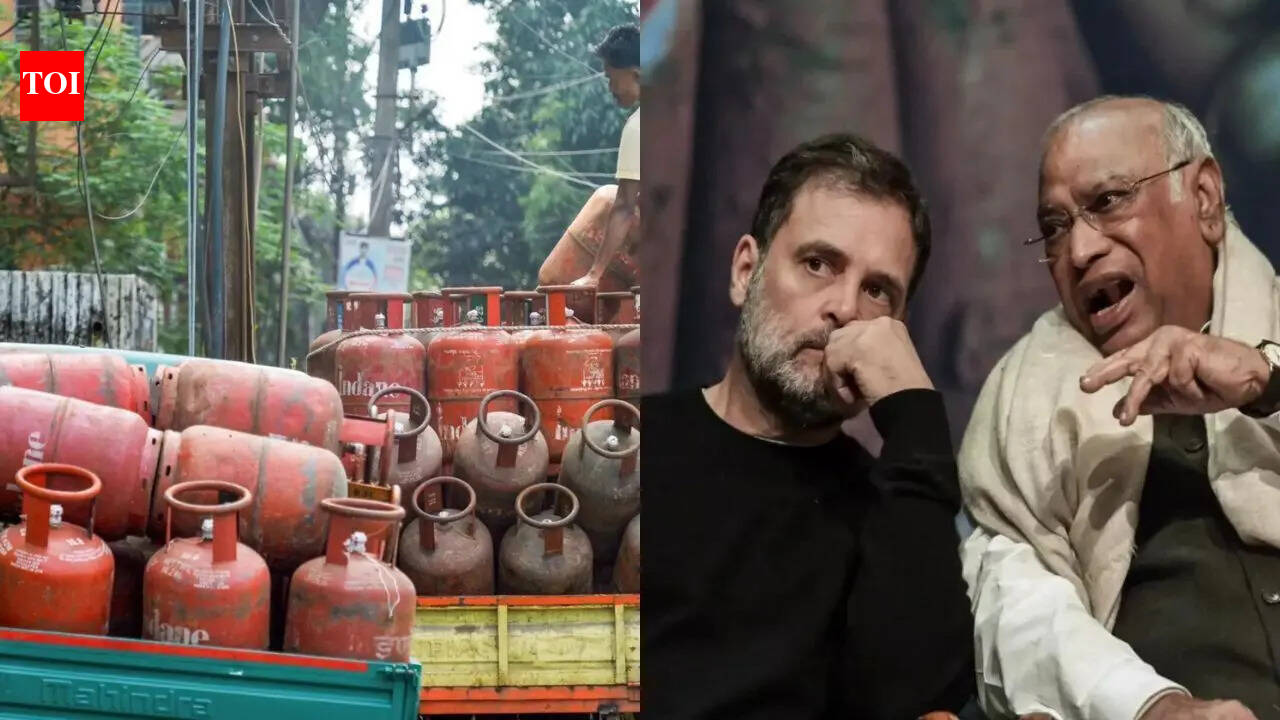
In a dramatic escalation of political rhetoric, India's principal opposition party, Congress, has launched a scathing attack on Prime Minister Narendra Modi, branding him the 'inflation man' following a significant hike in the price of commercial Liquefied Petroleum Gas (LPG) cylinders. The move, which saw a nearly 1000-rupee increase, has ignited a fierce debate about the government's economic policies, the plight of small and medium-sized enterprises (SMEs), and the broader cost of living crisis gripping the nation.
This latest price surge, affecting a vital commodity for countless businesses, from roadside eateries to large-scale industrial units, has not only drawn the ire of political opponents but also sparked widespread concern among the general populace. The Congress party alleges a consistent pattern of price increases under the current administration, arguing that such decisions disproportionately impact the most vulnerable sections of society and undermine the economic stability of small entrepreneurs who are the backbone of India's informal economy.
The Unfolding Crisis: Commercial LPG at a Premium
The recent hike, which pushed the price of a 19-kg commercial LPG cylinder close to the 2,000-rupee mark in major cities like Delhi, represents a substantial financial burden for businesses already grappling with post-pandemic recovery and global economic headwinds. For many small restaurants, tea stalls, and catering services, LPG is an indispensable energy source. An increase of this magnitude directly translates into higher operational costs, which are invariably passed on to consumers, further fueling the inflationary spiral. Economists point out that while the government often cites global crude oil prices as a justification for fuel hikes, the domestic pricing mechanism for LPG, especially commercial cylinders, often lacks transparency and appears to be influenced by fiscal considerations rather than purely market dynamics.
Historically, fuel prices, particularly LPG and petrol/diesel, have been a politically sensitive issue in India. Governments across decades have faced public backlash over hikes, often leading to protests and electoral consequences. The Modi government, which came to power partly on a promise of 'good governance' and economic stability, is now facing intense scrutiny over its handling of inflation. Critics argue that while the government has taken some measures to alleviate the burden on domestic LPG users through subsidies, commercial users have largely been left to fend for themselves, despite their crucial role in employment generation and economic activity.
Congress's Offensive: A Political Strategy?
The Congress party's decision to directly target Prime Minister Modi with the 'inflation man' moniker is a calculated political move. It aims to personalize the issue, making it a direct indictment of the Prime Minister's leadership and economic stewardship. Senior Congress leaders have been vocal, holding press conferences and issuing statements condemning the hike, highlighting its potential to cripple small businesses and exacerbate household budgets. They argue that the government's focus on large corporations and infrastructure projects has come at the expense of the common man and small entrepreneurs.
“This government, under Narendra Modi, has consistently shown a callous disregard for the struggles of ordinary Indians,” stated a prominent Congress spokesperson. “Every few months, we see these arbitrary price increases, and who pays the price? The small shopkeeper, the street vendor, the homemaker. The Prime Minister has become synonymous with rising prices, an 'inflation man' who presides over an economy that only benefits a select few.”
This political offensive is also strategically timed, with several state elections on the horizon and the crucial general elections not too far away. Inflation and economic distress are potent electoral issues, and the Congress is clearly attempting to capitalize on public discontent. By framing the issue as a failure of leadership, they hope to erode the ruling party's credibility on economic management, a domain where the BJP has traditionally sought to project strength.
Economic Ripple Effects: Beyond the Cylinder Price
The impact of commercial LPG price hikes extends far beyond the immediate cost to businesses. It creates a cascading effect throughout the economy. For instance, a restaurant facing higher fuel costs will either have to absorb the loss, reduce portion sizes, or, most likely, increase menu prices. This increase in food prices contributes to overall food inflation, which is a significant component of India's Consumer Price Index (CPI). When food becomes more expensive, the purchasing power of households diminishes, leading to reduced discretionary spending and a slowdown in other sectors of the economy.
Furthermore, small businesses, which often operate on thin margins, may find it difficult to sustain operations. This could lead to business closures, job losses, and a contraction in the informal sector, which employs a vast majority of India's workforce. The supply chain is also affected, as transportation costs, which rely heavily on diesel (another fuel prone to price volatility), also contribute to the final price of goods. This interconnectedness means that a hike in one essential commodity can trigger a wave of price adjustments across various goods and services, creating a vicious cycle of inflation.
Expert analysis from organizations like the Centre for Monitoring Indian Economy (CMIE) often highlights the vulnerability of Indian households to such price shocks. Data frequently shows that a significant portion of household income is spent on essential goods and services, making them highly susceptible to inflationary pressures. The recent LPG hike, therefore, is not just a commercial issue; it's a socio-economic challenge that tests the resilience of both businesses and families.
Government's Stance and Future Outlook
The government, while not directly addressing the 'inflation man' accusation, typically defends fuel price adjustments by citing global energy market volatility and the need to align domestic prices with international benchmarks. They often emphasize the fiscal burden of subsidies and the necessity of rationalizing prices to ensure the financial health of public sector oil marketing companies. However, critics argue that the government has ample room to maneuver through tax adjustments and better fiscal management, rather than passing the entire burden onto consumers and businesses.
Looking ahead, the debate over fuel prices and inflation is set to intensify. With global commodity prices remaining unpredictable and domestic demand showing signs of recovery, the government faces a delicate balancing act. It must manage inflationary pressures without stifling economic growth, while also addressing the political fallout from such decisions. The opposition, emboldened by public sentiment, will likely continue to use inflation as a key plank in its campaign against the ruling party.
The resolution of this issue will depend on a combination of global energy market stability, prudent domestic economic policies, and the government's willingness to engage with the concerns of businesses and households. For now, the 'inflation man' narrative has firmly taken root in the political discourse, underscoring the deep economic anxieties prevalent across India and setting the stage for a contentious period of economic policy debates and political maneuvering.
Stay Informed
Get the world's most important stories delivered to your inbox.
No spam, unsubscribe anytime.
Comments
No comments yet. Be the first to share your thoughts!