International Outcry: Muslim Nations Condemn 'Unacceptable' Israeli Actions at Jerusalem's Holy Sites
Eight Muslim-majority nations, led by Pakistan, have issued a strong condemnation of Israel's repeated incursions into Jerusalem's Islamic and Christian holy sites, particularly the Al-Aqsa Mosque. They describe these actions as a "flagrant violation" of international law and the historical status quo, warning of escalating regional tensions. The joint statement highlights concerns over the protection of religious freedoms and the sanctity of these revered places.
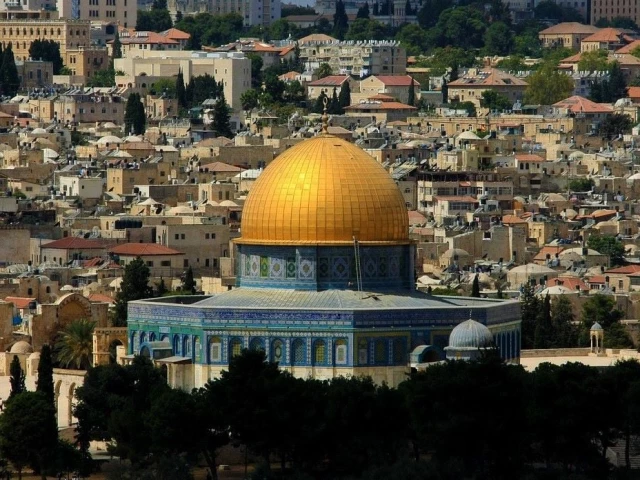
In a unified and forceful declaration, foreign ministers from Pakistan and seven other Muslim-majority nations have vehemently condemned Israel's persistent and what they term "unacceptable" violations against Islamic and Christian holy sites in Jerusalem. The joint statement, issued on Thursday, specifically highlighted repeated incursions into the Al-Aqsa Mosque compound, describing them as a "flagrant violation" of international law and a direct assault on the historic and legal status quo governing these revered sites. This collective denouncement underscores a growing international concern over the escalating tensions in Jerusalem, a city considered sacred by billions across three Abrahamic faiths.
A United Front Against Perceived Breaches
The declaration brings together a significant bloc of nations, including Pakistan, Saudi Arabia, Jordan, Egypt, Palestine, Turkey, Indonesia, and Malaysia. Their coordinated stance reflects a deep-seated apprehension regarding the future of Jerusalem's holy places, particularly in the wake of increased settler activity and Israeli security forces' presence within the Al-Aqsa compound. The ministers emphasized that these actions not only undermine peace efforts but also threaten to ignite wider regional instability. The status quo refers to a delicate arrangement, largely established after the 1967 Six-Day War, which grants Jordan custodianship over Muslim holy sites in Jerusalem and allows Jews to visit but not pray at the Al-Aqsa compound (known to Jews as the Temple Mount). Critics argue that Israel's actions, such as allowing Jewish prayer or restricting Palestinian access, are systematically eroding this historical agreement.
Pakistan's Foreign Minister, in particular, stressed the imperative of upholding international resolutions pertaining to Jerusalem and protecting the rights of Palestinians. The statement called upon the international community to exert pressure on Israel to cease its provocative actions and respect the sanctity of all religious sites. The Al-Aqsa Mosque is the third holiest site in Islam and is located within East Jerusalem, territory captured by Israel in 1967 and subsequently annexed, a move not recognized by most of the international community. Its significance for Muslims globally makes any perceived threat to its integrity a highly sensitive issue, often leading to widespread protests and diplomatic crises.
Historical Context and International Law
The issue of Jerusalem's holy sites is deeply embedded in decades of conflict and complex historical narratives. The Old City of Jerusalem, home to the Western Wall, the Church of the Holy Sepulchre, and the Al-Aqsa Mosque, is a focal point of religious devotion and political contention. For Christians, the Church of the Holy Sepulchre marks the site of Jesus' crucifixion and resurrection, making it one of Christianity's most sacred places. Any perceived threat to its status or the access of Christian worshippers also draws significant international concern. The recent condemnation by Muslim nations specifically included Christian sites, highlighting a broader concern for all non-Jewish religious heritage in the city.
International law, particularly the Fourth Geneva Convention, prohibits an occupying power from altering the demographic or legal status of occupied territory. While Israel disputes its status as an occupying power in East Jerusalem, the international community largely considers it as such. Resolutions from the United Nations Security Council and the General Assembly have repeatedly affirmed the special status of Jerusalem and called for the preservation of its holy sites. The repeated incursions, arrests of worshippers, and restrictions on access, particularly during religious holidays, are seen by these nations as direct violations of these international norms and conventions. The historical narrative of Jerusalem is not merely a local dispute; it is a global flashpoint, resonating with religious communities worldwide and influencing geopolitical dynamics.
Implications for Regional Stability and Peace Prospects
The joint statement warned that Israel's actions could have severe repercussions for regional stability and the already fragile prospects for peace between Israelis and Palestinians. The escalation of violence in recent years, often triggered by events at the Al-Aqsa compound, serves as a stark reminder of the volatility of the situation. For instance, in May 2021, tensions surrounding Al-Aqsa and potential evictions in Sheikh Jarrah contributed to an 11-day conflict between Israel and Hamas in Gaza, resulting in significant loss of life and widespread destruction. Such events underscore the interconnectedness of religious sensitivities and political realities in the region.
These condemnations are not merely symbolic; they represent a diplomatic challenge to Israel's policies and an appeal to the broader international community to intervene. While Israel maintains that its actions are necessary for security and to maintain order, critics argue that these measures disproportionately affect Palestinian worshippers and are part of a larger strategy to assert control over East Jerusalem. The lack of a comprehensive peace process further exacerbates these tensions, as there is no established framework for resolving the core issues, including the status of Jerusalem. The current geopolitical landscape, with shifting alliances and priorities, adds another layer of complexity to these long-standing grievances.
The Call for International Action and Future Outlook
The foreign ministers' call for international action is a plea for accountability and adherence to international law. They urged global powers to uphold their responsibilities in protecting religious freedom and ensuring that Jerusalem remains a city accessible to all faiths. The statement implicitly criticizes the perceived inaction or insufficient response from some Western nations, which often prioritize security concerns over human rights or international law in the Israeli-Palestinian context. The United Nations and other international bodies are frequently invoked in such declarations, yet their capacity to enforce resolutions without the unanimous support of powerful member states remains limited.
Looking ahead, the situation in Jerusalem's holy sites will likely remain a critical barometer of Israeli-Palestinian relations and regional stability. The continued pressure from Muslim-majority nations, coupled with the growing awareness of the plight of Palestinians, could potentially galvanize a more robust international response. However, without a fundamental shift in policy from all parties involved and a renewed commitment to a just and lasting peace, the cycle of condemnation, tension, and potential conflict is likely to persist. Protecting the sacred heritage of Jerusalem requires not just diplomatic statements, but concrete steps towards de-escalation, respect for international law, and a genuine commitment to shared custodianship that honors the city's unique spiritual significance for billions worldwide. The world watches, hoping that dialogue and respect can prevail over division and provocation in this most holy of cities.
Stay Informed
Get the world's most important stories delivered to your inbox.
No spam, unsubscribe anytime.
Comments
No comments yet. Be the first to share your thoughts!