Iran Defies US Blockade: Oil Tanker Navigates Strait of Hormuz Amid Escalating Tensions
Iran's state media claims an Iranian crude oil tanker and a bulk carrier successfully transited the Strait of Hormuz with tracking systems active, directly challenging a perceived U.S. blockade. This bold move underscores the volatile geopolitical landscape in the Persian Gulf, raising questions about international shipping lanes and regional stability. The incident follows heightened rhetoric from both Washington and Tehran, signaling a potential new phase in their long-standing standoff.
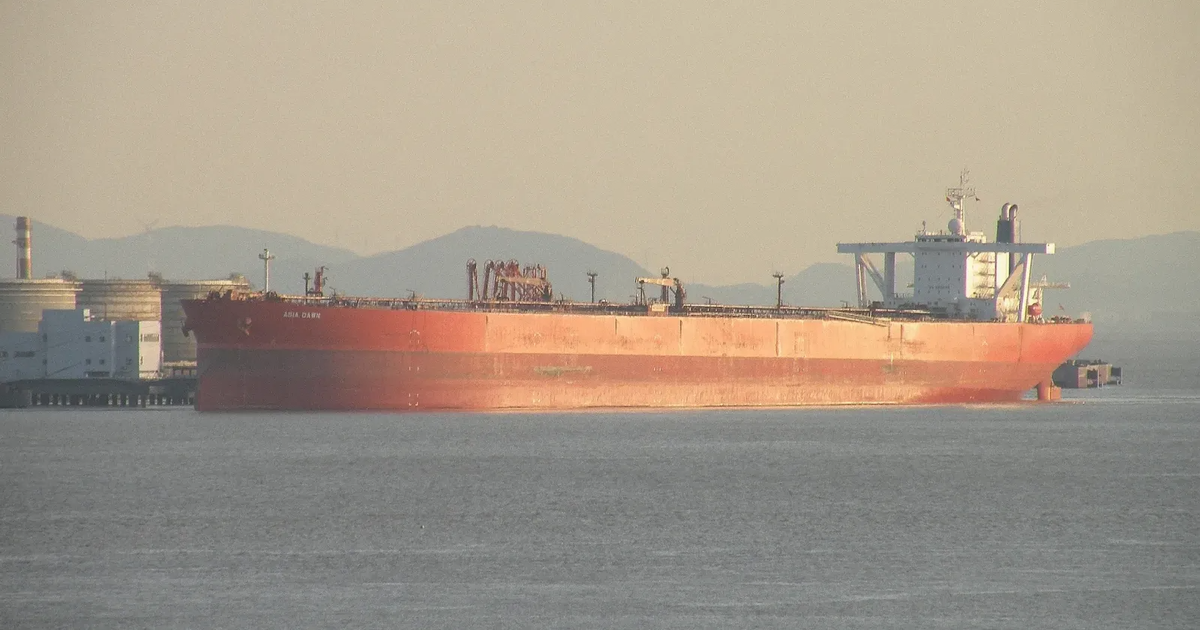
In a defiant move that reverberated across global shipping lanes and diplomatic circles, Iran's state media announced Wednesday morning that an Iranian crude oil tanker, alongside a bulk carrier transporting food supplies, had successfully navigated the strategic Strait of Hormuz and entered Iranian waters. Crucially, Fars News Agency, a semi-official Iranian news outlet, emphasized that the oil supertanker traversed international waters with its Automatic Identification System (AIS) – its tracking system – switched on, asserting it did so "without any concealment." This declaration comes just hours after a top U.S. military commander had hinted at a potential blockade of Iranian ports, escalating an already tense standoff in the Persian Gulf.
The incident, while seemingly a routine maritime passage, carries profound geopolitical weight, challenging the narrative of U.S. dominance in the region and testing the resolve of international sanctions. It underscores the intricate dance of power and deterrence playing out in one of the world's most critical maritime chokepoints, through which roughly one-fifth of the world's total oil consumption passes daily. The implications extend far beyond the immediate waters, touching upon global energy security, international law, and the future of U.S.-Iran relations.
The Strait of Hormuz: A Geopolitical Lifeline
The Strait of Hormuz is not merely a narrow waterway; it is a geopolitical artery pulsating with global economic and strategic significance. Connecting the Persian Gulf with the Arabian Sea and the broader Indian Ocean, it is bordered by Iran to the north and Oman's Musandam Governorate to the south. At its narrowest point, the strait is only about 21 nautical miles (39 kilometers) wide, with the shipping lanes themselves a mere two miles wide in either direction. This geographical constraint makes it exceptionally vulnerable to disruption, a fact Iran has historically leveraged as a strategic asset.
For decades, the Strait has been a flashpoint in regional conflicts and international power struggles. During the Iran-Iraq War (1980-1988), it was the scene of the "Tanker War," where both sides attacked commercial shipping to disrupt the other's oil exports. More recently, incidents involving attacks on tankers, drone downings, and naval confrontations have kept the international community on edge. The current episode adds another layer of complexity, as Iran explicitly showcases its ability to maintain maritime access despite external pressures, directly contradicting any implied or explicit threats of isolation.
A Calculated Act of Defiance
Iran's decision to publicize the tanker's transit with its AIS active is a deliberate and calculated act of defiance. Typically, vessels attempting to evade sanctions or surveillance might switch off their transponders to obscure their movements. By keeping the system on, Tehran sends a clear message: it is not attempting to hide its activities but rather asserting its right to free passage through international waters. This move is designed to demonstrate strength and resolve, both to its domestic audience and to international adversaries, particularly the United States.
This act also serves to test the practical limits of U.S. sanctions and naval presence. While the U.S. Fifth Fleet is a formidable force in the region, enforcing a complete blockade on a nation with a substantial coastline and naval capabilities is an immense challenge. Experts suggest that such a blockade would be an act of war, with potentially catastrophic consequences for global energy markets and regional stability. Iran's actions, therefore, can be seen as a probe, testing the U.S.'s willingness to escalate and its interpretation of international maritime law.
International Law and Freedom of Navigation
The legal framework governing the Strait of Hormuz is complex. While Iran claims the entire strait falls within its territorial waters, international law, specifically the United Nations Convention on the Law of the Sea (UNCLOS), grants all ships the right of transit passage through straits used for international navigation. This right allows for continuous and expeditious passage in the normal mode of operation. Iran has historically affirmed its commitment to UNCLOS but has also threatened to close the strait in response to perceived threats or sanctions.
The U.S., while not a signatory to UNCLOS, generally adheres to its principles regarding freedom of navigation. The current situation pits Iran's assertion of sovereignty and its right to export oil against U.S. efforts to enforce sanctions aimed at curtailing Iran's nuclear program and regional influence. The successful transit of the Iranian tanker, with its tracking system on, could be interpreted by Tehran as a victory for its interpretation of international maritime law and a demonstration that U.S. pressure has its limits. It also puts the onus on the U.S. to respond, or risk appearing to have its bluff called.
Implications for Global Energy Markets and Regional Stability
The implications of this incident are far-reaching. For global energy markets, any perceived disruption or escalation in the Strait of Hormuz immediately sends jitters through oil prices. While the immediate impact of this single transit may be limited, the underlying message of heightened tensions and potential for conflict could contribute to a risk premium on crude oil. Major oil importers, particularly in Asia, closely monitor developments in the region, understanding that their economic stability is directly tied to the free flow of oil through this chokepoint.
Regionally, the incident could embolden Iran's allies and proxies, while further alienating its adversaries. It reinforces the perception that Iran is willing to take risks to protect its economic interests and assert its regional power. For the U.S. and its allies, including Saudi Arabia and the UAE, the challenge is how to respond without triggering a wider conflict. The delicate balance of deterrence and de-escalation becomes even more precarious. The incident also highlights the fragility of peace in a region already grappling with multiple proxy conflicts and deeply entrenched rivalries.
Looking ahead, the Strait of Hormuz will remain a critical barometer of U.S.-Iran relations and broader Middle Eastern stability. This latest episode suggests that Iran is not backing down from its confrontational stance and is prepared to use its strategic geography to its advantage. The international community will be watching closely to see how the U.S. and its allies react, and whether this act of defiance marks a new, more volatile chapter in the ongoing saga of the Persian Gulf. The path forward demands careful diplomacy, but the rhetoric and actions on both sides suggest that such a resolution remains elusive, leaving the world to ponder the next move in this high-stakes maritime chess game.
Stay Informed
Get the world's most important stories delivered to your inbox.
No spam, unsubscribe anytime.
Comments
No comments yet. Be the first to share your thoughts!