Iran-US Peace Hopes Rekindle as Top Diplomats Converge on Islamabad
Amidst an eight-week conflict, Iranian Foreign Minister Abbas Araqchi's arrival in Islamabad signals a potential breakthrough for US-Iran peace talks. The simultaneous presence of US envoys Witkoff and Kushner in the Pakistani capital, though not for direct discussions, fuels optimism for de-escalation. This high-stakes diplomatic convergence in Pakistan could pave the way for renewed negotiations and a much-needed end to hostilities, offering a glimmer of hope for regional stability.
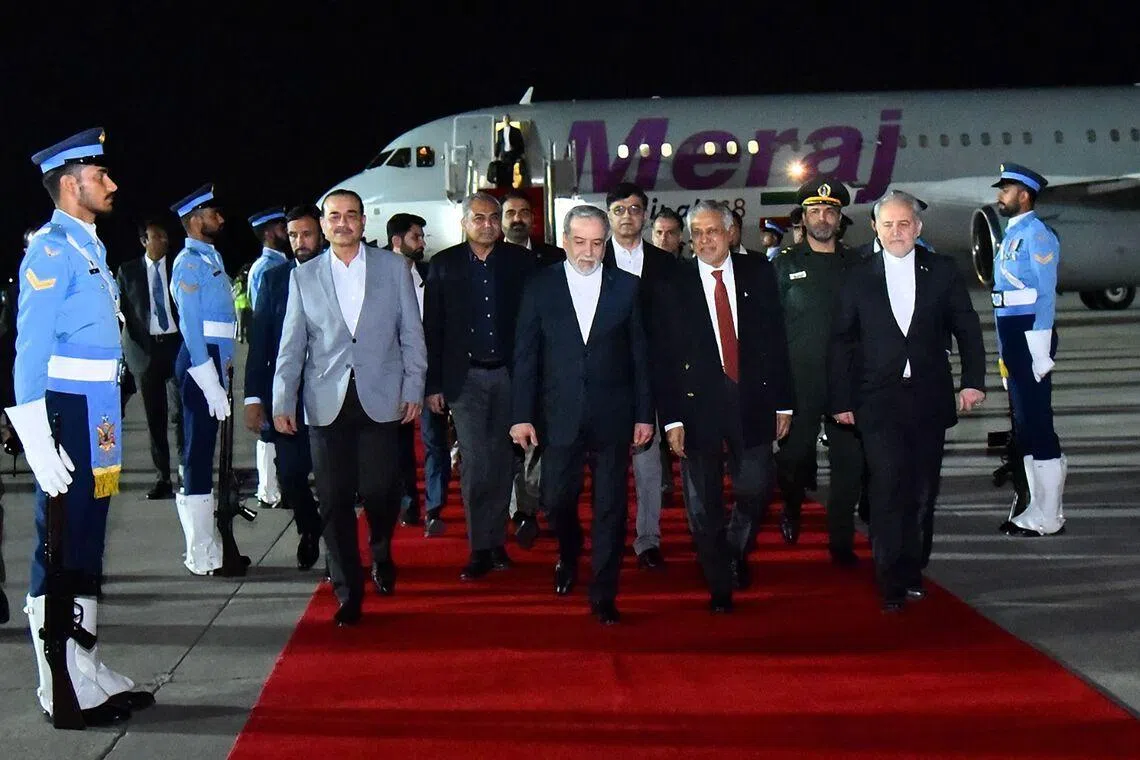
The diplomatic corridors of Islamabad are abuzz with cautious optimism as Iranian Foreign Minister Abbas Araqchi landed in the Pakistani capital on April 24. His visit, ostensibly to discuss proposals for restarting peace talks with the United States, injects a much-needed dose of hope into a region ravaged by an eight-week conflict that has claimed countless lives and destabilized an already volatile geopolitical landscape. The timing is particularly poignant, as US envoys Avi Berkowitz and Jared Kushner are also reportedly in Islamabad, albeit with no immediate indication of direct engagement with their Iranian counterparts.
This convergence of high-level diplomats from two adversarial nations in a neutral territory like Pakistan underscores the profound urgency of de-escalation. The conflict, which has seen escalating tensions and indirect confrontations, has pushed the Middle East to the brink, prompting international calls for a diplomatic resolution. Araqchi's presence, therefore, is not merely a routine visit but a significant diplomatic overture, signaling Tehran's potential willingness to explore avenues for dialogue, even as the shadow of past hostilities looms large.
A Glimmer of Hope in a Protracted Conflict
The current conflict, characterized by a complex interplay of regional proxies, maritime incidents, and cyber warfare, has its roots in a long history of mistrust and geopolitical rivalry between Iran and the United States. The initial withdrawal of the US from the Joint Comprehensive Plan of Action (JCPOA) in 2018, followed by the re-imposition of crippling sanctions, set the stage for the current escalation. Iran's retaliatory measures, including scaling back its commitments under the nuclear deal and increasing its uranium enrichment, further exacerbated tensions. The past eight weeks have witnessed a dangerous tit-for-tat, with strikes on oil facilities, shipping lanes, and military bases, raising fears of a broader regional conflagration.
Against this backdrop, Araqchi's mission in Islamabad is critical. While details of the 'proposals for restarting peace talks' remain under wraps, analysts suggest they likely involve a framework for de-escalation, confidence-building measures, and potentially a pathway back to some form of nuclear negotiations. The fact that Iran is sending such a senior diplomat to discuss these proposals indicates a strategic shift, perhaps driven by the economic toll of sanctions and the human cost of the ongoing conflict. The international community, including key European powers and regional players, has consistently advocated for dialogue, viewing it as the only viable path to stability.
Pakistan's Pivotal Role as a Mediator
Pakistan, strategically located at the crossroads of South Asia, Central Asia, and the Middle East, has historically played a crucial role in regional diplomacy. Its strong ties with both Iran and the United States position it uniquely as a potential mediator. Prime Minister Imran Khan has repeatedly offered Pakistan's good offices to facilitate dialogue between the two nations, emphasizing the need for peace to ensure regional stability and economic development. This current diplomatic episode in Islamabad is a testament to Pakistan's sustained efforts to foster understanding and reduce tensions.
The presence of US envoys Witkoff and Kushner, though not directly linked to Araqchi's agenda, adds another layer of intrigue. While the White House has maintained a tough stance on Iran, the very presence of these high-level officials in the same city, even if for separate engagements, creates an environment conducive to indirect communication or back-channel discussions. Such parallel diplomacy, often conducted through intermediaries, has been a hallmark of complex international relations and could be instrumental in bridging the communication gap between Washington and Tehran. The challenge, however, lies in translating these indirect signals into concrete steps towards direct negotiations.
The Path Forward: Hurdles and Opportunities
Restarting peace talks will not be an easy feat. The deep-seated mistrust, coupled with hardline positions on both sides, presents significant hurdles. For Iran, the lifting of sanctions and a return to the JCPOA's original terms are likely non-negotiable starting points. For the US, concerns about Iran's ballistic missile program, regional influence, and human rights record remain paramount. Any successful negotiation would require significant concessions and a willingness to compromise from both parties.
However, the current situation also presents a unique opportunity. The sheer exhaustion from the conflict, the economic strain, and the international pressure for peace could create a window for genuine diplomatic progress. The involvement of other international actors, such as the UN and European Union, could provide the necessary guarantees and frameworks to ensure any agreement is robust and sustainable. The potential benefits of de-escalation are immense: a reduction in regional instability, a boost to global energy markets, and a renewed focus on economic development rather than military confrontation.
Key considerations for future talks include: * Sanctions Relief: Iran's primary demand will likely be a phased lifting of US sanctions. * Nuclear Program: The scope and verification of Iran's nuclear activities will be central to US concerns. * Regional Stability: Discussions may extend to Iran's role in regional conflicts and proxy groups. * Security Guarantees: Both sides may seek assurances for their security interests.
Expert Analysis and Regional Implications
According to Dr. Fatima Khan, a senior analyst at the Institute for Middle East Studies, "Araqchi's visit is a significant diplomatic gambit. It signals that despite the rhetoric, both sides recognize the unsustainability of the current trajectory. Pakistan's role as a facilitator is crucial here, providing a much-needed neutral ground." She adds, "The challenge will be to manage expectations and ensure that any initial dialogue doesn't collapse under the weight of maximalist demands. Incremental steps, focusing on de-escalation and humanitarian aid, might be the most pragmatic starting point."
The implications for the region are profound. A successful de-escalation could bring much-needed stability to the Persian Gulf, reduce the risk of a wider war, and allow countries to focus on pressing domestic issues. Conversely, a failure to capitalize on this diplomatic opening could plunge the region into deeper turmoil, with devastating consequences for global energy supplies and international security. The convergence in Islamabad, therefore, represents a critical juncture, a moment where the future of Middle Eastern peace hangs delicately in the balance.
Conclusion: A Fragile Path Towards Peace
The presence of Iranian Foreign Minister Araqchi in Islamabad, coinciding with the visit of US envoys, offers a fragile yet tangible hope for de-escalation in the protracted US-Iran conflict. While direct talks remain elusive, the very act of discussing peace proposals in a neutral setting is a positive step. Pakistan's diplomatic efforts, coupled with the international community's persistent calls for dialogue, have created an environment where such an overture is possible. The road ahead is fraught with challenges, requiring immense political will and a willingness to compromise from both Tehran and Washington. However, the alternative – continued conflict and instability – is far more perilous. The world watches Islamabad, hoping that this diplomatic convergence marks the beginning of a genuine and lasting peace process, bringing an end to the eight-week war and paving the way for a more stable future in the Middle East.
Stay Informed
Get the world's most important stories delivered to your inbox.
No spam, unsubscribe anytime.
Comments
No comments yet. Be the first to share your thoughts!