Iran Vows 'Banditry' Response to US Blockade: Escalating Tensions in the Gulf
Iran's military has issued a stark warning, threatening retaliation if the United States maintains a blockade of its ports, labeling such actions as 'banditry' and 'piracy'. This declaration from the central command Khatam Al-Anbiya signals a dangerous escalation in the long-standing geopolitical standoff between Tehran and Washington. The international community watches closely as rhetoric intensifies, raising concerns about maritime security and potential conflict in the vital Strait of Hormuz.
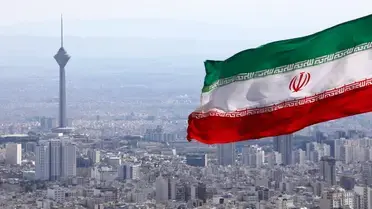
The simmering tensions between Iran and the United States have once again flared into a dangerous confrontation, with Iran's military issuing a stern warning that it will respond decisively if the U.S. maintains a blockade of Iranian ports. In a statement carried by the state-run media outlet IRIB, the military’s central command, Khatam Al-Anbiya, unequivocally labeled any such action as “banditry” and “piracy,” signaling a significant escalation in the rhetoric surrounding maritime security in the Persian Gulf.
This declaration is not merely a verbal threat; it reflects a deep-seated strategic calculation within Tehran, aimed at deterring what it perceives as aggressive economic warfare. For decades, the Strait of Hormuz, a narrow chokepoint through which a significant portion of the world's oil supply passes, has been a flashpoint. Iran's latest statement underscores its willingness to challenge any perceived infringement on its sovereign rights and economic lifelines, potentially drawing the region into a more direct and perilous conflict.
Historical Context: A Legacy of Sanctions and Confrontation
To understand the gravity of Iran's recent warning, one must delve into the complex history of U.S.-Iran relations. Following the 1979 Islamic Revolution, ties between the two nations fractured, leading to decades of mistrust, proxy conflicts, and economic sanctions. The U.S. has consistently imposed sanctions on Iran, particularly targeting its oil exports and financial sector, with the stated aim of curbing its nuclear program and regional influence. These sanctions have severely impacted Iran's economy, leading to widespread hardship and fueling anti-Western sentiment within the country.
From Iran's perspective, these sanctions, especially those aimed at blocking its maritime trade, constitute an act of economic warfare. The concept of a naval blockade, even if not explicitly declared by the U.S. but rather enforced through secondary sanctions on entities trading with Iran, is seen as an existential threat. Historically, blockades have been considered acts of war, and Iran's use of terms like “banditry” and “piracy” highlights its view that such measures are illegal and illegitimate under international law. This narrative resonates strongly with a populace that often feels besieged by external pressures.
The Strategic Importance of Iranian Ports and Maritime Trade
Iran's economy is heavily reliant on oil exports, which primarily leave the country via its southern ports on the Persian Gulf. Key ports like Bandar Abbas, Imam Khomeini, and Bushehr are vital arteries for both oil and non-oil trade, facilitating the import of essential goods and the export of domestic products. A sustained blockade, or even the credible threat of one, would cripple Iran's ability to engage in international commerce, exacerbating its already challenging economic situation.
The Strait of Hormuz, at its narrowest point only 21 nautical miles wide, is the world's most important oil transit chokepoint. Approximately 20% of the world's total petroleum liquids consumption and about one-third of the world's liquefied natural gas (LNG) pass through this strait. Any disruption here, whether intentional or accidental, has immediate and far-reaching consequences for global energy markets. Iran has repeatedly threatened to close the strait in response to perceived threats, a move that would send shockwaves through the global economy and likely trigger an international military response.
Khatam Al-Anbiya: The Apex of Iran's Military Command
The statement originating from Khatam Al-Anbiya is particularly significant. This is not merely a branch of the Iranian armed forces; it is the Central Headquarters of Khatam al-Anbiya, the highest military command in Iran, responsible for coordinating the activities of the regular army (Artesh) and the Islamic Revolutionary Guard Corps (IRGC). Its pronouncements carry immense weight, representing the unified strategic stance of the entire Iranian military establishment. When Khatam Al-Anbiya speaks, it reflects the collective will and strategic intent of Tehran's defense apparatus.
Their use of strong language – “banditry” and “piracy” – is a deliberate rhetorical choice designed to frame U.S. actions as illegitimate and criminal, thereby justifying a potential military response under the guise of self-defense. This framing is crucial for internal consumption, rallying public support, and for external messaging, aiming to garner sympathy from nations that might view unilateral U.S. actions as overreach.
Potential Responses and Escalation Scenarios
What form might Iran's
Stay Informed
Get the world's most important stories delivered to your inbox.
No spam, unsubscribe anytime.
Comments
No comments yet. Be the first to share your thoughts!