ISIS Second-in-Command Eliminated in Joint US-Nigerian Operation: A Major Blow to Global Terrorism
Abu-Bilal al-Minuki, ISIS's global second-in-command, has been eliminated in a joint operation by US and Nigerian forces, as announced by former President Donald Trump. This significant development marks a critical blow to the terrorist organization's leadership and operational capabilities. The successful mission highlights evolving international counter-terrorism strategies and collaboration against extremist threats. Experts are now assessing the long-term impact on ISIS's global network and its affiliates.
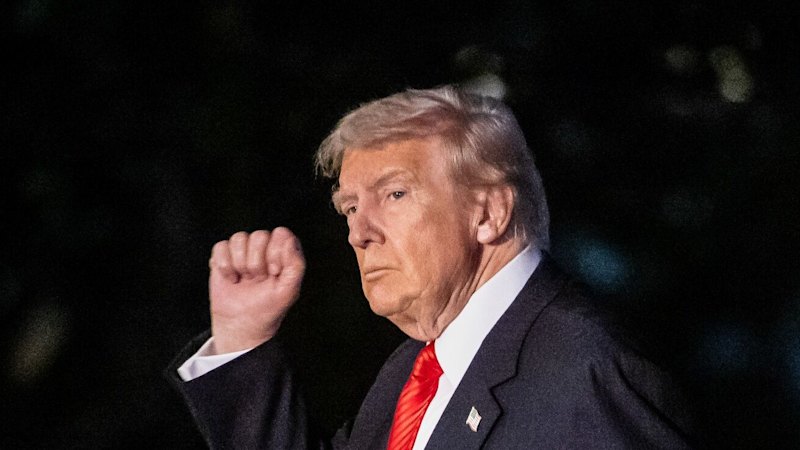
In a decisive blow to global terrorism, Abu-Bilal al-Minuki, identified as the second-in-command of the Islamic State (ISIS) worldwide, has been eliminated in a joint operation conducted by United States and Nigerian forces. The announcement, made by former US President Donald Trump via a Truth Social post, underscores a strategic victory in the ongoing fight against extremist organizations and highlights the critical role of international cooperation in combating these threats.
The operation, shrouded in the secrecy typical of high-stakes military maneuvers, reportedly targeted al-Minuki, a figure whose influence extended across ISIS's fragmented global network. While details remain scarce, the successful execution of such a mission points to sophisticated intelligence gathering, advanced military capabilities, and robust coordination between the participating nations. This event is not merely a tactical win; it represents a significant disruption to ISIS's command structure and its ability to plan and execute large-scale operations.
The Shadowy Figure of Abu-Bilal al-Minuki
Little is publicly known about Abu-Bilal al-Minuki, a testament to the clandestine nature of ISIS's top echelons. However, his designation as "second-in-command globally" suggests a pivotal role in the organization's strategic planning, financial networks, and ideological dissemination. Historically, individuals holding such senior positions within ISIS have been instrumental in: * Operational Command: Directing terrorist attacks and insurgent activities across various regions. * Logistical Support: Overseeing the movement of fighters, weapons, and resources. * Financial Management: Managing the group's illicit revenue streams from oil, extortion, and kidnapping. * Propaganda and Recruitment: Shaping the narrative and attracting new recruits to the cause.
Al-Minuki's elimination likely creates a significant void, potentially leading to internal power struggles or a temporary paralysis in certain operational areas. His death could also force ISIS to divert resources towards shoring up its leadership, potentially exposing other key figures.
A New Era of Counter-Terrorism Cooperation
The involvement of Nigerian forces alongside their American counterparts is particularly noteworthy. Nigeria has been grappling with its own severe extremist challenges, primarily from Boko Haram and its splinter group, the Islamic State West Africa Province (ISWAP). The successful collaboration against a global ISIS leader suggests a deepening of counter-terrorism ties between the US and African nations, particularly in regions where extremist groups have found fertile ground.
This joint operation signifies a shift towards more integrated and localized approaches to counter-terrorism. Instead of solely relying on drone strikes or special forces raids, the emphasis appears to be on empowering local partners with intelligence, training, and resources to tackle threats within their borders. Such partnerships are crucial for: * Intelligence Sharing: Providing real-time, actionable intelligence to local forces. * Capacity Building: Enhancing the operational capabilities of partner militaries. * Legitimacy: Ensuring that counter-terrorism efforts are seen as locally driven and sustainable.
The success of this mission could serve as a blueprint for future collaborations, particularly in regions like the Sahel, the Horn of Africa, and Southeast Asia, where ISIS affiliates continue to pose significant threats.
Implications for ISIS's Global Network
While the elimination of a high-ranking leader is undoubtedly a victory, experts caution against declaring the end of ISIS. The organization has proven remarkably resilient, adapting its strategies and structure in the face of sustained pressure. Following the territorial defeat of its 'caliphate' in Iraq and Syria, ISIS transitioned into a decentralized global insurgency, relying on a network of affiliates and sleeper cells.
However, the loss of a figure like al-Minuki can have several profound implications:
* Disruption of Command and Control: Severing communication lines and hindering strategic planning. * Morale Impact: Potentially demoralizing fighters and supporters, while boosting the morale of counter-terrorism forces. * Succession Challenges: Creating a power vacuum that could lead to infighting or the promotion of less experienced leaders. * Operational Setbacks: Delaying or derailing planned attacks and recruitment drives.
Nonetheless, ISIS's ideology remains a potent force, and its ability to inspire lone-wolf attacks and leverage online propaganda means the threat persists. The group's affiliates, such as ISWAP in West Africa, ISIS-Khorasan in Afghanistan, and others in the Philippines and Mozambique, continue to operate with varying degrees of autonomy, posing localized but significant dangers.
The Road Ahead: Sustained Vigilance and Adaptation
The elimination of Abu-Bilal al-Minuki is a testament to the relentless efforts of international counter-terrorism forces. It underscores that even as the global focus shifts to other geopolitical challenges, the fight against extremist groups remains a critical priority. However, this victory is but one battle in a protracted war. The fluidity of terrorist organizations demands sustained vigilance, adaptive strategies, and robust international cooperation.
Moving forward, the international community must continue to invest in: * Intelligence Gathering: To preempt threats and identify emerging leaders. * Capacity Building: Strengthening the capabilities of nations on the front lines of terrorism. * Counter-Narrative Efforts: Challenging extremist ideologies online and offline. * Addressing Root Causes: Tackling socio-economic grievances and governance issues that extremist groups exploit.
The successful operation against al-Minuki offers a moment to acknowledge progress, but it also serves as a stark reminder that the threat of global terrorism, though diminished in some respects, is far from eradicated. The next phase of this struggle will require even greater innovation, collaboration, and a long-term commitment to peace and security across the globe.
Stay Informed
Get the world's most important stories delivered to your inbox.
No spam, unsubscribe anytime.
Comments
No comments yet. Be the first to share your thoughts!