Kemi Seba: The Fiery Pan-Africanist Challenging French Influence in West Africa
Kemi Seba, the controversial anti-colonial activist, has once again captured headlines with his detention in South Africa, sparking debate across West Africa and beyond. Accused by some of being a 'Russian mouthpiece,' Seba's fiery rhetoric against French neocolonialism resonates with many disillusioned youth. This article delves into his background, ideology, and the complex geopolitical landscape he navigates, examining the implications of his growing influence.
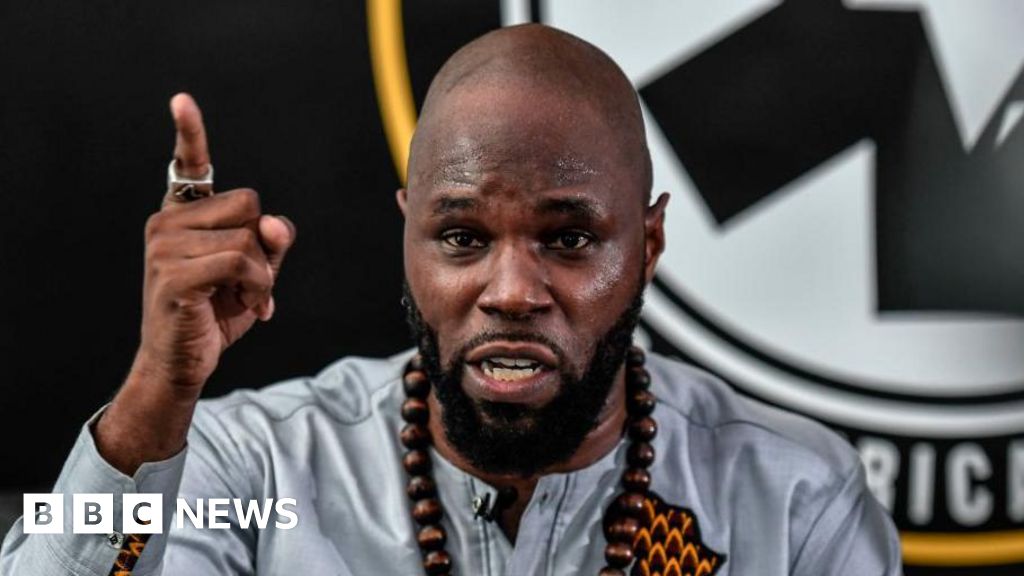
In the complex tapestry of West African geopolitics, few figures ignite as much fervent debate and passionate support as Kemi Seba. The self-proclaimed anti-colonial Pan-Africanist, whose real name is Stellio Gilles Robert Capo Chichi, has once again found himself at the center of international attention, recently detained in South Africa under circumstances that remain partially obscured. This latest incident only amplifies the spotlight on a figure who has become a powerful, albeit polarizing, voice against what he and his followers perceive as enduring French neocolonial influence across the continent.
Seba's arrest, reportedly while attempting to flee, has sent ripples through a region already grappling with political instability, economic hardship, and a growing sentiment of anti-French resentment. For his supporters, it is further proof of a concerted effort to silence a truth-teller; for his detractors, it underscores concerns about his methods and alleged external affiliations. PulseWorld investigates the phenomenon of Kemi Seba, his message, and the profound implications of his movement for the future of West Africa.
The Rise of a Controversial Figure
Born in France to Beninese parents, Kemi Seba's journey to becoming a prominent Pan-Africanist activist is marked by several ideological shifts. He initially gained notoriety in the early 2000s as a leader of the radical black nationalist group Tribu Ka in France, which was later banned for hate speech. After disavowing some of his earlier, more extreme positions, Seba pivoted towards a broader anti-imperialist and Pan-Africanist agenda, focusing his activism primarily on African soil. His rhetoric is characterized by an unwavering condemnation of France's historical and contemporary role in Africa, particularly its economic and political ties through institutions like the CFA franc currency zone.
Seba’s appeal lies in his ability to articulate the frustrations of a generation of young Africans who feel disenfranchised and exploited. He speaks directly to the legacy of colonialism, arguing that independence was merely a façade for continued economic subjugation. His speeches, often delivered with charismatic fervor, call for a complete break from Western influence, the establishment of a truly sovereign African currency, and a reassertion of African dignity and self-determination. He has successfully cultivated a significant following, particularly among youth in countries like Senegal, Mali, Burkina Faso, and Niger, where anti-French sentiment has been particularly pronounced in recent years.
The Neocolonialism Narrative and French Reaction
At the core of Seba's message is the concept of neocolonialism, a term used to describe the indirect control exercised by former colonial powers over their former colonies, particularly through economic, political, or cultural means. He frequently cites the CFA franc, a currency used by 14 African nations and pegged to the Euro, as a prime example of this ongoing subjugation. Critics of the CFA franc argue it hinders economic development, limits monetary sovereignty, and disproportionately benefits France. Seba's calls for its abolition resonate deeply with those who see it as a symbol of economic dependence.
France, for its part, has consistently defended its relationship with its former colonies, emphasizing development aid, security cooperation, and cultural exchange. However, the rising tide of anti-French sentiment, often fueled by figures like Seba, has forced Paris to re-evaluate its approach. The withdrawal of French troops from Mali and Burkina Faso, and the subsequent rise of military juntas in some West African nations, underscore a significant shift in regional dynamics. French officials have often dismissed Seba as a fringe figure or, more pointedly, as a destabilizing force, sometimes linking him to external actors seeking to undermine French interests.
Accusations of External Influence: The 'Russian Mouthpiece' Label
One of the most persistent accusations leveled against Kemi Seba is that he acts as a 'Russian mouthpiece'. This allegation stems from his perceived alignment with Russian geopolitical interests, particularly in regions where Moscow has sought to expand its influence at the expense of Western powers. Seba has indeed met with Russian officials and appeared on Russian state-backed media, where he has found a platform to amplify his anti-Western rhetoric. His critics argue that while his anti-colonial message may resonate, his actions inadvertently serve Russia's strategic objectives in Africa, which include securing access to resources, fostering political alliances, and challenging the unipolar world order.
However, Seba and his supporters vehemently deny these claims, asserting that his alliances are purely opportunistic and driven by a desire to find partners willing to support African sovereignty, regardless of their origin. They argue that labeling him a 'Russian mouthpiece' is a convenient way for Western powers to discredit legitimate African grievances and deflect attention from their own historical and contemporary roles in the continent. The truth likely lies in a more nuanced reality: Seba's anti-Western stance naturally aligns with Russia's geopolitical ambitions, creating a convergence of interests that both sides appear willing to exploit.
Implications for West Africa's Future
Kemi Seba's continued prominence highlights several critical trends in West Africa. Firstly, it underscores the deep-seated frustration with post-colonial arrangements and the enduring desire for genuine self-determination. His message taps into a powerful yearning for dignity and agency that transcends national borders. Secondly, his movement reflects a growing disillusionment with traditional political elites, who are often perceived as corrupt or beholden to foreign interests. This vacuum allows charismatic figures like Seba to gain traction among a populace hungry for change.
Thirdly, Seba's activities are intertwined with the broader geopolitical competition unfolding in Africa. As Western influence wanes in some areas, new players like Russia and China are stepping in, offering alternative partnerships that often come with fewer demands for democratic governance or human rights. The rise of figures like Seba, whether intentionally or not, contributes to this shift, potentially reshaping regional alliances and power dynamics. The challenge for West African nations will be to navigate these complex external relationships while prioritizing their own development and stability.
Conclusion: A Voice in a Shifting Landscape
Kemi Seba remains a divisive and enigmatic figure, a product of historical grievances and contemporary geopolitical shifts. His detention in South Africa is but another chapter in a career defined by confrontation and controversy. While his methods and alleged affiliations invite scrutiny, his core message – a demand for genuine African sovereignty and an end to perceived foreign exploitation – continues to resonate powerfully across West Africa.
As the continent grapples with the legacies of colonialism, the pressures of globalization, and the allure of new international partners, voices like Seba's will likely continue to challenge the status quo. The future of West Africa will hinge on how its leaders and its people respond to these calls for change, whether by embracing a more independent path, forging new alliances, or finding a way to reconcile historical grievances with the imperatives of modern statecraft. Kemi Seba, for all his controversies, serves as a potent reminder that the struggle for true emancipation in Africa is far from over.
Stay Informed
Get the world's most important stories delivered to your inbox.
No spam, unsubscribe anytime.
Comments
No comments yet. Be the first to share your thoughts!