Kim Jong Un's Grim Praise: Unpacking North Korea's 'Self-Sacrifice' Doctrine in Ukraine War
North Korean leader Kim Jong Un has publicly lauded soldiers who reportedly detonated grenades to commit suicide on the battlefield in Ukraine, confirming a long-suspected and deeply disturbing military policy. This revelation underscores the extreme pressures on North Korean troops and raises serious questions about their involvement in Russia's war. The incident highlights the regime's brutal ideology of 'self-sacrifice' and its implications for international law and human rights.
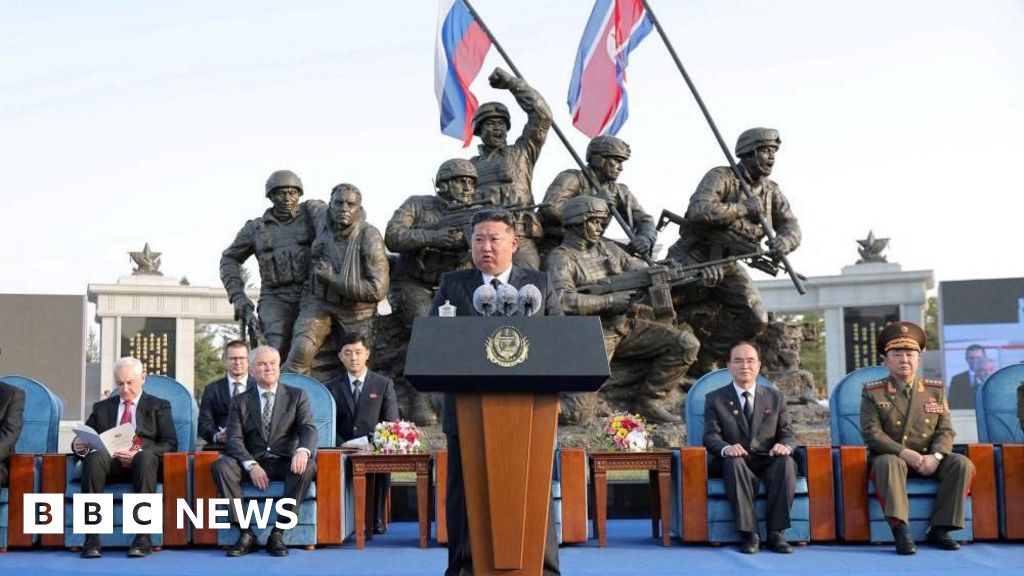
In a chilling revelation that has sent ripples through international human rights circles and geopolitical analyses, North Korean leader Kim Jong Un has publicly praised soldiers who, while fighting for Russia in Ukraine, reportedly chose to detonate their grenades to commit suicide rather than be captured. This unprecedented commendation, delivered in a recent speech, not only confirms a long-suspected, grim battlefield policy but also offers a stark, disturbing window into the extreme ideological indoctrination and brutal realities faced by North Korean military personnel.
For years, whispers and unconfirmed reports have circulated regarding North Korea's 'self-sacrifice' doctrine, a macabre directive that allegedly mandates soldiers to take their own lives if faced with imminent capture. Kim Jong Un's explicit praise transforms these rumors into official policy, painting a grim picture of a military culture where death is preferred over perceived dishonor, even in a foreign conflict far from home. This development is not merely a footnote in the ongoing Ukraine war; it is a profound indicator of the lengths to which the Pyongyang regime will go to enforce its iron-fisted control and ideological purity, even at the cost of its soldiers' lives.
The Doctrine of 'Self-Sacrifice': A Historical Precedent
The concept of 'self-sacrifice' in North Korean military doctrine is deeply rooted in the country's unique Juche ideology, which emphasizes self-reliance and absolute loyalty to the leader. While the act of suicide in battle is not unheard of in military history – from ancient Roman legions to Japanese kamikaze pilots in World War II – North Korea's institutionalization of such a directive is particularly alarming. It suggests a systematic conditioning designed to eliminate any possibility of defection or intelligence gathering by enemy forces, reinforcing the regime's paranoia and isolation.
Historical parallels can be drawn to the Korean War (1950-1953), where North Korean and Chinese forces often fought with extreme tenacity, sometimes to the last man. However, the explicit command to commit suicide by grenade marks an escalation, moving beyond fighting to the death into a realm of mandated self-destruction. This policy serves multiple purposes for the regime:
* Preventing Capture: Ensures no soldier can be interrogated or defect, safeguarding state secrets and preventing the spread of 'undesirable' information. * Ideological Purity: Reinforces the narrative of unwavering loyalty and heroism, portraying soldiers as willing martyrs for the state and leader. * Deterrence: Sends a powerful, albeit horrifying, message to both internal and external audiences about the regime's absolute control and the perceived fanaticism of its forces.
This doctrine is not just about battlefield tactics; it's a core component of the regime's psychological warfare against its own people, instilling fear and absolute obedience from cradle to grave. The public commendation of these acts further solidifies this dark aspect of North Korean governance.
North Korea's Role in the Ukraine Conflict: A Murky Alliance
Kim Jong Un's praise for these soldiers directly links North Korea to the ongoing conflict in Ukraine, confirming what many intelligence agencies have long suspected: North Korean personnel are actively participating alongside Russian forces. While initial reports focused on artillery shells and ballistic missile transfers from Pyongyang to Moscow, the presence of North Korean troops, even in a seemingly limited capacity, adds a new, disturbing dimension to the conflict.
The exact number and roles of North Korean soldiers in Ukraine remain shrouded in secrecy. However, their involvement, whether as direct combatants, support personnel, or even as a symbolic gesture of solidarity, carries significant implications:
* Violation of Sanctions: Any deployment of North Korean personnel for military purposes abroad would constitute a clear violation of multiple United Nations Security Council resolutions, which prohibit Pyongyang from engaging in such activities. * Human Rights Concerns: The 'self-sacrifice' policy raises profound human rights issues, essentially forcing soldiers into a choice between certain death by enemy fire or mandated suicide, stripping them of fundamental human dignity and autonomy. * Geopolitical Alignment: It further cements the burgeoning alliance between Russia and North Korea, a partnership driven by mutual isolation from the West and a shared interest in undermining the existing international order. This alignment poses a significant challenge to global stability, particularly given North Korea's nuclear ambitions.
This direct acknowledgment by Kim Jong Un dispels any lingering doubt about the depth of North Korea's commitment to supporting Russia, transforming a transactional relationship into one that appears to involve human lives on the front lines.
International Law and Ethical Dilemmas
The implications of Kim Jong Un's statement extend far beyond the battlefield. From an international law perspective, the use of soldiers under such extreme directives raises questions about war crimes and the treatment of combatants. While suicide is not typically a war crime, the institutionalization of a policy that compels individuals to take their own lives, especially under duress, could be seen as a form of cruel, inhuman, or degrading treatment, potentially violating international humanitarian law.
Moreover, if North Korean soldiers are indeed being deployed to Ukraine, their status as combatants and their rights under the Geneva Conventions become critical. The 'self-sacrifice' policy fundamentally undermines the protections afforded to prisoners of war, as it aims to prevent capture altogether. This creates a dangerous precedent and further complicates efforts to ensure adherence to international norms in armed conflict.
Ethically, the situation presents a profound moral quandary. The idea of a state actively encouraging, even demanding, its soldiers to commit suicide is anathema to modern human rights principles. It speaks to a regime that views its citizens as expendable tools for political objectives, rather than individuals with inherent worth and rights. The international community faces a challenge in how to address such a policy, balancing condemnation with the practical difficulties of influencing a state as isolated and recalcitrant as North Korea.
A Glimpse into Totalitarian Control and Future Implications
Kim Jong Un's public praise is more than just a confirmation of a grim policy; it is a powerful piece of propaganda aimed at both internal and external audiences. Internally, it serves to reinforce the image of an invincible, ideologically pure military and a leader who demands ultimate loyalty. Externally, it projects an image of unyielding resolve, perhaps intended to deter potential adversaries.
However, this revelation also highlights the extreme fragility and desperation that often underpin totalitarian regimes. The need to enforce such a brutal policy suggests a deep-seated fear of defection, ideological contamination, and the potential for internal dissent. It underscores the immense psychological burden placed upon North Korean citizens, particularly those in uniform.
Looking ahead, this development could have several long-term implications:
* Increased Scrutiny: International bodies and human rights organizations will likely intensify their scrutiny of North Korea's military practices and its involvement in foreign conflicts. * Reinforced Sanctions: The confirmed military cooperation with Russia, especially involving personnel, could lead to further tightening of international sanctions against both nations. * Evolving Battlefield Dynamics: The presence of North Korean troops, even if small in number, adds another layer of complexity to the Ukraine war, potentially influencing tactical decisions and propaganda narratives. * Internal Messaging: The regime will continue to use such 'heroic' narratives to bolster domestic support and suppress any nascent dissent, further entrenching its cult of personality.
The praise for these soldiers, however horrifying, offers a rare, unfiltered glimpse into the extreme nature of Kim Jong Un's regime. It serves as a stark reminder of the human cost of totalitarianism and the profound ethical challenges posed by states that operate outside the bounds of international norms. As the world grapples with the escalating conflict in Ukraine, the shadows cast by Pyongyang's 'self-sacrifice' doctrine will undoubtedly continue to loom large, demanding urgent attention and a concerted international response.
Stay Informed
Get the world's most important stories delivered to your inbox.
No spam, unsubscribe anytime.
Comments
No comments yet. Be the first to share your thoughts!