Lion's Historians: Makerere's Prof. Ssali Urges Africa to Seize Narrative Control Amidst Global Shifts
Africa must actively shape its own story to navigate the complex global landscape, declared Acting Makerere University Vice Chancellor Professor Sarah Ssali at the Kampala Geopolitics Conference. She emphasized the urgent need for the continent to move beyond being a passive observer, asserting its unique perspectives and historical truths. This call to action highlights the critical role of African voices in defining its future and influencing international relations, urging a paradigm shift in how the world perceives and interacts with the continent.
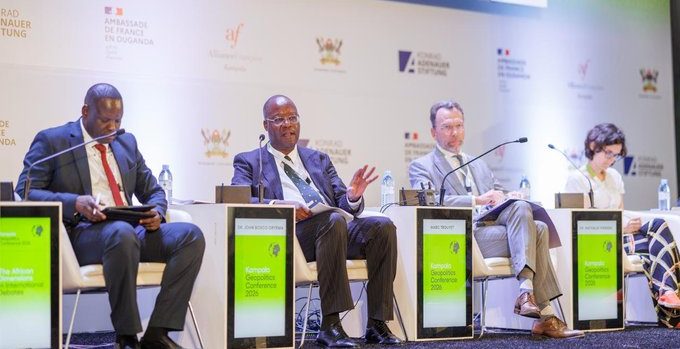
KAMPALA — In a world increasingly defined by shifting power dynamics and contested narratives, the clarion call for Africa to seize control of its own story has never been more urgent. This pivotal message resonated deeply at the 9th Edition of the Kampala Geopolitics Conference (KGC), where Acting Makerere University Vice Chancellor Professor Sarah Ssali delivered a powerful address, urging the continent to abandon its role as a passive observer and become the architect of its destiny. Her impassioned plea, delivered from the hallowed halls of Makerere’s Ivory Tower, underscored a fundamental truth: in the geopolitical arena, those who control the narrative control the future.
Professor Ssali's intervention comes at a crucial juncture. For centuries, Africa's story has largely been told through external lenses – often characterized by stereotypes, exploitation, and a focus on challenges rather than triumphs. This historical imbalance has not only distorted perceptions but has also limited Africa's agency on the global stage. The KGC, a significant platform for intellectual discourse, provided the perfect backdrop for this assertion, bringing together policymakers, academics, and civil society leaders to deliberate on the continent’s place in a multipolar world. The essence of her argument is clear: Africa's future, its economic prosperity, political stability, and cultural identity, hinges on its ability to articulate its experiences, aspirations, and contributions with authenticity and authority.
Reclaiming the Pen: The Imperative of Self-Narration
The concept of “owning the narrative” is far more profound than mere public relations; it is about epistemic justice and self-determination. Professor Ssali highlighted that for too long, African history, culture, and political realities have been interpreted, analyzed, and often misrepresented by non-African scholars, journalists, and institutions. This has led to a perpetuation of colonial-era stereotypes and a failure to acknowledge the continent's rich diversity, innovation, and resilience. “We must become the lion’s historians,” she declared, referencing the famous African proverb, “Until the lions have their own historians, the history of the hunt will always glorify the hunter.”
This reclamation involves several critical dimensions:
* Historical Revisionism: Actively researching, documenting, and disseminating African perspectives on its past, challenging Eurocentric interpretations of colonialism, independence struggles, and pre-colonial civilizations. * Cultural Preservation and Promotion: Investing in and celebrating indigenous languages, arts, philosophies, and knowledge systems, ensuring they are recognized as valuable contributions to global heritage. * Media Representation: Developing robust, independent African media outlets that can tell African stories to the world, free from external biases and agendas. This includes leveraging digital platforms to bypass traditional gatekeepers. * Policy Formulation: Ensuring that African voices and priorities are central to international policy discussions concerning the continent, from climate change to trade agreements and security issues.
The absence of an authentic African narrative leaves a vacuum, which is invariably filled by others, often with agendas that do not align with African interests. This is particularly pertinent in an era of information warfare and digital diplomacy, where narratives can be weaponized to influence public opinion and geopolitical outcomes.
Geopolitical Shifts and African Agency
The call for narrative ownership is intrinsically linked to the rapidly evolving global geopolitical landscape. The rise of new global powers, the shifting alliances, and the increasing competition for resources and influence mean that Africa can no longer afford to be a passive recipient of external policies. Professor Ssali emphasized that Africa must strategically position itself to leverage these changes to its advantage.
Historically, Africa has often been viewed as a battleground for proxy wars or a source of raw materials. However, with its burgeoning youth population, vast natural resources, and growing economic potential, the continent is poised to become a significant global player. To realize this potential, African nations must:
* Forge Unified Positions: Present a united front on critical global issues, amplifying their collective voice through regional bodies like the African Union. * Diversify Partnerships: Engage with a broader range of international partners, avoiding over-reliance on any single power bloc, and negotiating terms that prioritize African development. * Invest in Human Capital: Foster education, innovation, and technological advancement to build self-sufficient economies and knowledge societies. * Strengthen Democratic Institutions: Ensure good governance, transparency, and the rule of law to build trust and attract sustainable investment.
The KGC itself serves as a testament to this evolving agency, providing a forum where African leaders and thinkers can articulate their visions and engage in direct dialogue with international counterparts. The discussions at the conference often highlight the continent’s nuanced approach to global challenges, moving beyond simplistic narratives of victimhood or dependency.
The Role of Academia and Intellectuals
Professor Ssali, as a leading academic, naturally highlighted the critical role of universities and intellectuals in this endeavor. Makerere University, with its storied history as a beacon of African scholarship, is uniquely positioned to lead this charge. Academic institutions are the custodians of knowledge, the incubators of critical thought, and the training grounds for future leaders.
Key contributions from academia include:
* Research and Scholarship: Producing rigorous, Africa-centric research that challenges existing paradigms and offers new insights into the continent's complexities. * Curriculum Development: Decolonizing curricula to reflect African histories, philosophies, and scientific contributions, ensuring that younger generations are educated with a balanced and empowering understanding of their heritage. * Public Engagement: Engaging in public discourse, translating complex research into accessible narratives, and informing public policy debates. * International Collaboration: Fostering partnerships with global institutions based on mutual respect and equitable exchange of knowledge, rather than one-way knowledge transfer.
This intellectual leadership is vital for building the foundational knowledge and critical thinking skills necessary to construct and disseminate a compelling African narrative. It’s about equipping the next generation with the tools to tell their own stories effectively and persuasively on the global stage.
A Forward-Looking Vision: From Observer to Architect
Professor Ssali's call at the KGC is not merely an academic exercise; it is a strategic imperative for Africa's future. By taking ownership of its narrative, the continent can transform its image from one often associated with challenges to one recognized for its immense potential, innovation, and unique contributions to humanity. This shift is essential for attracting equitable investment, fostering genuine partnerships, and ensuring that African interests are genuinely represented in global decision-making bodies. The journey from passive observer to active architect of its own destiny will be long and complex, but the foundations are being laid. The discussions at the KGC, spearheaded by voices like Professor Ssali, are crucial steps in this transformative process, signaling a new era where Africa speaks for itself, with confidence, authority, and an unwavering vision for its place in the world. The time for the lion's historians has truly arrived, ready to write the next chapter of Africa's remarkable story.
Stay Informed
Get the world's most important stories delivered to your inbox.
No spam, unsubscribe anytime.
Comments
No comments yet. Be the first to share your thoughts!