Macron Clarifies French Naval Presence in Hormuz: A Security Mission, Not a Blockade
French President Emmanuel Macron has firmly stated that France's naval deployment near the Strait of Hormuz is a security mission coordinated with Iran, not an attempt to impose or support a blockade. His remarks, made during a press conference in Nairobi, underscore France's commitment to freedom of navigation and its opposition to any tolls or restrictions on shipping in the vital waterway. This stance aims to de-escalate regional tensions while ensuring maritime security amidst heightened geopolitical sensitivities.
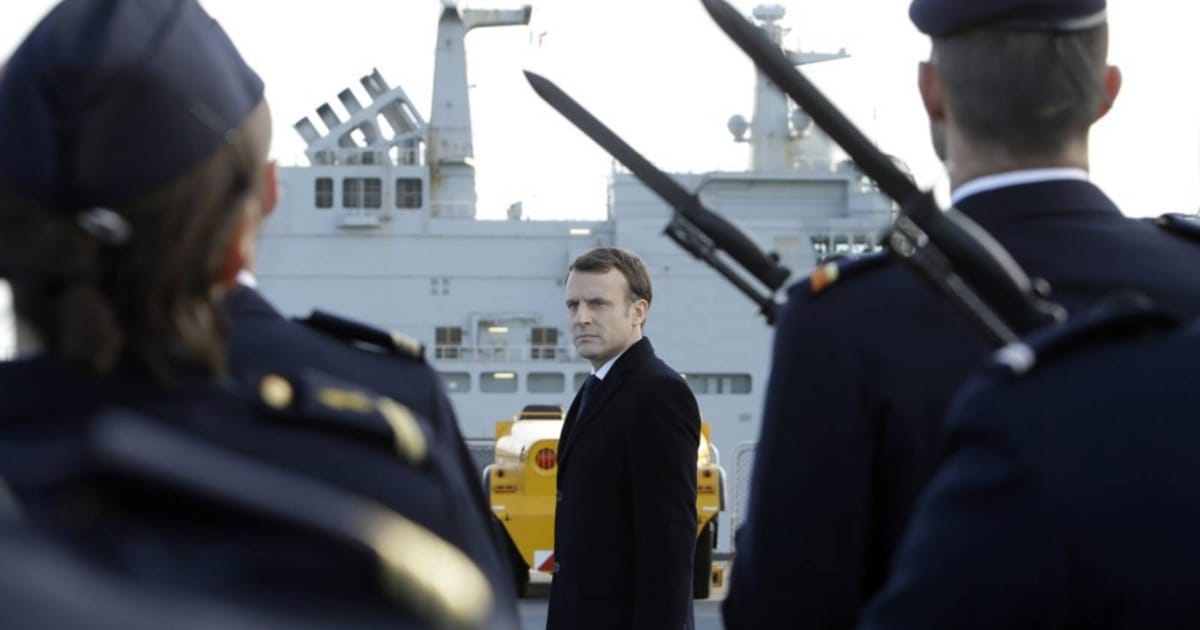
The Strait of Hormuz, a narrow choke point connecting the Persian Gulf to the open ocean, has long been a flashpoint for international tensions. Its strategic importance, primarily as a conduit for a significant portion of the world's oil supply, makes any military maneuver or diplomatic statement concerning its security a matter of global consequence. Against this backdrop, French President Emmanuel Macron's recent clarification regarding his nation's naval activities in the region has resonated deeply, offering a nuanced perspective on European engagement in a volatile Middle East.
Speaking from Nairobi, Kenya, President Macron unequivocally stated that France "never envisaged" sending warships into the Strait of Hormuz with the intention of enforcing or participating in a blockade. Instead, he characterized the French naval presence as a security mission, carefully coordinated with Iran. This distinction is crucial, as it positions France not as an antagonist in the escalating regional power dynamics, but as a facilitator of stability and unimpeded maritime passage. Macron reiterated his consistent opposition to any form of blockade from either side and firmly rejected the imposition of any "toll" that would impede the free flow of shipping through the strategic waterway.
The Geopolitical Chessboard of Hormuz
The Strait of Hormuz is more than just a shipping lane; it's a critical artery for global energy markets. Approximately 20% of the world's petroleum liquids and a substantial amount of liquefied natural gas (LNG) pass through this strait daily. Its closure, or even significant disruption, would send shockwaves through the global economy, leading to soaring oil prices and widespread economic instability. This inherent vulnerability has made the strait a focal point for geopolitical maneuvering, particularly between Iran and its regional rivals, as well as Western powers.
Historically, tensions in the strait have ebbed and flowed, often correlating with broader geopolitical shifts. The Iran-Iraq War (1980-1988) saw the "Tanker War," where both sides attacked commercial shipping, highlighting the strait's susceptibility to conflict. More recently, incidents involving tanker seizures, drone attacks, and naval confrontations have underscored the persistent fragility of maritime security in the area. Iran, possessing significant naval capabilities in the Gulf, has repeatedly warned that it could close the strait if its own interests are threatened, a stance viewed with alarm by the international community.
France's Diplomatic Balancing Act
France, under President Macron, has sought to carve out a distinct diplomatic path in the Middle East, often differing from the more confrontational approaches taken by some other Western nations. Macron's emphasis on dialogue and de-escalation, even with adversaries, has been a hallmark of his foreign policy. His statement regarding Hormuz reflects this approach, aiming to reassure Iran while simultaneously upholding the principle of freedom of navigation.
By framing the naval deployment as a "security mission coordinated with Iran," France is attempting to achieve several objectives:
* De-escalation: It signals to Iran that France is not aligning with efforts to isolate or antagonize Tehran, potentially reducing the likelihood of retaliatory actions in the strait. * Maintaining Open Channels: It keeps diplomatic lines open with Iran, which is crucial for broader regional stability and for addressing issues like the Joint Comprehensive Plan of Action (JCPOA), the international nuclear deal. * Upholding International Law: It reinforces the international norm of freedom of navigation, a principle vital for global trade and security. * European Autonomy: It demonstrates a degree of European foreign policy autonomy, distinct from U.S. policy, which has sometimes advocated for a more robust military posture in the region.
This strategy is not without its challenges. Balancing the need for security with the imperative of de-escalation in such a complex environment requires delicate diplomacy and clear communication. The coordination with Iran, as mentioned by Macron, suggests a level of trust and engagement that is often absent in the broader international discourse surrounding the Islamic Republic.
Regional Implications and International Responses
Macron's statement comes at a time when regional dynamics are particularly fluid. The Middle East is grappling with a myriad of crises, from the ongoing conflict in Yemen to the political instability in Lebanon and the ever-present Israeli-Palestinian issue. The Strait of Hormuz, while geographically distinct, is inextricably linked to these wider regional tensions. Any misstep or misinterpretation of intentions in the strait could easily trigger a wider conflagration.
Other international actors have varied responses to the situation. The United States, for instance, has often advocated for a strong military presence to deter Iranian aggression and ensure freedom of navigation, sometimes even proposing international coalitions for maritime security. Gulf Arab states, heavily reliant on the strait for their oil exports, generally support measures that guarantee its security but also harbor deep suspicions about Iran's intentions. China and India, major consumers of oil transiting Hormuz, prioritize stability and unimpeded trade above all else.
Macron's emphasis on a coordinated security mission rather than a blockade also subtly critiques the idea of unilateral action or overly aggressive postures that could provoke rather than deter. It suggests a preference for multilateral solutions and a recognition that Iran, as a littoral state, has legitimate security concerns that need to be addressed within a broader framework.
The Path Forward: Diplomacy and De-escalation
The French position, as articulated by President Macron, underscores the urgent need for continued diplomatic engagement and de-escalation efforts in the Strait of Hormuz. The alternative – a militarized standoff or, worse, an open conflict – would have catastrophic consequences for the region and the global economy.
Key elements for a stable future in Hormuz include:
* Clear Communication Channels: Maintaining direct and indirect communication between all parties involved, including Iran, Western powers, and regional states, is paramount to prevent misunderstandings. * Adherence to International Law: All nations must respect the United Nations Convention on the Law of the Sea (UNCLOS), which guarantees the right of innocent passage through international straits. * Confidence-Building Measures: Exploring initiatives that build trust and reduce suspicion among naval forces operating in the area could be beneficial. * Economic Stability: Addressing the underlying economic grievances and sanctions that contribute to Iran's more assertive posture could foster a more cooperative environment.
In conclusion, President Macron's statement serves as a vital reminder of the complexities inherent in ensuring maritime security in the Strait of Hormuz. By distinguishing France's role as a partner in a security mission coordinated with Iran, rather than an enforcer of a blockade, Paris aims to navigate the treacherous waters of Middle Eastern geopolitics with a focus on de-escalation and dialogue. This approach, if successful, could offer a blueprint for other international actors seeking to maintain stability in one of the world's most critical maritime passages, ensuring that global trade continues unimpeded and regional tensions do not boil over into wider conflict.
Stay Informed
Get the world's most important stories delivered to your inbox.
No spam, unsubscribe anytime.
Comments
No comments yet. Be the first to share your thoughts!