Near Catastrophe: Two US Navy Growlers Collide Mid-Air at Idaho Air Show, All Crew Safe
A shocking incident unfolded at an Idaho air show as two US Navy EA-18G Growler jets collided mid-air, resulting in both aircraft crashing. Miraculously, all four crew members involved in the dramatic event ejected safely, averting a potential tragedy. This rare occurrence has prompted an immediate investigation into the circumstances surrounding the collision, raising questions about air show safety protocols and military aviation training.
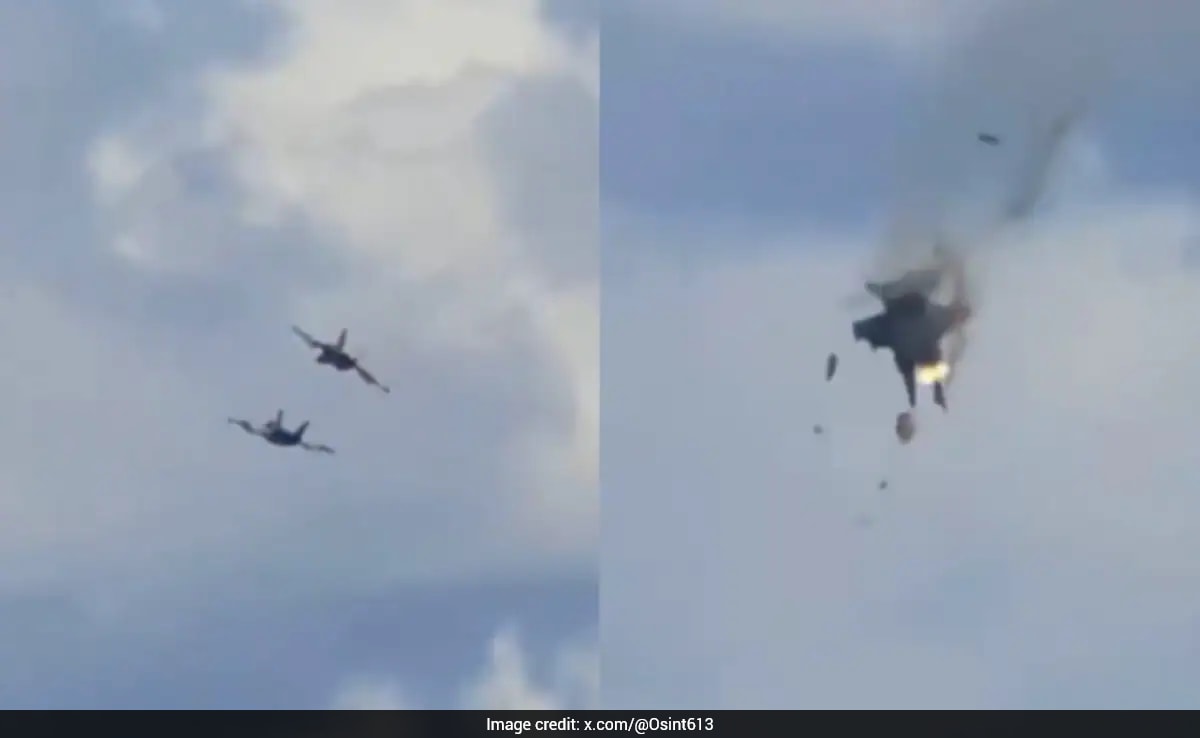
The roar of jet engines, a familiar symphony at air shows, turned into a chilling crescendo of chaos on a recent Sunday in Idaho. Spectators at the Mountain Home Air Force Base were witness to a terrifying spectacle as two US Navy EA-18G Growler electronic warfare jets, part of a planned aerial demonstration, collided mid-air. The incident, which sent plumes of smoke into the sky and scattered debris across the base, could have been a catastrophic loss of life. Yet, against all odds, all four crew members – two pilots and two electronic warfare officers – aboard the two aircraft managed to eject safely, a testament to modern aviation safety systems and rapid response training. This near-catastrophe has immediately ignited a comprehensive investigation and sparked renewed discussions about the inherent risks of military aviation and public air show safety.
The Anatomy of a Mid-Air Collision
The incident involved two EA-18G Growlers, a specialized variant of the F/A-18 Super Hornet, known for its electronic warfare capabilities. These aircraft, belonging to an unspecified Navy squadron, were participating in the 'Gunfighter Skies' air show, a popular event showcasing military prowess and precision. Eyewitness accounts and preliminary reports suggest the collision occurred during a formation maneuver, a common element in air show routines designed to demonstrate synchronized flying and pilot skill. While the exact sequence of events leading to the impact remains under investigation, the immediate aftermath saw both jets spiraling downwards. The rapid deployment of parachutes for all four crew members was a critical factor in their survival. The crews were quickly recovered and transported for medical evaluation, thankfully sustaining only minor injuries. The wreckage of both multi-million dollar aircraft was contained within the base perimeter, preventing further damage or civilian casualties on the ground.
This type of incident, while rare, underscores the extreme precision and coordination required for military aerial demonstrations. Even the slightest miscalculation in speed, altitude, or trajectory can have devastating consequences. The EA-18G Growler, a sophisticated piece of military hardware, is equipped with advanced avionics and ejection systems, which proved vital in this instance. The Martin-Baker US16E ejection seat, standard on the Super Hornet family, is designed to propel aircrew clear of a damaged aircraft even at low altitudes and speeds, offering a critical window for survival. The successful ejections highlight the rigorous training pilots and EWO's undergo to react instantaneously in life-threatening situations.
Historical Context and Safety Evolution
Mid-air collisions, particularly during air shows or training exercises, are a stark reminder of the inherent dangers of military aviation. Historically, such incidents have often resulted in tragic loss of life. However, advancements in aviation technology, pilot training, and air traffic control have significantly reduced their frequency. The 1988 Ramstein Air Show disaster in Germany, where three jets collided, killing 70 people and injuring hundreds, remains a sobering benchmark for air show safety protocols. Following that tragedy, regulations were tightened globally, focusing on minimum altitude requirements, separation distances, and stringent approval processes for aerial maneuvers.
In the United States, military air shows operate under strict guidelines set by the Department of Defense and individual service branches. These guidelines cover everything from flight paths and altitudes to emergency response plans. Despite these precautions, the human element and the unpredictable nature of high-performance aircraft mean that risks can never be entirely eliminated. The EA-18G Growler fleet, while having an excellent safety record overall, has experienced isolated incidents, as is common with any complex military platform. This particular event will undoubtedly lead to a comprehensive review of the specific maneuvers performed, the training of the aircrews involved, and the overall safety parameters for air shows featuring high-performance tactical aircraft.
Expert Analysis and Implications
From an operational standpoint, the loss of two EA-18G Growlers represents a significant financial and strategic blow, although not insurmountable for the vast US Navy fleet. Each Growler costs approximately $65-70 million, making the combined loss well over $100 million. Beyond the monetary value, these aircraft are critical assets for electronic warfare, a domain of increasing importance in modern conflict. The investigation will meticulously examine factors such as:
* Pilot Error: Was there a miscommunication, a lapse in judgment, or a deviation from the briefed flight plan? * Mechanical Failure: Did one of the aircraft experience an unforeseen mechanical issue that contributed to the collision? * Environmental Factors: Were there any unusual weather conditions, visibility issues, or bird strikes? * Air Show Protocols: Were the established safety distances and maneuver parameters adhered to? Were they sufficient?
The findings of this investigation will be crucial not only for understanding this specific incident but also for informing future safety protocols across the Navy and potentially for air shows worldwide. For the public, the incident serves as a stark reminder that while air shows are thrilling spectacles, they carry inherent risks. The miraculous survival of the crew members, however, also highlights the incredible engineering and training that goes into modern military aviation, offering a glimmer of reassurance amidst the shock.
Looking Ahead: A Focus on Prevention and Resilience
The immediate aftermath of the Idaho collision will involve a thorough and likely lengthy investigation by the Navy's safety board. Their findings will be critical in preventing similar incidents in the future. This will involve detailed analysis of flight data recorders, cockpit voice recorders, eyewitness testimony, and wreckage examination. Lessons learned will be integrated into training curricula and operational procedures, not just for the Growler community but potentially across all tactical aviation platforms.
For the Mountain Home Air Force Base and the air show community, this incident will undoubtedly prompt a re-evaluation of event planning and safety measures. While the desire to showcase military capabilities and inspire the next generation of aviators remains strong, the paramount concern must always be the safety of both aircrews and spectators. The successful ejection of all four crew members is a testament to the resilience of human design and training, but the goal remains to ensure such emergency systems are never needed. The incident in Idaho is a powerful, albeit harrowing, reminder of the fine line between breathtaking display and potential disaster, reinforcing the continuous need for vigilance, rigorous training, and an unwavering commitment to safety in the skies.
Stay Informed
Get the world's most important stories delivered to your inbox.
No spam, unsubscribe anytime.
Comments
No comments yet. Be the first to share your thoughts!