North Korea's Latest Ballistic Missile Launches Escalate Tensions in Volatile Region
North Korea conducted multiple ballistic missile launches towards the Sea of Japan on Sunday, marking its latest weapons test activity this year. These launches come amidst heightened regional tensions and ongoing joint military exercises between South Korea and the United States. Analysts suggest Pyongyang's actions are a direct challenge to international sanctions and a demonstration of its evolving military capabilities, further complicating denuclearization efforts and regional stability.
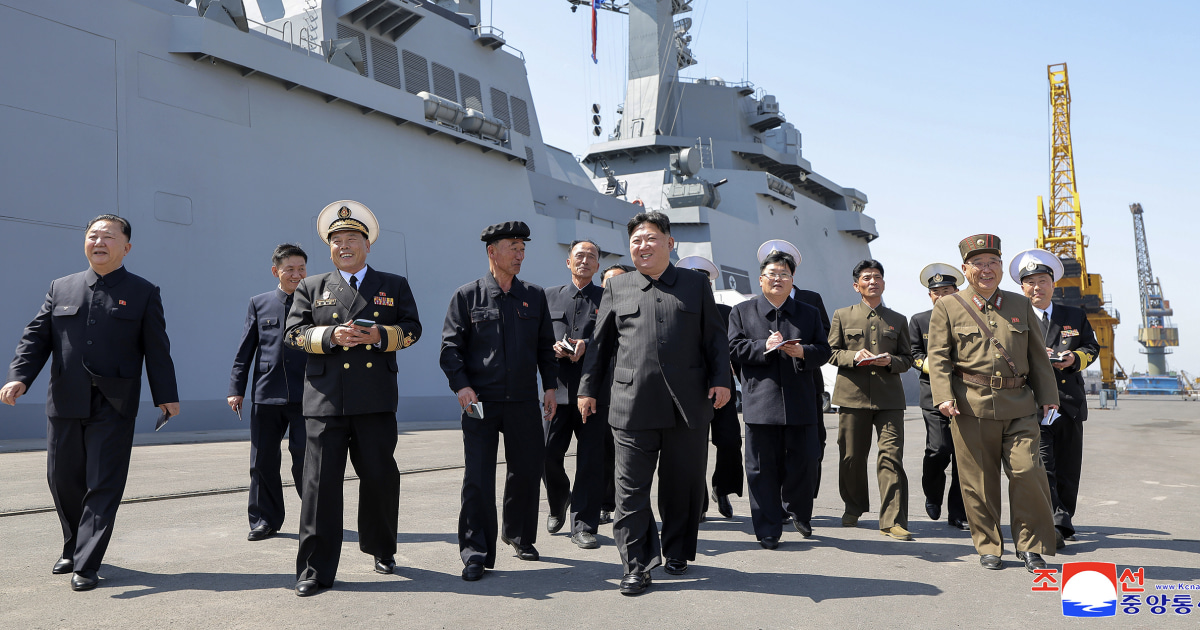
The tranquil waters off the Korean Peninsula were once again disturbed on Sunday as North Korea launched multiple ballistic missiles toward the Sea of Japan, known in Korea as the East Sea. This latest barrage of weapons testing activity, confirmed by its neighbors, signals a persistent and escalating challenge from Pyongyang, further ratcheting up tensions in an already volatile region. The launches underscore North as a key player in the intricate geopolitical dance of Northeast Asia, demanding immediate attention from international observers and policymakers alike.
A Pattern of Provocation: The Latest Launches
South Korea's Joint Chiefs of Staff (JCS) reported that the launches occurred Sunday morning, detecting several short-range ballistic missiles (SRBMs) fired from North Korea's eastern coast. Japanese authorities also confirmed the launches, with Prime Minister Fumio Kishida condemning the actions as a serious threat to regional and international peace and security. While initial assessments indicated the missiles landed outside Japan's exclusive economic zone (EEZ), the sheer frequency and variety of North Korea's tests this year are cause for alarm. These launches are not isolated incidents but rather part of a broader, calculated strategy by Pyongyang to advance its military capabilities and exert pressure on the international community. The JCS stated that South Korea and U.S. intelligence agencies were conducting a detailed analysis of the launches, including the exact type of missiles fired and their flight parameters.
This recent display of military might follows a series of provocative actions throughout the year, including tests of long-range cruise missiles, submarine-launched ballistic missiles (SLBMs), and even what North Korea claimed were hypersonic missiles. Each test serves a dual purpose: to refine its weapons technology and to send a clear message to Washington and Seoul. The timing of these launches is often strategic, frequently coinciding with joint military exercises between the United States and South Korea, which Pyongyang consistently denounces as rehearsals for invasion. This cyclical pattern of action and reaction has become a defining feature of inter-Korean relations.
Geopolitical Chessboard: Regional Implications
North Korea's continued missile development and testing pose significant challenges to regional stability. For South Korea, its immediate neighbor, these launches represent a direct threat to national security and a constant reminder of the ever-present danger from the North. The South Korean government has repeatedly called for dialogue while simultaneously bolstering its defense capabilities and strengthening its alliance with the United States. The ROK-U.S. alliance remains the cornerstone of deterrence on the peninsula, with both nations regularly conducting joint drills to enhance readiness.
Japan, another key U.S. ally, views North Korea's missile program with growing concern. Missiles flying over or near Japanese territory have prompted emergency alerts and calls for strengthened missile defense systems. The potential for a miscalculation or accidental escalation is a constant worry for Tokyo. Furthermore, the launches complicate efforts by the United States to forge a united front with its East Asian allies against a rising China, as North Korea's actions often divert attention and resources.
For China, North Korea's principal economic and political benefactor, the situation presents a delicate balancing act. While Beijing has historically supported Pyongyang, it also has an interest in regional stability and preventing a full-blown crisis on its doorstep. China has often called for de-escalation and dialogue, urging all parties to exercise restraint. However, its willingness to enforce international sanctions fully has been questioned, leading to accusations of enabling North Korea's illicit activities.
The Denuclearization Dilemma: A Stalled Process
The ultimate goal of international efforts regarding North Korea has been denuclearization – the complete, verifiable, and irreversible dismantlement of its nuclear weapons program. However, progress on this front has been virtually nonexistent for years. Despite high-profile summits between former U.S. President Donald Trump and North Korean leader Kim Jong Un, no concrete breakthroughs were achieved. Pyongyang has consistently demanded sanctions relief as a precondition for any significant steps toward denuclearization, a demand that Washington and its allies have largely rejected without tangible progress on disarmament.
North Korea views its nuclear arsenal as a crucial deterrent against perceived external threats, particularly from the United States. Its state media frequently frames missile tests as necessary measures for self-defense against hostile policies. This narrative, coupled with the regime's unwavering commitment to its military program, makes any diplomatic resolution incredibly challenging. The international community, led by the United Nations Security Council, has imposed numerous sanctions on North Korea, targeting its arms trade, financial transactions, and access to critical resources. However, the effectiveness of these sanctions has been limited, partly due to illicit evasion tactics and inconsistent enforcement.
Expert Analysis and Forward-Looking Perspectives
Security analysts widely agree that North Korea's recent missile launches are intended to achieve several objectives:
* Technological Advancement: Each test provides valuable data for refining missile designs, improving accuracy, and extending range. * Deterrence: Demonstrating capabilities to deter potential adversaries. * Bargaining Chip: Enhancing its leverage in future negotiations for sanctions relief or other concessions. * Domestic Cohesion: Rallying internal support for the regime by portraying it as a strong defender of the nation.
Stay Informed
Get the world's most important stories delivered to your inbox.
No spam, unsubscribe anytime.
Comments
No comments yet. Be the first to share your thoughts!