Pope Leo Clarifies 'Tyrants' Speech: Not Aimed at Trump, But a Universal Message
Pope Leo has clarified that his recent speech, which criticized "tyrants" for spending billions on wars, was not specifically aimed at former US President Donald Trump. Despite occurring days after a public disagreement, the pontiff emphasized that his remarks were a universal condemnation of conflict and excessive military spending. This clarification highlights the Vatican's delicate diplomatic balance and the Pope's consistent advocacy for peace and social justice on a global scale.
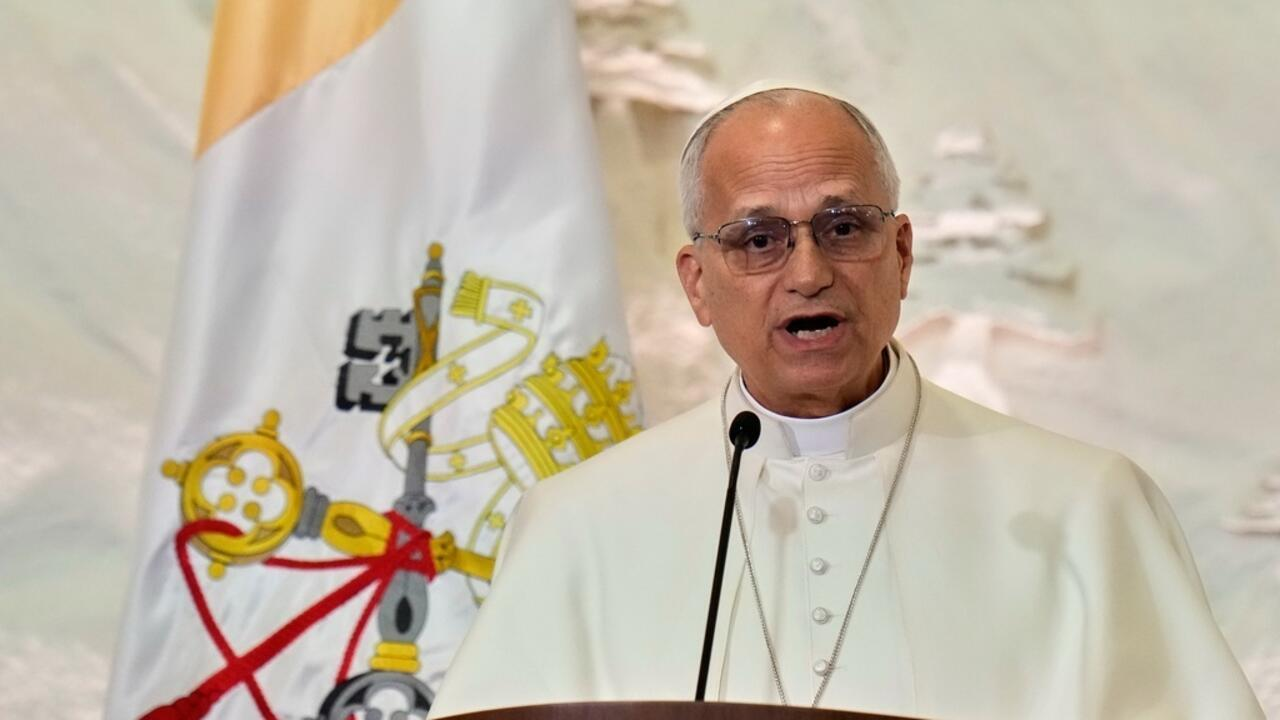
In a move to quell swirling speculation and diplomatic ripples, Pope Leo has emphatically stated that his recent, widely reported criticism of "tyrants" spending billions on wars was not a direct jab at former US President Donald Trump. The pontiff's clarification comes days after a high-profile spat with the then-US president, leading many observers and media outlets to interpret his remarks as a thinly veiled critique of Trump's policies and rhetoric. However, Pope Leo, ever the astute diplomat and spiritual leader, moved swiftly to reframe his message as a universal condemnation of conflict, excessive military expenditure, and the moral failings of leadership, rather than a personalized attack.
The Genesis of the Controversy
The initial remarks, delivered earlier this week, resonated globally, particularly given their timing. Pope Leo had previously engaged in a public disagreement with Donald Trump, most notably concerning immigration policies and the construction of border walls. This history fueled the narrative that the Pope's subsequent speech was a direct response, a papal rebuke from the highest spiritual authority to a powerful temporal leader. The phrase "tyrants who spend billions on wars" immediately conjured images of powerful nations and their leaders, with the United States, under Trump's administration, often being a focal point in discussions about military spending and international interventions. The media, quick to draw connections, amplified this interpretation, creating a significant international talking point.
However, the Vatican's diplomatic machinery, often slow but deliberate, recognized the potential for misinterpretation and the need for clarity. The Holy See operates on a global stage, maintaining relations with nearly every nation, and a direct, public confrontation with a world leader, especially one as influential as the US president, carries immense weight and potential consequences. While the Pope is known for his outspokenness on issues of social justice, poverty, and peace, his criticisms are typically framed in broader, more theological or ethical terms, rather than as specific political endorsements or condemnations of individuals.
A Universal Call for Peace and Prudence
Pope Leo's clarification underscores a fundamental aspect of papal communication: a preference for universal moral principles over specific political skirmishes. "My words were not aimed at any particular individual," the Pope reportedly stated, "but at a general pattern of behavior, a tragic reality where resources that could alleviate suffering are instead funneled into instruments of destruction." This re-contextualization aligns perfectly with the long-standing tradition of papal encyclicals and addresses, which frequently call for peace, disarmament, and the ethical use of global resources. For centuries, popes have served as moral arbiters, often speaking truth to power, but usually from a position that transcends partisan politics.
The pontiff's message is deeply rooted in Catholic social teaching, which consistently advocates for the preferential option for the poor and the common good. From Pope John XXIII's Pacem in Terris to Pope Francis's Fratelli Tutti, the Church has consistently condemned war as a last resort, emphasizing diplomacy, dialogue, and humanitarian aid. The billions spent on wars, in this theological framework, represent a profound misallocation of resources that could otherwise be used to combat poverty, hunger, disease, and illiteracy – issues that disproportionately affect the world's most vulnerable populations. By framing his critique in this universal manner, Pope Leo elevates the discussion from a political spat to a moral imperative, inviting introspection from all leaders, regardless of their political affiliation or nationality.
The Delicate Dance of Papal Diplomacy
This incident highlights the intricate and often delicate nature of papal diplomacy. The Pope, as the head of the Catholic Church, wields immense moral authority, but his power is primarily spiritual and persuasive, not military or economic. Therefore, maintaining a careful balance in public statements is crucial. A direct attack on a specific world leader, while perhaps satisfying to some critics of that leader, could alienate entire nations, jeopardize diplomatic relations, and potentially endanger Catholic communities in those countries. The Vatican's foreign policy is often characterized by its long-term vision, seeking to foster dialogue and build bridges, even with regimes it might fundamentally disagree with.
Furthermore, the Pope's role as a global spiritual leader means his words are heard and interpreted by billions across diverse cultures and political systems. His message must resonate beyond immediate headlines, offering guidance that is both timely and timeless. By clarifying his intent, Pope Leo reinforces the idea that his pronouncements are meant to inspire a broader ethical reflection on global governance, human dignity, and the pursuit of peace, rather than to engage in political mudslinging. This approach allows the Holy See to maintain its moral authority and its capacity to mediate and advocate on behalf of the marginalized, without being perceived as a partisan political actor.
Looking Ahead: A Consistent Voice for Humanity
Pope Leo's clarification serves as a powerful reminder of the consistent message emanating from the Vatican: a tireless call for peace, justice, and the protection of human dignity. While the immediate focus was on his relationship with Donald Trump, the deeper implication is a reaffirmation of the Church's role as a global conscience. In a world increasingly fragmented by conflict and political polarization, the Pope's voice remains one of the few truly universal moral authorities. His emphasis on the misuse of resources for war, rather than for human development, is a critique that transcends national borders and political ideologies.
Moving forward, we can expect Pope Leo to continue to speak out on these critical issues, using his platform to advocate for the vulnerable and to challenge leaders to prioritize peace over conflict, cooperation over confrontation, and compassion over indifference. His recent clarification is not an act of retreat, but rather a strategic re-centering of his message, ensuring that its universal appeal and moral weight are not diminished by narrow political interpretations. The message is clear: the call to end war and redirect resources towards human flourishing is not a political jab, but a profound spiritual and ethical imperative for all of humanity.
Stay Informed
Get the world's most important stories delivered to your inbox.
No spam, unsubscribe anytime.
Comments
No comments yet. Be the first to share your thoughts!