Pakistan Stock Exchange Plunges: What Triggered the Massive Sell-Off and What's Next?
The Pakistan Stock Exchange (PSX) experienced a dramatic sell-off, with the KSE-100 index plummeting over 2,750 points in a single session. This aggressive profit-taking wiped out early gains, raising concerns about market stability and investor sentiment. Experts are analyzing the underlying factors and the potential ripple effects on Pakistan's economy and future market performance.
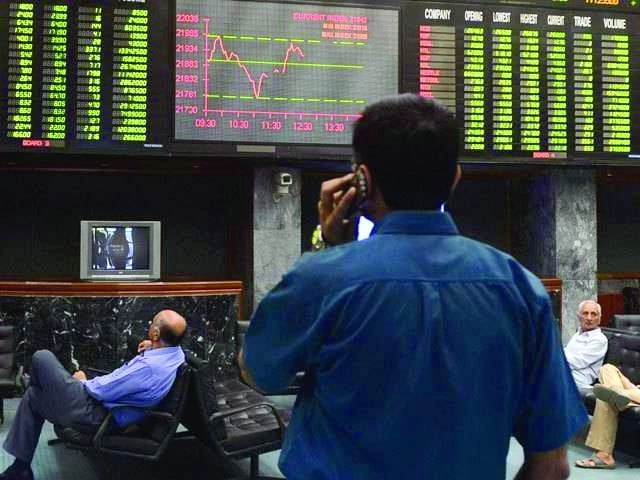
KARACHI – The financial heart of Pakistan experienced a seismic shock on Thursday as the Pakistan Stock Exchange (PSX) witnessed one of its most significant single-day plunges in recent memory. The benchmark KSE-100 index, a barometer of the nation's economic health, plummeted by an astonishing 2,750 points, closing at 169,173 points after an intra-day low of 168,828. This aggressive selling spree, largely attributed to profit-taking, aggressively erased earlier gains and sent jitters through investor circles, prompting urgent questions about the market's resilience and the broader economic outlook.
The day began with a flicker of optimism, as the market initially showed signs of building on previous positive momentum. However, this early promise quickly evaporated under the weight of sustained selling pressure. The sheer scale of the decline, with the index shedding over 2,400 points from its peak, underscored the volatility inherent in emerging markets and the swiftness with which sentiment can shift. For many investors, both institutional and retail, the session served as a stark reminder of the unpredictable nature of equity markets, particularly in an environment marked by complex domestic and international economic factors.
The Anatomy of a Sell-Off: Profit-Taking and Underlying Pressures
The immediate trigger for Thursday's dramatic decline was widely identified as aggressive profit-taking. After a period of sustained gains, many investors chose to cash in on their accumulated profits, leading to a cascade of sell orders. This phenomenon is not uncommon in bull markets, where rapid appreciation can lead to overvaluation in certain sectors, making them ripe for correction. However, the intensity of the selling suggests that underlying concerns might also be at play, amplifying the impact of mere profit-booking.
One significant factor contributing to the market's sensitivity is Pakistan's macroeconomic landscape. Despite recent efforts to stabilize the economy, including securing crucial funding from international bodies like the International Monetary Fund (IMF), persistent challenges remain. High inflation, a fluctuating currency, and ongoing fiscal pressures create an environment where investor confidence can be fragile. Any perceived instability or even the hint of policy uncertainty can quickly translate into market jitters, prompting a flight to safety or, in this case, a rush to realize gains before potential downturns.
Furthermore, global economic headwinds cannot be ignored. Rising interest rates in major economies, geopolitical tensions, and commodity price volatility all contribute to a cautious global investment climate. While the PSX's movements are primarily driven by domestic factors, it is not entirely insulated from these broader trends. Foreign institutional investors, who play a significant role in emerging markets, often react to global cues, and their withdrawal can exacerbate local selling pressure.
Historical Context: A Market Prone to Swings
The Pakistan Stock Exchange has a rich, albeit often turbulent, history. Established in 1947, it has evolved through various political and economic cycles, experiencing periods of robust growth interspersed with sharp corrections. The KSE-100 index itself has seen remarkable highs and lows, reflecting the country's journey through economic reforms, political transitions, and regional challenges.
For instance, the market witnessed significant rallies during periods of economic liberalization and privatization, attracting substantial foreign investment. Conversely, political instability, security concerns, and balance of payments crises have historically led to sharp declines. The current plunge, while significant, fits within a pattern of volatility that seasoned Pakistani investors have come to understand. The market's resilience has often been tested, and it has typically shown a capacity for recovery, albeit sometimes after prolonged periods of consolidation.
Comparing this event to past corrections, such as those seen during the 2008 global financial crisis or specific domestic political upheavals, reveals a common thread: investor sentiment is paramount. When confidence wavers, even fundamentally sound companies can see their valuations erode. The challenge for policymakers and market regulators is to foster an environment of predictability and transparency that can mitigate these emotional swings and encourage long-term investment rather than speculative trading.
Expert Analysis and Implications for Investors
Market analysts are dissecting Thursday's events with keen interest. "While profit-taking is a natural part of market cycles, the sheer volume and speed of the sell-off indicate a deeper nervousness," commented Dr. Aisha Khan, a leading economist based in Karachi. "Investors are likely reassessing their risk exposure in light of inflation concerns and the upcoming election cycle. There's a tendency to de-risk ahead of periods of uncertainty."
The immediate implication for investors is a potential recalibration of expectations. Those who entered the market recently might be feeling the pinch, while long-term investors may view this as an opportunity to acquire quality stocks at a discount. However, caution is advised. "It's crucial for investors to avoid panic selling," warned Mr. Junaid Alam, a veteran stockbroker. "A market correction, while painful, can also cleanse excesses. The focus should be on fundamentally strong companies with solid earnings prospects, rather than chasing speculative plays."
The plunge also highlights the importance of diversification and risk management. Investors with concentrated portfolios in highly volatile sectors would have felt the brunt of the decline more acutely. For the broader economy, a sustained downturn in the stock market could impact consumer confidence and corporate investment, though a single-day correction is unlikely to have a lasting macroeconomic effect unless it signals a deeper, more prolonged trend.
The Road Ahead: Navigating Uncertainty and Seeking Stability
Looking forward, the PSX faces a period of heightened scrutiny. The market's ability to recover swiftly will depend on several critical factors. Firstly, macroeconomic stability remains paramount. Continued progress on fiscal consolidation, inflation control, and currency stability will be crucial in restoring investor confidence. Any positive news regarding the next tranche of IMF funding or significant foreign direct investment could provide a much-needed boost.
Secondly, political clarity will play a significant role. With a general election on the horizon, the market often reacts sensitively to political developments. A clear and stable political transition, irrespective of the outcome, tends to be favored by investors over prolonged uncertainty or instability. Policy continuity, particularly concerning economic reforms, will be key to attracting and retaining investment.
Finally, the corporate earnings season will be closely watched. Strong financial results from listed companies can provide a fundamental underpinning for market recovery, demonstrating that despite macroeconomic challenges, businesses are still capable of generating profits and delivering value to shareholders. Conversely, weak earnings could prolong the market's consolidation phase.
In conclusion, while Thursday's plunge was a stark reminder of the PSX's inherent volatility, it also presents an opportunity for reflection and strategic repositioning. For policymakers, it underscores the urgent need for consistent economic reforms and transparent governance. For investors, it reinforces the timeless principles of prudent investing: research, diversification, and a long-term perspective. The path ahead may be bumpy, but with careful navigation, the Pakistani market has the potential to regain its footing and continue its journey towards sustained growth.
Stay Informed
Get the world's most important stories delivered to your inbox.
No spam, unsubscribe anytime.
Comments
No comments yet. Be the first to share your thoughts!