Ping G440 LST: The Low-Spin Driver Defying Expectations and Redefining Performance
Ping's new G440 LST driver has unexpectedly stolen the spotlight in robotic testing, showcasing a remarkable combination of low spin and high forgiveness. This anomaly challenges conventional golf club design, offering an unprecedented blend of distance and playability. Its emergence promises to reshape the landscape of high-performance golf equipment, providing a significant advantage for a wider range of golfers.
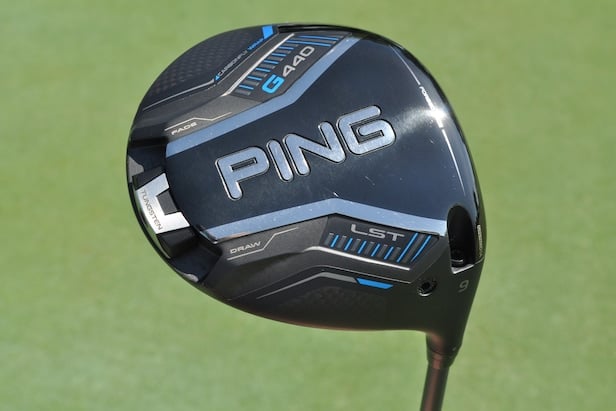
In the highly competitive world of golf equipment, innovation is a constant pursuit, yet true breakthroughs are rare. Manufacturers tirelessly strive to push the boundaries of technology, often focusing on incremental gains. However, a recent development from Ping, a brand synonymous with precision engineering, has sent ripples through the industry, defying established norms and capturing the attention of experts and enthusiasts alike. What began as a routine robotic analysis of the Ping G440 K driver, an evolution of the acclaimed G430 Max 10K, unexpectedly pivoted when a completely different club, the Ping G440 LST, emerged as the star, exhibiting performance characteristics that challenge the very definition of a low-spin driver.
Traditionally, low-spin drivers, often designated with 'LS' or 'LST' (Low Spin Technology), are designed for highly skilled golfers with high swing speeds. Their primary objective is to reduce backspin, which, when coupled with high ball speed, can lead to longer carries and more penetrating trajectories. The trade-off, however, has always been a significant reduction in forgiveness. These clubs are notoriously less stable on off-center hits, demanding a precise strike to achieve optimal results. The G440 LST, according to initial robotic testing data from Golf Laboratories, is shattering this paradigm, delivering the coveted low-spin numbers while simultaneously offering an astonishing level of forgiveness previously unseen in this category. This unexpected revelation suggests a significant leap forward in golf club design, potentially democratizing the benefits of low-spin performance for a broader spectrum of players.
The Unprecedented Fusion: Low Spin Meets High Forgiveness
The core of the G440 LST's groundbreaking performance lies in its ability to reconcile two historically opposing design principles: low spin and high moment of inertia (MOI), the latter being the primary metric for forgiveness. Engineers and designers have long grappled with the inherent conflict between these two goals. To reduce spin, clubheads are often designed with a forward center of gravity (CG), which inherently reduces MOI and thus forgiveness. Conversely, to increase forgiveness, weight is typically pushed to the perimeter and rear of the clubhead, moving the CG back and increasing spin.
The G440 LST appears to have found an ingenious solution to this dilemma. While specific technical details remain proprietary, the robotic analysis indicates that Ping has managed to achieve a low-spin profile without sacrificing the stability and resistance to twisting on off-center hits that golfers crave. This suggests a sophisticated redistribution of mass, perhaps utilizing advanced materials or internal geometries that manipulate the CG in a novel way. The implications are profound: golfers who previously had to choose between maximum distance (low spin) and consistent accuracy (high forgiveness) may now be able to have both. This could translate to longer drives on good hits and significantly less dispersion on mishits, a dream scenario for any golfer.
Robotic Testing: Unveiling the Truth Beyond the Hype
Robotic testing, like that conducted by Golf Laboratories, plays a crucial role in objectively evaluating golf equipment. Unlike human testing, which is subject to variability in swing speed, attack angle, and strike location, robots provide consistent, repeatable data. This allows engineers to isolate variables and precisely measure performance characteristics such as ball speed, launch angle, spin rate, and dispersion. The initial focus of the testing was on the G440 K, a driver designed for maximum forgiveness and stability, building upon the success of the G430 Max 10K, renowned for its ultra-high MOI. The G430 Max 10K, released in 2024, set a new benchmark for forgiveness, making the G440 K's evolution a highly anticipated event.
It was during this rigorous data collection that the G440 LST's anomalous performance became evident. The data points for spin rates were consistently low, as expected from an LST model. What was not expected was the equally impressive data for MOI and tight dispersion patterns, typically associated with much more forgiving, higher-spinning drivers. This unexpected convergence of attributes forced a re-evaluation of the entire testing protocol and highlighted the G440 LST as a truly unique product. The objective, unbiased nature of robotic analysis ensures that such groundbreaking discoveries are not overlooked, providing a solid foundation for performance claims.
Historical Context: The Evolution of Driver Design
The journey of driver technology has been marked by continuous innovation, driven by a relentless pursuit of distance and accuracy. From persimmon woods to metal woods, and then to titanium and composite materials, each era has brought its own set of advancements. The early 2000s saw the rise of adjustable drivers, allowing golfers to fine-tune loft and lie. More recently, manufacturers have focused on aerodynamic efficiency, weight distribution for specific launch conditions, and face technologies to maximize ball speed across the entire clubface.
Low-spin drivers have always represented the pinnacle of distance for elite players, but their unforgiving nature limited their appeal. Brands like Ping have consistently been at the forefront of this evolution. The original G430 Max 10K, for instance, was a testament to their commitment to extreme forgiveness, pushing MOI values to unprecedented levels. The G440 LST's emergence now suggests a new chapter, where the historical trade-offs are being overcome. This isn't just an incremental improvement; it's a potential paradigm shift, indicating that the industry might be entering an era where high performance no longer necessitates a compromise on playability. This could fundamentally alter how golfers approach driver selection and how manufacturers design future models.
Implications for Golfers and the Industry
The implications of the Ping G440 LST's performance are far-reaching. For golfers, especially those with moderate to high swing speeds who have struggled to harness the benefits of low-spin drivers due to their lack of forgiveness, this club could be a game-changer. It promises longer drives with greater consistency, potentially lowering handicaps and enhancing enjoyment of the game. It means less time searching for errant shots and more time focusing on the next one. This could lead to a significant increase in confidence off the tee, a critical component of successful golf.
For the golf equipment industry, the G440 LST sets a new benchmark. Competitors will undoubtedly scramble to understand and replicate Ping's engineering feat. This could spark a new wave of innovation, pushing all manufacturers to explore novel ways of combining desirable performance characteristics. It also raises questions about the future of driver segmentation – if low spin can be achieved with high forgiveness, will the distinct categories of 'max forgiveness' and 'low spin' drivers begin to blur? This could simplify the purchasing decision for consumers, offering a more versatile 'best of both worlds' option.
Furthermore, the success of the G440 LST could influence material science and manufacturing processes within the industry. Achieving such a delicate balance of performance metrics often requires breakthroughs in how materials are used and how clubheads are constructed. This could lead to new patents, proprietary technologies, and a renewed focus on fundamental research and development, ultimately benefiting the entire sport.
The Road Ahead: A New Era of Driver Design?
The Ping G440 LST is more than just a new driver; it represents a potential inflection point in golf club technology. Its ability to deliver low spin and high forgiveness simultaneously challenges long-held assumptions about driver design. As this club moves from robotic testing to public release and real-world play, its impact will be closely watched. If its performance translates consistently to the hands of golfers, it could usher in a new era where the pursuit of maximum distance no longer comes at the expense of playability. This innovation could redefine expectations for what a driver can achieve, setting a new standard for performance and opening up exciting possibilities for golfers of all skill levels. The future of the tee shot just got a lot more interesting, thanks to Ping's unexpected triumph.
Stay Informed
Get the world's most important stories delivered to your inbox.
No spam, unsubscribe anytime.
Comments
No comments yet. Be the first to share your thoughts!