Putin's Victory Day: A Defiant Stance Amidst Shifting Global Dynamics
Vladimir Putin used Russia's scaled-back Victory Day parade to double down on his justification for the war in Ukraine, framing it as a defense against an aggressive NATO. His speech, delivered in Moscow's Red Square, highlighted a narrative of historical grievance and national resilience. This annual event, traditionally a display of military might, offered insights into the Kremlin's strategic messaging and its perception of the ongoing conflict.
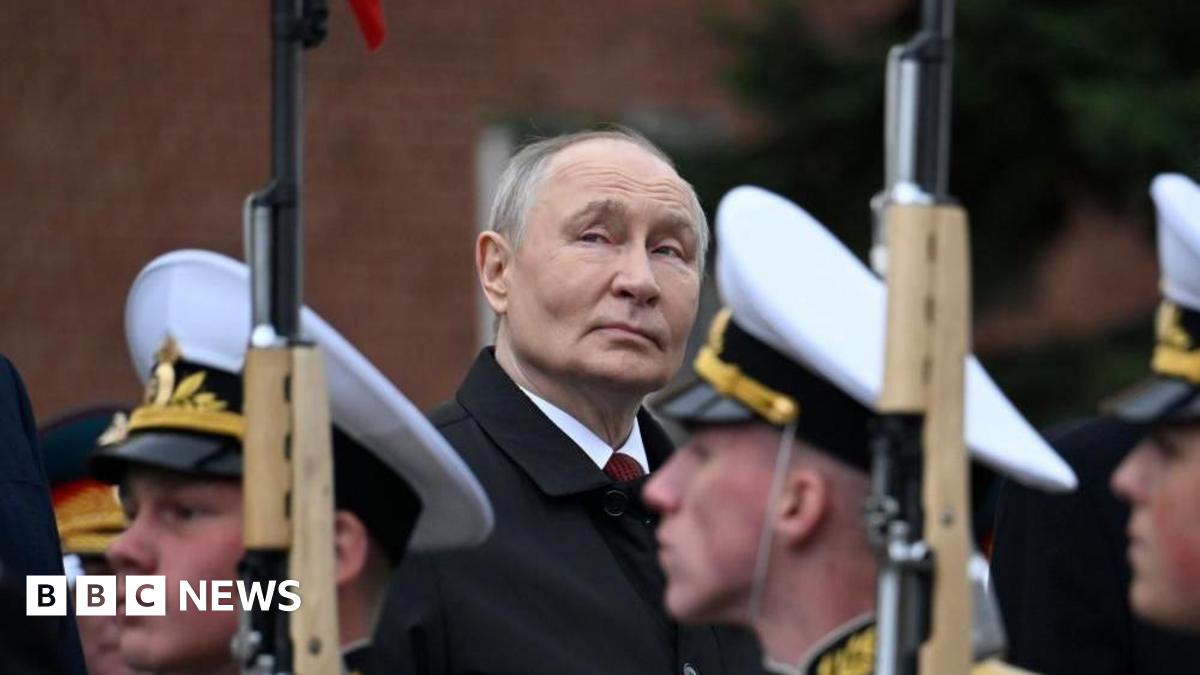
In a display of unwavering defiance against a backdrop of ongoing conflict, Russian President Vladimir Putin utilized the annual Victory Day parade in Moscow's Red Square to reiterate his justifications for the "special military operation" in Ukraine and to launch a scathing critique of NATO. The scaled-back nature of this year's celebrations, marked by fewer military assets and a more subdued atmosphere, spoke volumes about the current geopolitical climate and the strains of a protracted war.
Traditionally a grandiose spectacle showcasing Russia's military prowess, the 2024 parade offered a stark contrast to previous years. While still featuring a contingent of military personnel and a handful of allied leaders, the absence of the customary aerial flypast and a reduced ground forces display underscored the operational demands placed on the Russian military. Yet, the message from the podium remained resolute: Russia is engaged in a defensive struggle against what it perceives as an existential threat from the West.
The Narrative of Justification: A Historical Echo
Putin's speech was a carefully crafted blend of historical revisionism and contemporary grievance. He invoked the memory of the Soviet Union's victory over Nazi Germany in World War II, a foundational myth of modern Russian identity, to draw parallels with the current conflict. By portraying the current struggle as a continuation of the "Great Patriotic War," he sought to imbue the invasion of Ukraine with a sense of historical inevitability and moral righteousness. This narrative is crucial for domestic consumption, aiming to rally public support and legitimize the immense sacrifices being made.
He accused Western powers, particularly NATO, of fostering "Russophobia" and attempting to undermine Russia's sovereignty. This framing positions Russia not as an aggressor, but as a victim compelled to act in self-defense. The concept of a "multipolar world order," a recurring theme in Russian foreign policy discourse, was also implicitly championed, contrasting with what Moscow views as a unipolar, US-dominated international system. This rhetoric serves to justify Russia's challenge to the existing global power structure and its pursuit of a sphere of influence.
NATO as the Antagonist: A Perennial Theme
Central to Putin's address was the portrayal of NATO as an aggressive, expansionist bloc threatening Russia's borders. He reiterated long-standing Russian complaints about NATO's eastward enlargement following the collapse of the Soviet Union, arguing that this expansion directly contributed to the current security crisis. This perspective, while widely disputed by Western nations who maintain NATO is a defensive alliance, forms a cornerstone of the Kremlin's rationale for its actions in Ukraine.
Putin's denunciation of NATO is not new; it has been a consistent feature of his public statements for decades. However, its prominence on Victory Day – a day meant to celebrate national unity and triumph – underscored the Kremlin's view that the conflict in Ukraine is inextricably linked to a broader confrontation with the West. By casting NATO as the primary antagonist, Putin seeks to deflect international criticism and consolidate domestic support by presenting the war as a patriotic defense against external aggression. This narrative also conveniently sidesteps the complexities of Ukraine's sovereign right to choose its alliances.
The Geopolitical Chessboard: Implications for the World
The implications of Putin's defiant stance extend far beyond the immediate conflict in Ukraine. His speech signaled a continued commitment to Russia's current trajectory, indicating little willingness to de-escalate or seek a diplomatic resolution on terms unfavorable to Moscow. The scaled-back parade, while perhaps a pragmatic response to military realities, also projected an image of a nation tightening its belt for a prolonged struggle, prioritizing military objectives over ostentatious displays.
Expert analysts suggest that Putin's rhetoric aims to achieve several objectives: first, to maintain domestic cohesion and support for the war effort; second, to send a clear message to Western powers that Russia will not be intimidated; and third, to appeal to countries in the Global South that may harbor similar grievances against perceived Western hegemony. The notion of a "new world order" free from American dominance resonates with many nations seeking greater autonomy and a more balanced international system. Russia's actions, therefore, are not just about Ukraine, but about reshaping the global geopolitical landscape.
Furthermore, the speech underscored the deepening ideological chasm between Russia and the West. While Western leaders condemn Russia's actions as a violation of international law and a threat to European security, Putin frames them as a necessary response to Western aggression. This fundamental disagreement makes finding common ground for peace increasingly challenging, pointing towards a future characterized by continued geopolitical tension and proxy conflicts.
Looking Ahead: A Protracted Struggle
As the war in Ukraine grinds on, Putin's Victory Day address served as a powerful reaffirmation of Russia's resolve. The absence of any conciliatory language or indication of a shift in strategy suggests that Moscow is prepared for a protracted conflict. The emphasis on historical grievances and the demonization of NATO indicate that the Kremlin views this as an existential struggle, not merely a regional dispute.
For international observers, the parade and speech offered a sobering glimpse into the mind of the Russian leadership. It highlighted the deep-seated historical narratives that inform Russian foreign policy and the extent to which the current conflict is perceived through the lens of past triumphs and perceived injustices. The world watches as Russia continues to chart a course that challenges established norms, with profound implications for global security, international relations, and the future of Europe. The path forward remains fraught with uncertainty, but one thing is clear: Russia, under Putin, remains committed to its vision, regardless of the international outcry or the costs incurred.
Stay Informed
Get the world's most important stories delivered to your inbox.
No spam, unsubscribe anytime.
Comments
No comments yet. Be the first to share your thoughts!