Putin's Victory Day Cult: How Russia's Weaponized History Fails Its War Veterans
Russia's Victory Day, once a solemn commemoration, has transformed under Vladimir Putin into a weaponized 'cult of war,' simplifying complex history into a heroic narrative. This state-built ideology, which frames current conflicts through a distorted World War II lens, is increasingly failing the very veterans it purports to honor. The article explores how this narrative impacts soldiers returning from Ukraine, their struggles for recognition and support, and the growing disconnect between Kremlin propaganda and battlefield realities.
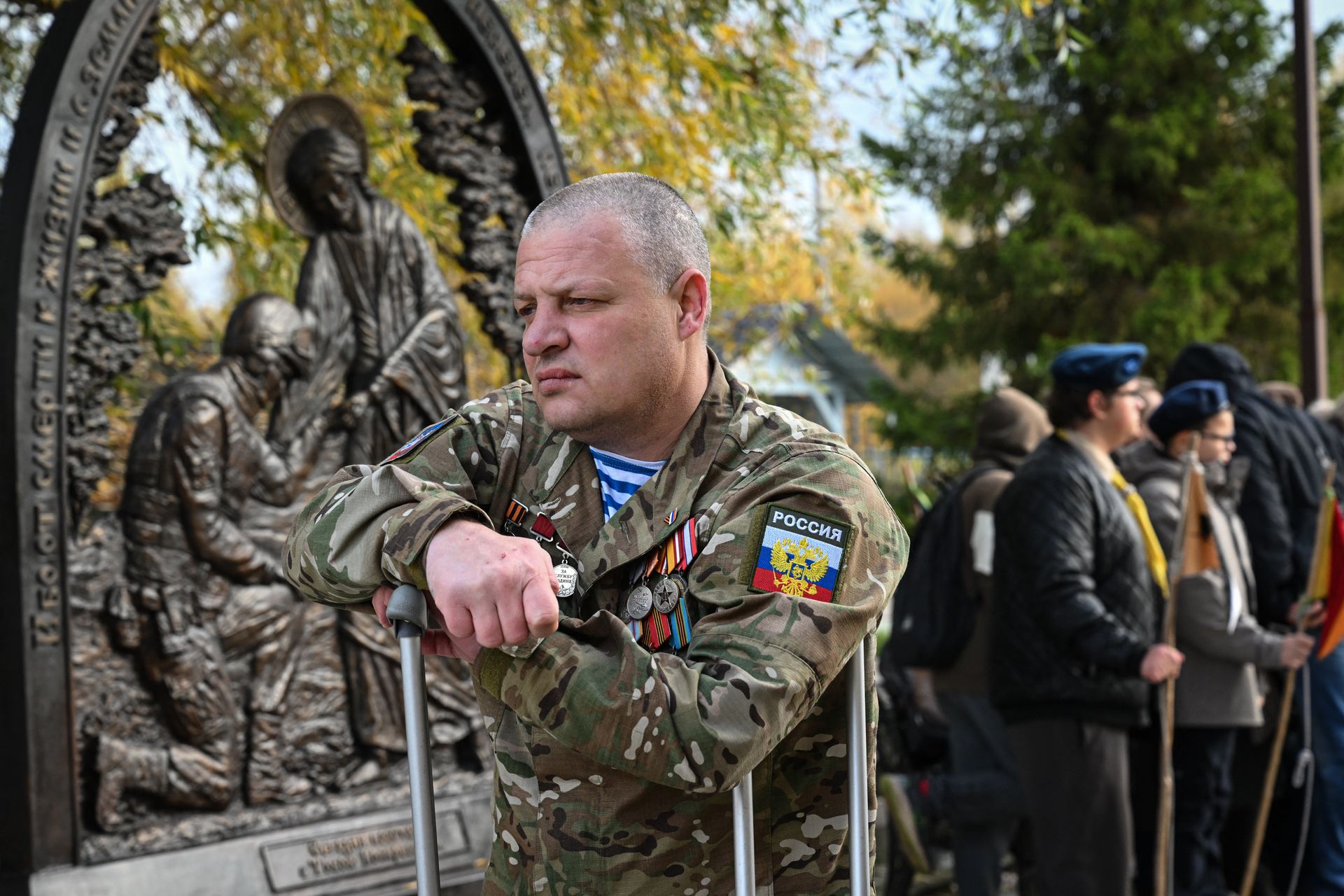
For decades, May 9th has been etched into the Russian psyche as Victory Day, a profound national holiday commemorating the Soviet Union's triumph over Nazi Germany in World War II, known in Russia as the Great Patriotic War. It is, without question, the most sacred date in the nation's political calendar, a day of immense historical weight and collective memory. However, under the two-decade rule of President Vladimir Putin, this solemn commemoration has undergone a dramatic and insidious transformation, evolving from a tribute to fallen heroes into a state-built cult of war—a powerful, weaponized narrative that increasingly fails the very veterans it purports to champion.
The Genesis of a Weaponized Narrative
Putin's ascent to power coincided with a deliberate and systematic effort to reshape Russia's historical consciousness. The complex, often brutal realities of Soviet involvement in World War II, including its pact with Nazi Germany, its purges, and its immense human cost, have been systematically downplayed or erased. In their place, the Kremlin has constructed a simplified, heroic narrative: one of an unblemished, righteous struggle against absolute evil, culminating in glorious victory. This narrative is not merely a historical interpretation; it is a foundational myth for modern Russia, designed to foster national unity, justify state power, and project an image of military might.
This historical revisionism has profound implications. The language of World War II has been expertly co-opted to frame contemporary geopolitical conflicts. Most notably, the invasion of Ukraine in February 2022 was justified by the Kremlin as a 'denazification' effort, an echo of the Great Patriotic War. Ukrainian leaders and even the Ukrainian state itself were branded as 'Nazis' or 'neo-Nazis,' a grotesque distortion of reality that served to demonize an entire nation and rally domestic support for the invasion. This rhetorical strategy weaponizes historical trauma, turning a shared memory of suffering into a tool for aggression.
The Disconnect: Veterans of Past and Present Wars
The irony of this cult of war is that while it lionizes the abstract concept of military victory, it often struggles to adequately support the flesh-and-blood veterans who embody that sacrifice. Veterans of World War II, now dwindling in number, are revered as symbols, paraded during Victory Day celebrations, but their individual experiences and needs often remain secondary to the grand narrative. Their stories are curated to fit the state's agenda, emphasizing heroism and loyalty above all else.
The disconnect becomes even more stark when considering veterans of Russia's more recent conflicts, particularly the ongoing war in Ukraine. While the Kremlin's propaganda machine works overtime to portray these soldiers as inheritors of the Great Patriotic War's glory, the reality on the ground, and for those returning home, is often grim. Reports from independent media and human rights organizations paint a picture of inadequate medical care, psychological support, and social reintegration programs. Many wounded soldiers face long rehabilitation processes, often with limited state assistance, while families of the fallen grapple with grief and financial hardship.
The Economic and Social Strain
The economic burden of the war in Ukraine, coupled with international sanctions, further exacerbates the challenges faced by veterans. While the state allocates significant resources to military spending and propaganda, the social safety net for returning soldiers often proves insufficient. The promise of generous compensation and benefits frequently clashes with bureaucratic hurdles and underfunded services. This disparity creates a growing sense of disillusionment among those who have risked their lives for the state.
Furthermore, the social stigma associated with returning from a conflict that is officially termed a 'special military operation' rather than a 'war' can complicate matters. Soldiers may struggle to articulate their experiences, and society, conditioned by state media, may not fully grasp the psychological toll of modern warfare. This can lead to isolation, mental health crises, and difficulties in finding employment, mirroring problems faced by veterans in many nations, but compounded by Russia's specific political and social context.
Propaganda vs. Reality: A Widening Chasm
The Kremlin's narrative relies heavily on controlling information. State media relentlessly promotes the idea of a unified, victorious nation, battling existential threats. However, the reality of a protracted, costly conflict, with significant casualties and no clear end in sight, is increasingly difficult to conceal. Social media, despite censorship efforts, provides glimpses into the lives of soldiers and their families, often revealing a stark contrast to the official narrative. These alternative sources of information chip away at the credibility of the state-built cult of war, particularly among younger generations who have not directly experienced the Soviet era.
The failure of the state to adequately care for its veterans undermines the very legitimacy of its war narrative. If the sacrifices made are not honored with tangible support and recognition, the heroic tales begin to ring hollow. This creates a dangerous feedback loop: the more the state relies on a fabricated past to justify a difficult present, the more it risks alienating those who are living through that present, especially those on the front lines.
The Future of Russia's War Cult
As the war in Ukraine continues, the sustainability of Putin's Victory Day cult faces increasing pressure. While May 9th will undoubtedly remain a central pillar of Russian identity, its meaning may continue to shift. The current generation of veterans, unlike their World War II predecessors, are returning from a conflict that lacks the clear moral clarity of fighting Nazism, at least in the eyes of much of the international community and, increasingly, some segments of Russian society. Their experiences, often traumatic and complex, do not easily fit into the simplified, heroic mold prescribed by the Kremlin.
The long-term implications are significant. A state that fails its veterans risks eroding the very foundation of its military and patriotic fervor. The gap between official rhetoric and lived reality can lead to cynicism, social unrest, and a weakening of national cohesion. While the cult of war may serve to rally support in the short term, its inability to genuinely care for its participants may prove to be its ultimate undoing, leaving behind a legacy of unfulfilled promises and neglected heroes. The true cost of weaponized history is borne not just by the 'enemy,' but by the nation's own people, especially those who answer the call to arms.
Stay Informed
Get the world's most important stories delivered to your inbox.
No spam, unsubscribe anytime.
Comments
No comments yet. Be the first to share your thoughts!