Retro-Futurism Reimagined: Wipeout Clone Soars on ESP32-S3, Redefining Embedded Gaming
A remarkable engineering feat has brought a clone of the iconic 1995 PlayStation game Wipeout to life on the humble ESP32-S3 microcontroller. This development challenges conventional notions of embedded system capabilities, showcasing how modern, low-cost hardware can deliver sophisticated 3D graphics. It represents a significant step forward for retro gaming enthusiasts and embedded developers alike, opening new avenues for complex applications on resource-constrained devices.
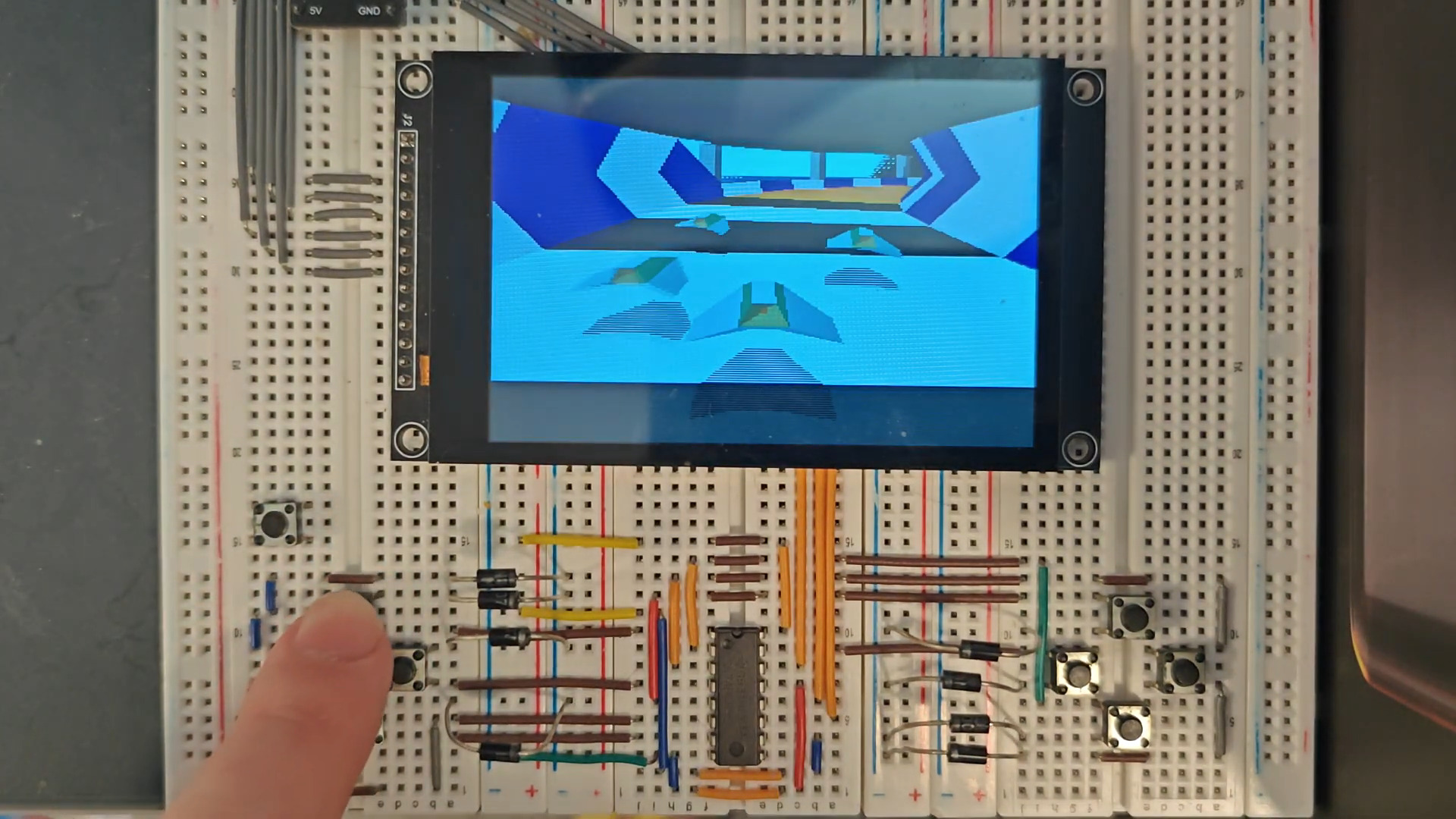
In the annals of video game history, few titles command the same reverence as Psygnosis's 1995 masterpiece, Wipeout. Launched alongside the original PlayStation, it wasn't just a game; it was a cultural phenomenon, a pulsating blend of high-speed anti-gravity racing, cutting-edge 3D graphics, and an unforgettable electronic soundtrack that defined a generation. Wipeout showcased the raw power and potential of Sony's nascent console, pushing the boundaries of what was thought possible in home entertainment. Fast forward nearly three decades, and the spirit of this legendary title has been rekindled in the most unexpected of places: on a tiny, low-cost ESP32-S3 microcontroller, a chip more commonly associated with IoT devices and smart home automation than demanding 3D gaming.
This extraordinary achievement, bringing a functional Wipeout clone to native execution on the ESP32-S3, is more than just a nostalgic trip; it's a profound statement on the relentless march of technological progress and the ingenuity of the open-source community. It forces us to re-evaluate our perceptions of what 'embedded' systems are truly capable of, demonstrating that with clever optimization and a deep understanding of hardware, even seemingly impossible tasks can be realized. The project, which has garnered significant attention within developer circles, serves as a beacon for future innovation, suggesting a future where complex graphical applications are not solely the domain of powerful PCs or dedicated gaming consoles.
The Unlikely Canvas: ESP32-S3's Hidden Power
The ESP32-S3, a dual-core Xtensa LX7 processor from Espressif Systems, is a marvel of modern embedded engineering. Typically found powering everything from smart light bulbs to industrial sensors, its specifications – a clock speed of up to 240 MHz, 512 KB of SRAM, and integrated Wi-Fi and Bluetooth – hardly scream '3D gaming powerhouse.' The original PlayStation, for comparison, boasted a 33.8 MHz MIPS R3000 CPU and 2 MB of RAM, alongside dedicated graphics hardware. The sheer disparity in raw specifications makes the ESP32-S3's ability to render a recognizable Wipeout experience all the more astonishing. This isn't achieved through emulation, which would be prohibitively slow; instead, it's a native port, a meticulously crafted codebase designed to leverage every ounce of the S3's capabilities.
The key to this success lies in several factors: * Highly Optimized Code: The developers have likely employed aggressive optimization techniques, writing low-level code that directly interacts with the hardware, bypassing typical operating system overheads. * Efficient Graphics Pipeline: Rather than relying on a full-blown graphics API, the project probably uses a custom, lightweight rendering engine tailored for the S3's specific architecture, potentially utilizing its built-in display controller and DMA (Direct Memory Access) for rapid pixel manipulation. * Resource Management: Judicious use of the limited RAM and flash memory, alongside clever asset compression and streaming, would be crucial to fit the game's data within the microcontroller's constraints. * Single-Purpose Design: Unlike a general-purpose computer, the ESP32-S3 in this context is dedicated solely to running the game, allowing for maximum resource allocation to the task at hand.
Beyond Nostalgia: Technical Implications and Innovations
This project transcends mere novelty; it offers profound insights into the future of embedded graphics and low-power computing. For developers, it provides a tangible example of what can be achieved with constrained hardware, fostering a mindset of efficiency and innovation. It challenges the notion that sophisticated graphical interfaces require high-end processors, potentially paving the way for:
* Advanced HMI (Human-Machine Interface) on IoT Devices: Imagine smart home devices with richer, more interactive 3D interfaces, or industrial control panels with intuitive graphical dashboards, all powered by cost-effective microcontrollers. * Portable Retro Gaming: While not a commercial product, the project demonstrates the feasibility of creating ultra-portable, dedicated retro gaming devices with minimal power consumption, extending battery life significantly. * Educational Tools: It serves as an excellent educational resource, illustrating principles of low-level programming, graphics rendering, and embedded system optimization in a highly engaging manner. * Proof of Concept for Edge AI Visualization: As AI moves to the edge, there's a growing need to visualize complex data directly on embedded devices. This project shows that even 3D representations might be within reach without offloading to the cloud.
The developers behind this clone have effectively reverse-engineered and re-implemented core aspects of Wipeout's rendering logic, demonstrating a deep understanding of 3D mathematics, rasterization techniques, and hardware-specific optimizations. This is not just about copying a game; it's about understanding the underlying principles that made it work and adapting them to an entirely different computational paradigm.
The Evolution of Embedded Graphics: From Pixels to Polygons
The journey of embedded graphics has been a fascinating one. Early microcontrollers could barely flicker a few LEDs. With advancements, monochrome character displays became common, followed by simple pixel-based LCDs. The introduction of more powerful ARM-based microcontrollers and specialized graphics co-processors brought about the era of touchscreens and basic GUI elements. However, full-fledged 3D rendering, especially at playable frame rates, remained largely the domain of more powerful application processors or dedicated GPUs.
The ESP32-S3 Wipeout clone blurs these lines. It signifies a coming of age for certain microcontrollers, demonstrating that they are no longer just for simple control tasks. The integration of faster memory interfaces, improved CPU architectures, and increasingly sophisticated peripherals within these compact packages is unlocking capabilities that were once unimaginable. This trend is likely to continue, with future generations of microcontrollers offering even more robust graphical capabilities, potentially including hardware acceleration for specific 3D operations.
The Open-Source Spirit and Community Impact
Projects like the Wipeout clone thrive in the vibrant open-source community. It's a testament to collaborative innovation, where enthusiasts, engineers, and hobbyists share knowledge, code, and passion to push the boundaries of technology. The source code, once released, becomes a learning tool, a foundation upon which others can build, modify, and improve. This iterative process accelerates development and disseminates expertise, making complex topics accessible to a wider audience.
The impact on the ESP32 community specifically is immense. It provides a high-profile example of the chip's versatility and raw power, inspiring new projects and attracting more developers to the platform. It also highlights the importance of Espressif's continued investment in robust SDKs and development tools, which empower creators to harness the full potential of their hardware.
A Glimpse into the Future of Pervasive Computing
As we look ahead, the implications of such projects are far-reaching. The ability to run complex graphical applications on extremely low-power, low-cost hardware points towards a future of pervasive computing where rich, interactive experiences are embedded into nearly every object around us. From smart appliances with engaging interfaces to wearable devices offering sophisticated data visualization, the boundaries between dedicated computing devices and everyday objects will continue to blur. The ESP32-S3 Wipeout clone is not just a game; it's a harbinger of a future where processing power and graphical fidelity are no longer exclusive to the largest, most expensive machines, but are democratized and distributed across the fabric of our digital lives. It reminds us that innovation often springs from unexpected places, driven by passion and a desire to challenge the status quo, proving that even a small chip can host a giant leap for embedded gaming.
Stay Informed
Get the world's most important stories delivered to your inbox.
No spam, unsubscribe anytime.
Comments
No comments yet. Be the first to share your thoughts!