Samsung Workers Demand Fair Pay Amid AI Chip Boom, Threaten Major Strike
Tens of thousands of Samsung Electronics workers are protesting a significant pay gap with rival SK Hynix, threatening an 18-day strike from May 21 if their demands are not met. This unprecedented labor action could disrupt the global AI chip supply chain, impacting tech giants relying on Samsung's memory products. The dispute highlights growing labor tensions in South Korea's highly competitive tech sector.
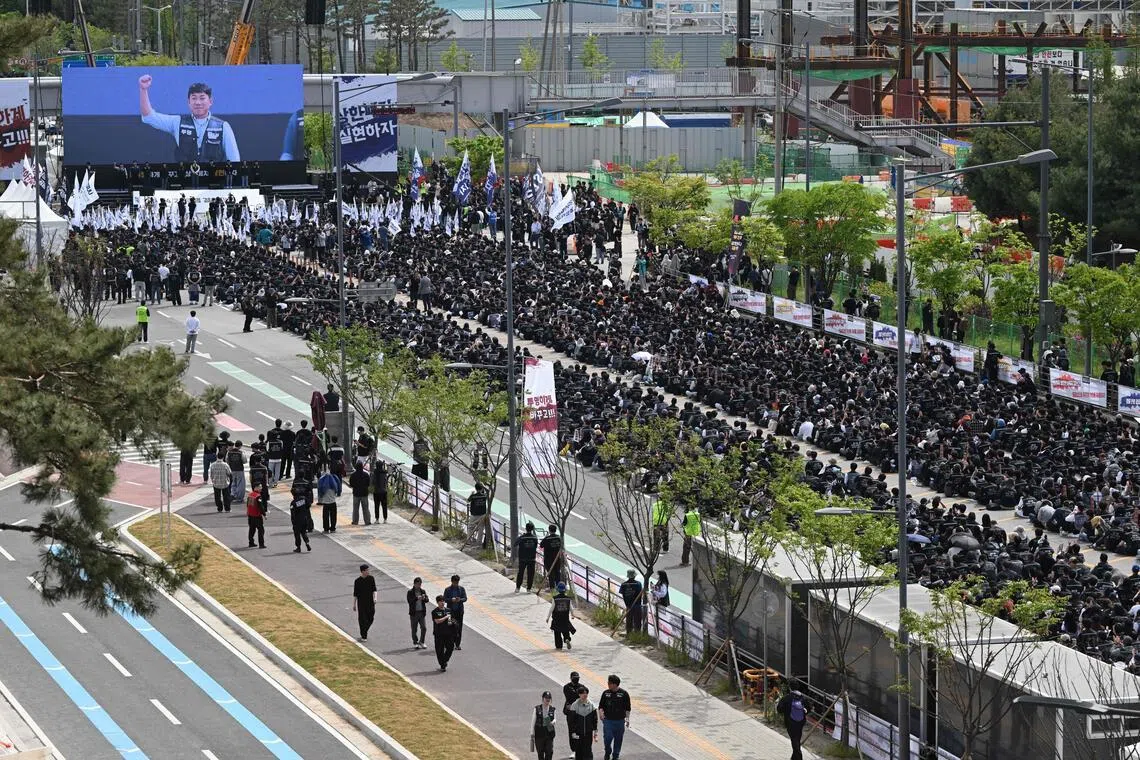
In an unprecedented show of collective defiance, tens of thousands of Samsung Electronics workers gathered at a sprawling factory complex south of Seoul on April 23, their voices echoing a growing frustration over compensation levels. This massive rally, a stark departure from Samsung's historically subdued labor relations, precedes a looming 18-day strike scheduled to commence on May 21. The potential industrial action, driven by a significant pay disparity with rival SK Hynix, threatens to send ripples across the global technology landscape, particularly impacting the burgeoning artificial intelligence (AI) chip supply chain.
For decades, Samsung, a titan of industry and a cornerstone of South Korea's economy, has largely managed to avoid the large-scale labor disputes common in other sectors. Its workforce, often characterized by a strong sense of corporate loyalty and a preference for internal resolution, is now openly challenging the status quo. The genesis of this discontent lies in the perceived unfairness of their remuneration compared to that of their counterparts at SK Hynix, a key competitor in the high-stakes memory chip market. As the demand for high-bandwidth memory (HBM) chips, crucial for AI accelerators, skyrockets, both companies are at the forefront of this technological revolution. However, Samsung's unionized workers argue that their contributions are not being adequately recognized, especially when benchmarked against the more generous compensation packages offered by SK Hynix.
The Widening Pay Gap and Unionization Efforts
The core of the dispute revolves around a substantial pay gap. While specific figures are often proprietary, union representatives have consistently highlighted that SK Hynix employees, on average, receive significantly higher annual compensation, including bonuses and benefits, for comparable work. This disparity has become increasingly pronounced as SK Hynix has seen immense success in the HBM market, leading to record profits and, consequently, more substantial employee incentives. Samsung, despite its overall financial prowess and diversified portfolio, has faced challenges in its memory division, particularly in catching up with SK Hynix in the latest HBM generations. This has translated into less favorable bonus structures for its employees, fueling resentment.
Historically, Samsung maintained a largely union-free environment, a strategy that allowed it considerable flexibility in managing its workforce and compensation. However, recent years have seen a significant shift. The National Samsung Electronics Union (NSEU), which represents a substantial portion of Samsung's workforce, has grown rapidly, becoming a formidable voice for employee rights. This growth is partly attributed to changing labor laws in South Korea and a broader societal movement towards greater worker empowerment. The union's ability to mobilize tens of thousands of workers for a rally and threaten a prolonged strike underscores its newfound strength and determination. Their demands extend beyond just a percentage increase in base pay; they are seeking a more equitable share of the company's profits, especially given the intense pressure and long hours often associated with working in the high-tech manufacturing sector.
Potential Impact on Global AI Chip Supply
The prospect of an 18-day strike at Samsung, a global leader in memory chip production, sends shivers down the spines of technology executives worldwide. Samsung is not just a major producer of DRAM and NAND flash memory; it is also a critical supplier of advanced packaging services and, increasingly, HBM chips for AI applications. Companies like Nvidia, AMD, and other AI hardware developers rely heavily on a stable supply of these components to power their next-generation processors and data centers. A prolonged disruption could have cascading effects, leading to:
* Supply Chain Delays: An 18-day stoppage would inevitably create backlogs in production and shipments, delaying the availability of crucial memory components. * Price Volatility: Reduced supply could drive up prices for memory chips, impacting the profitability of downstream manufacturers and potentially increasing costs for consumers. * Market Share Shifts: While SK Hynix might initially benefit from Samsung's woes, the overall market could suffer from instability, potentially prompting customers to diversify their supplier base further. * Innovation Slowdown: Delays in component availability can slow down the development and deployment of new AI technologies, affecting the pace of innovation across the industry.
The timing of this potential strike is particularly sensitive. The AI boom is accelerating, with companies scrambling to acquire the necessary hardware infrastructure. Any hiccup in the supply chain for essential components like HBM could have significant strategic implications for nations and corporations vying for leadership in AI development. The global semiconductor industry is already grappling with geopolitical tensions and the lingering effects of past supply chain disruptions; a major strike at Samsung would add another layer of complexity.
Broader Implications for South Korean Labor and Corporate Culture
This dispute at Samsung is more than just a fight over wages; it represents a significant moment for South Korean labor relations. For decades, the chaebol – the large, family-controlled conglomerates like Samsung, Hyundai, and LG – have wielded immense power, often resisting strong unionization. The visible and vocal protest at Samsung signals a potential shift in this dynamic. It suggests that even in the most powerful and traditionally conservative corporate environments, workers are increasingly willing to assert their rights and demand a fairer share of the wealth they help create.
This movement could inspire similar actions in other chaebol, potentially leading to a broader re-evaluation of corporate governance and employee welfare across the country. The South Korean government, which often walks a tightrope between supporting its powerful industries and ensuring social equity, will be closely watching the outcome. A resolution that addresses worker concerns without crippling the industry's competitiveness will be crucial.
Furthermore, the incident highlights the growing importance of human capital in the highly specialized semiconductor industry. While automation and advanced technology are paramount, the skilled engineers and technicians who design, manufacture, and test these complex chips remain indispensable. Companies that fail to adequately compensate and retain this talent risk losing their competitive edge, especially in a global market where skilled labor is in high demand.
The Path Forward: Negotiation and Resolution
As the May 21 deadline approaches, both Samsung management and the NSEU are under immense pressure to find a resolution. The company has historically prided itself on its ability to navigate challenges and maintain its market leadership. A prolonged strike would not only damage its reputation but also incur significant financial losses and potentially cede ground to competitors. For the union, a successful outcome would solidify its standing and empower workers across the country.
Negotiations are likely to be intense, balancing the company's need for financial stability and global competitiveness with the workers' legitimate demands for fair compensation. The outcome will depend on the willingness of both sides to compromise and find common ground. External mediation or government intervention might become necessary if an impasse is reached. The global tech community, from chip designers to end-users, will be watching closely, hoping for a swift and equitable resolution that ensures the continued flow of innovation and essential components that power our digital world.
This labor dispute at Samsung is a microcosm of broader global trends: the increasing assertiveness of labor in critical industries, the pressure on corporations to share profits more equitably, and the intricate dependencies within global supply chains. Its resolution will undoubtedly set a precedent for future labor relations in South Korea's vital technology sector and beyond, shaping the future of work in an increasingly interconnected and AI-driven economy.
Stay Informed
Get the world's most important stories delivered to your inbox.
No spam, unsubscribe anytime.
Comments
No comments yet. Be the first to share your thoughts!