Silent Voices Unleashed: New AI Wearable Transforms Throat Movements into Speech
A groundbreaking AI-powered wearable device is poised to revolutionize communication for individuals who cannot speak. By meticulously detecting subtle throat muscle movements, this innovative technology translates silent intentions into audible, synthesized speech. This development offers a profound new avenue for expression, promising enhanced independence and social inclusion for millions worldwide.
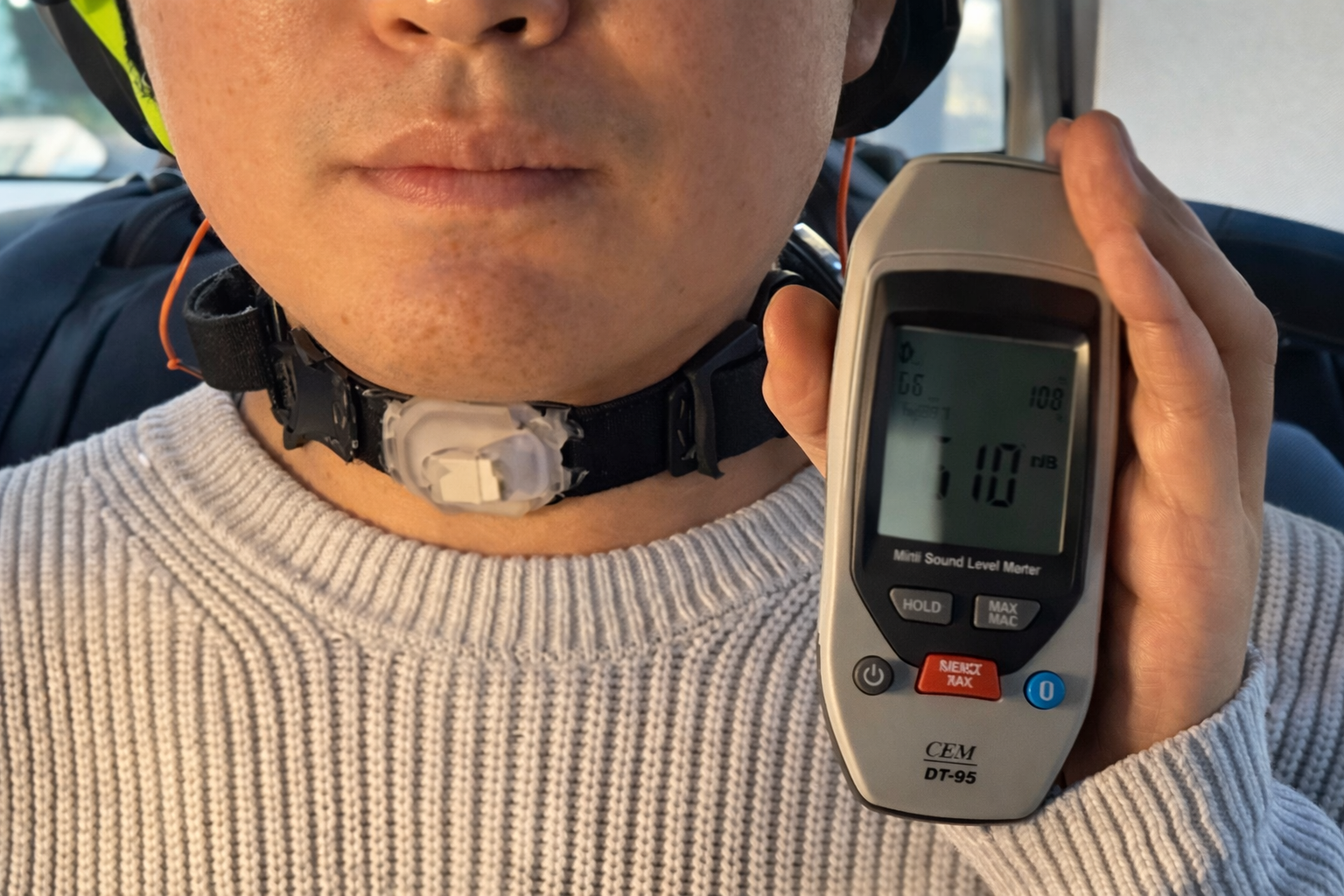
In a world increasingly defined by technological innovation, few advancements hold as much promise as those that bridge fundamental human gaps. Imagine a reality where the unspoken thoughts of those unable to vocalize can finally be heard, not through interpretation, but through direct, synthesized speech. This is no longer the stuff of science fiction, but a tangible reality emerging from the convergence of artificial intelligence and advanced sensor technology. A new AI-powered wearable device is making headlines for its remarkable ability to detect and translate the minute, silent movements of throat muscles into clear, audible speech, offering a revolutionary lifeline for individuals with vocal impairments.
Speech, for most, is an effortless act—a complex symphony of breath, vocal cord vibration, and articulatory movements. Yet, beneath this audible performance lies a silent ballet of muscle contractions and subtle skin shifts in the throat, an often-overlooked trace of our intent to speak. It is this hidden language that researchers have now tapped into, leveraging sophisticated AI algorithms to decode these imperceptible signals. This innovation represents a monumental leap forward from traditional assistive communication devices, promising a more intuitive, natural, and immediate form of expression.
The Science Behind the Silent Translator
At the heart of this groundbreaking technology lies a sophisticated interplay of biosensors and machine learning. The wearable device, often described as a discreet neckband or patch, is equipped with highly sensitive electromyography (EMG) sensors. These sensors are designed to pick up the faint electrical signals generated by muscle contractions in the larynx and pharynx, even when no sound is produced. When an individual silently 'speaks'—forming words with their mouth and throat muscles without vocalizing—these subtle movements create unique electrical patterns.
These raw electrical signals are then fed into a powerful AI model, which has been meticulously trained on vast datasets of both silent and audible speech. The AI's task is to learn the intricate correlations between specific muscle movement patterns and their corresponding spoken words. Through deep learning techniques, the model can identify the subtle nuances that differentiate one silent utterance from another, effectively creating a 'dictionary' of silent speech. Once a pattern is recognized, the AI then triggers a speech synthesizer, converting the decoded silent intention into an audible voice. The voice can often be customized, allowing users to choose a tone and pitch that feels most natural to them, further enhancing the personalization and acceptance of the technology.
This approach differs significantly from older methods like eye-tracking or brain-computer interfaces (BCIs), which, while powerful, often require more conscious effort or invasive procedures. The beauty of the silent speech wearable is its non-invasiveness and its direct engagement with the physiological mechanisms of speech, offering a more natural and less cognitively demanding pathway to communication. The speed and accuracy of the translation are critical, and ongoing research is continually refining these aspects to ensure seamless and fluid conversation.
A Historical Perspective: The Quest for Voice
The human desire to communicate is fundamental, and the struggle of those deprived of speech has long driven innovation. From rudimentary sign languages and picture boards to sophisticated text-to-speech devices, the journey to restore voice has been arduous and inspiring. Early communication aids were often cumbersome and slow, relying on users to painstakingly select letters or words. The advent of electronic speech synthesizers in the mid-20th century marked a significant turning point, giving rise to iconic voices like Stephen Hawking's.
However, even advanced text-to-speech systems, while invaluable, still require manual input, whether through typing, eye-tracking, or head movements. This process can be slow, laborious, and interrupt the natural flow of conversation. The dream has always been to capture the intent of speech directly, bypassing the need for physical articulation or manual selection. Researchers have explored various avenues, including direct brain-computer interfaces (BCIs) that attempt to decode neural signals directly from the brain. While BCIs show immense promise, they often involve surgical implantation and are still in relatively early stages of widespread adoption.
The new AI wearable represents a bridge between these historical efforts and future aspirations. It leverages the body's natural, albeit silent, speech mechanisms, offering a non-invasive, intuitive alternative that is closer to the natural act of speaking than any technology before it. It builds upon decades of research in signal processing, machine learning, and human-computer interaction, culminating in a device that could redefine assistive communication for a new generation.
Profound Implications and Future Horizons
The potential impact of this technology is nothing short of transformative. For individuals suffering from conditions that impair speech—such as amyotrophic lateral sclerosis (ALS), stroke, laryngeal cancer, or vocal cord paralysis—this device could unlock a new era of independence and social participation. Imagine a person with ALS, who can no longer vocalize, being able to engage in real-time conversations, express complex thoughts, or even tell a joke, simply by forming the words silently in their throat. The psychological benefits, including reduced frustration, increased self-esteem, and deeper social connections, are immeasurable.
Beyond medical applications, the technology holds intriguing possibilities for other fields. Military personnel or emergency responders could use it for silent communication in noisy or covert environments. Astronauts could communicate in vacuum without complex vocalization equipment. Even in everyday life, it could enable silent phone calls or discreet interaction with smart devices. The implications for privacy and accessibility are vast, potentially integrating seamlessly into augmented reality interfaces or smart home ecosystems.
However, challenges remain. Accuracy, especially in diverse linguistic contexts and with varying individual speech patterns, is paramount. The device needs to be robust, comfortable for prolonged wear, and affordable. Ethical considerations around data privacy, especially with such intimate physiological data, will also need careful navigation. Furthermore, the development of multi-language support and the ability to capture emotional nuances in synthesized speech are crucial next steps.
A New Chapter in Human Connection
The advent of this AI-powered silent speech wearable marks a pivotal moment in the history of human communication. It is a testament to the relentless pursuit of solutions that empower individuals and break down barriers. While still in its early stages of deployment and refinement, the technology offers a glimpse into a future where the ability to speak is no longer a prerequisite for being heard. It promises not just a tool, but a true extension of self, enabling millions to reclaim their voices and participate fully in the rich tapestry of human interaction. As we look ahead, the continued evolution of such devices will undoubtedly foster a more inclusive and connected world, where every silent thought has the potential to become an audible reality.
Stay Informed
Get the world's most important stories delivered to your inbox.
No spam, unsubscribe anytime.
Comments
No comments yet. Be the first to share your thoughts!