Singapore's Big Heart: How One Family Embraces Eight Children, Including a 'Special Sister'
In a world increasingly valuing smaller families, Singaporean couple Eu-Jin Lim and Eunice Wong stand out with their vibrant household of eight children. Their journey, marked by intentional parenting and the joyful integration of their youngest daughter, who has Down syndrome, offers profound lessons in love, acceptance, and community. This article explores their unique family dynamics, the societal implications of their choices, and the broader context of special needs inclusion in modern Asia.
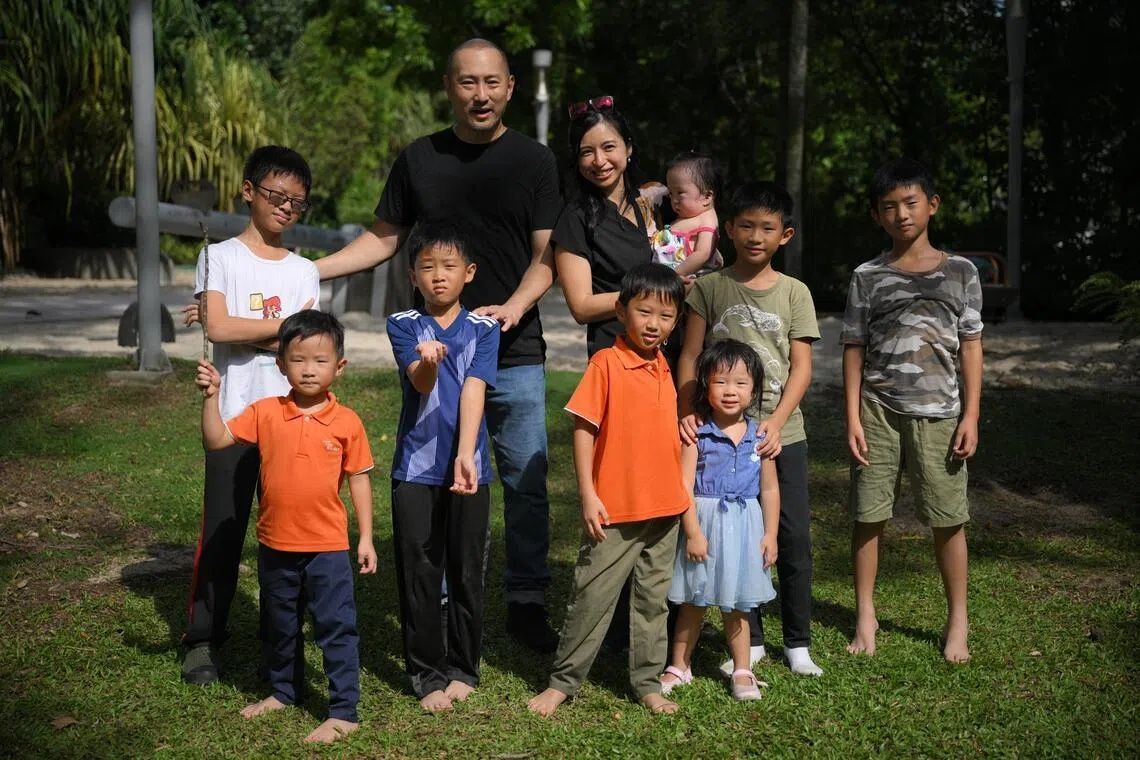
In a bustling metropolis renowned for its efficiency and often, its compact living, the Lim-Wong household in Singapore stands as a vibrant anomaly. Eu-Jin Lim, a video producer, and his wife Eunice Wong are not just raising a family; they are cultivating a thriving ecosystem of love, learning, and unwavering support for their eight children, ranging from toddlers to pre-teens. Their story, particularly the intentional preparation for and joyful embrace of their youngest daughter, who has Down syndrome, offers a powerful counter-narrative to prevailing societal norms and a testament to the boundless capacity of the human heart.
At a time when global birth rates are declining and the concept of the nuclear family often implies one or two children, the Lim-Wong family challenges conventions. Their home, shared with Eu-Jin’s parents and two domestic helpers, is a hub of activity, laughter, and collective responsibility. This multi-generational, multi-faceted household provides a unique lens through which to examine modern family structures, the evolving understanding of disability, and the profound impact of unconditional love.
The Intentional Journey of a Large Family
The decision to have a large family in Singapore, a nation with one of the world's lowest fertility rates (1.04 births per woman in 2022), is itself a significant statement. For Eu-Jin and Eunice, it wasn't merely a matter of biological happenstance but a conscious choice rooted in their values and beliefs. They speak of their children not as burdens but as blessings, each adding a unique dimension to their family tapestry. This perspective is crucial in understanding their approach to parenting, which emphasizes collective growth and mutual support. The older children are actively involved in caring for their younger siblings, fostering a strong sense of community and responsibility from an early age. This dynamic contrasts sharply with the often individualistic upbringing prevalent in many contemporary societies, where children might have fewer siblings and less direct experience with caregiving.
Their journey took a particularly poignant turn with the impending arrival of their eighth child. Upon learning that their daughter would be born with Down syndrome, the couple did not succumb to despair or isolation. Instead, they embarked on a proactive mission: to prepare their seven existing children for the arrival of their "special sister." This involved open conversations, educational resources, and fostering an environment of understanding and acceptance. This approach is a masterclass in inclusive parenting, demonstrating how potential challenges can be reframed as opportunities for growth and deeper connection within the family unit. It underscores the importance of communication and education in dispelling myths and fostering empathy towards individuals with disabilities.
Shifting Perceptions: Disability in Asian Societies
The Lim-Wong family's narrative resonates deeply within the broader context of how disability is perceived and integrated into Asian societies. Historically, in many parts of Asia, disability has often been met with stigma, shame, or a lack of understanding, sometimes leading to isolation for affected individuals and their families. However, there has been a significant, albeit gradual, shift in recent decades. Countries like Singapore have made strides in promoting inclusive education and providing support services, though challenges persist.
Expert analysis suggests that while medical advancements have improved early diagnosis, societal acceptance remains a critical hurdle. "Families like the Lims are trailblazers," says Dr. Anya Sharma, a sociologist specializing in family dynamics in Southeast Asia. "They are not just accepting their child; they are actively championing her, demonstrating that a child with Down syndrome is not a burden but a beloved member who enriches the family in unique ways. This public visibility is vital in breaking down long-held prejudices." The family's openness about their daughter's condition and their proactive efforts to educate their other children and wider community contribute significantly to this societal shift. Their story helps normalize the experience of having a child with special needs, moving it from the periphery to the center of public discourse.
The Power of Preparation and Community
The preparation undertaken by Eu-Jin and Eunice for their daughter's arrival was meticulous and heartfelt. They didn't just inform their children; they involved them. They explained Down syndrome in age-appropriate terms, highlighting both the unique characteristics and the shared humanity. This proactive engagement helped to preempt potential anxieties or misunderstandings, fostering instead an atmosphere of eager anticipation and protective love. The result is a family unit where the "special sister" is not just tolerated but celebrated, integrated fully into the daily rhythm and fabric of their lives.
This family's experience also highlights the critical role of community and support networks. While the article mentions the immediate family and domestic helpers, the broader support system—be it extended family, friends, or specialized organizations—is often indispensable for families raising children with special needs. Singapore, with its robust social services infrastructure, offers various programs for early intervention and support for children with developmental delays. However, the emotional and practical burden often falls heavily on families, making internal resilience and external support paramount. The Lims' story implicitly champions the idea that a strong, informed family unit can be the most powerful advocate and support system for a child with special needs.
Implications for Modern Parenting and Society
The Lim-Wong family's story offers several profound implications for contemporary society and parenting:
* Redefining "Normal": Their experience challenges the narrow definition of a "perfect" family or child, advocating for a broader, more inclusive understanding of human diversity. It reminds us that richness often lies in difference. * The Value of Large Families: In an era of demographic decline, their choice to have a large family, and the joy they derive from it, provides a compelling argument for the intrinsic value of multiple siblings and the unique social skills developed within such a dynamic. * Proactive Inclusion: Their method of preparing their children for their sister's arrival offers a replicable model for families facing similar circumstances, emphasizing education, open dialogue, and empathy. * Advocacy Through Example: By living their lives openly and joyfully, the Lims become silent advocates for individuals with Down syndrome, demonstrating their capacity for love, learning, and belonging.
Furthermore, this narrative underscores the importance of family-centered care and the need for societal structures that support families in their entirety, especially those navigating the complexities of special needs. It's a call to move beyond mere tolerance to genuine acceptance and celebration of diversity in all its forms.
A Forward-Looking Perspective
The journey of the Lim-Wong family is far from over. As their children grow, new challenges and triumphs will undoubtedly emerge. However, their foundational approach—built on love, understanding, and proactive inclusion—equips them to navigate whatever lies ahead. Their story serves as a powerful beacon, illuminating the path towards a more compassionate and inclusive society, not just in Singapore, but globally.
Their home, bursting with life, is a microcosm of what a truly inclusive world could look like: a place where differences are not just accommodated but cherished, where every individual contributes to the collective joy, and where love is the most powerful force of all. As societies grapple with issues of diversity, inclusion, and declining birth rates, the Lim-Wong family offers a compelling, heartwarming, and deeply insightful model for the future, reminding us that the greatest riches often lie within the embrace of a large, loving, and diverse family.
Stay Informed
Get the world's most important stories delivered to your inbox.
No spam, unsubscribe anytime.
Comments
No comments yet. Be the first to share your thoughts!