Somaliland's Bold Diplomatic Gambit: First Embassy in Jerusalem Signals New Era
Somaliland, the self-declared independent state in the Horn of Africa, has announced a groundbreaking decision to open its first-ever embassy in Jerusalem. This move, following Israel's recognition of the territory, marks a significant diplomatic shift and signals deepening ties between the two entities. The establishment of an embassy in Jerusalem carries immense geopolitical weight, challenging traditional diplomatic norms and potentially reshaping regional alliances. It underscores Somaliland's persistent quest for international recognition and Israel's strategic interests in the Horn of Africa.
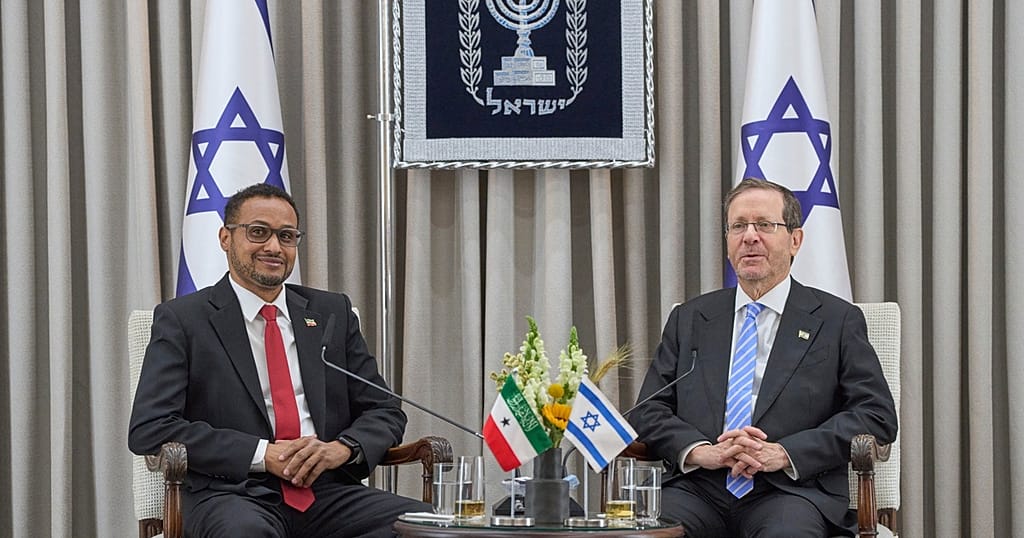
In a move that has sent ripples across the geopolitical landscape, Somaliland, the self-declared independent state in the Horn of Africa, has announced its intention to establish its first-ever embassy anywhere in the world, and its chosen location is none other than Jerusalem. This audacious diplomatic gambit follows Israel's recent recognition of the breakaway territory, marking a significant escalation in their burgeoning relationship and a profound challenge to established international norms. The decision not only solidifies ties between Hargeisa and Jerusalem but also throws a spotlight on Somaliland's decades-long struggle for global legitimacy and Israel's strategic interests in a volatile region.
This development is far more than a mere diplomatic formality; it is a geopolitical earthquake. For Somaliland, a territory of approximately 5.7 million people that declared independence from Somalia in 1991 but has largely remained unrecognized by the international community, opening an embassy in Jerusalem is a powerful statement of sovereignty and a direct appeal for broader recognition. For Israel, it represents a strategic foothold in a critical maritime corridor, offering new avenues for influence and partnership.
A Bid for Recognition: Somaliland's Long Road
Somaliland's journey to this point has been one of resilience and self-governance in the face of international skepticism. After breaking away from Somalia following the collapse of Siad Barre's regime, Somaliland has built a functioning democratic system, maintained relative peace and stability, and fostered a nascent economy, all without formal international recognition. Its capital, Hargeisa, functions as a de facto capital, hosting informal diplomatic missions but never a fully-fledged embassy. The decision to open its first in Jerusalem is therefore deeply symbolic, aiming to leverage Israel's diplomatic weight and influence to advance its own cause for statehood.
* Historical Context: Somaliland was a British protectorate, distinct from Italian Somaliland, which forms the bulk of modern-day Somalia. This historical difference underpins its claim for separate statehood. * Democratic Credentials: Unlike its troubled neighbor Somalia, Somaliland has held multiple free and fair elections, demonstrating a commitment to democratic principles often cited in its arguments for recognition. * Economic Aspirations: The territory seeks foreign investment and trade, with the port of Berbera being a key asset. Recognition would unlock significant economic potential.
This move is a calculated risk for Somaliland. While it could pave the way for other nations to consider recognition, it also risks alienating some Arab and Muslim-majority nations that do not recognize Jerusalem as Israel's capital. However, for a state desperate for international validation, the potential rewards appear to outweigh the risks.
Israel's Strategic Calculus: Expanding Influence in the Horn
For Israel, the recognition of Somaliland and the reciprocated embassy opening in Jerusalem fit into a broader strategic framework. Israel has long sought to expand its diplomatic and security ties in Africa, particularly in the Horn of Africa, a region of immense strategic importance due to its proximity to vital shipping lanes (e.g., the Bab-el-Mandeb Strait) and its role in regional security dynamics. The Horn of Africa is a crossroads for global trade and a battleground for influence among major powers. Establishing a formal presence with Somaliland offers several advantages:
* Countering Regional Adversaries: Deepening ties with Somaliland could serve as a counterweight to the influence of Iran or other hostile actors in the Red Sea region. * Security Cooperation: Potential for intelligence sharing and security cooperation, particularly concerning maritime security and counter-terrorism efforts. * Economic Opportunities: Opening new markets for Israeli technology, agriculture, and defense industries. * Diplomatic Precedent: Encouraging other African nations to reconsider their stance on Jerusalem as Israel's capital, following the lead of the United States.
The timing is also crucial, coming amidst a period of shifting alliances in the Middle East and Africa, exemplified by the Abraham Accords. While Somaliland is not an Arab nation, its Muslim-majority population makes this diplomatic breakthrough particularly noteworthy, potentially setting a precedent for other non-Arab Muslim-majority entities.
The Jerusalem Question: A Diplomatic Minefield
The decision to place the embassy in Jerusalem is perhaps the most contentious aspect of this announcement. The status of Jerusalem is one of the most sensitive and unresolved issues in the Israeli-Palestinian conflict. Most nations maintain their embassies in Tel Aviv, adhering to the international consensus that Jerusalem's final status should be determined through negotiations. The United States, followed by a handful of other countries, broke with this consensus by moving its embassy to Jerusalem, a move lauded by Israel but widely condemned by Palestinians and many in the international community.
Somaliland's choice to follow suit is a powerful statement of solidarity with Israel and a defiance of traditional diplomatic norms. It signals a willingness to align with Israel on a deeply symbolic issue, potentially hoping to gain significant political capital in return. This decision will undoubtedly draw criticism from the Arab League, the Organization of Islamic Cooperation (OIC), and other bodies that advocate for East Jerusalem as the capital of a future Palestinian state. It places Somaliland in a unique, and potentially isolated, diplomatic position within the broader Muslim world.
Implications and Future Outlook
The implications of this development are far-reaching and multifaceted. For Somaliland, it represents a significant step forward in its long quest for international recognition. While one embassy may not immediately unlock widespread recognition, it provides a powerful precedent and a strong argument for its legitimacy. It also diversifies its diplomatic outreach beyond traditional partners.
For Israel, it solidifies its presence in a strategically vital region and reinforces its diplomatic strategy of forging new alliances, particularly with non-Arab Muslim-majority states. It also adds another voice to the growing chorus of nations recognizing Jerusalem as its capital.
However, the move is not without its challenges. Somalia, which still claims Somaliland as part of its territory, will undoubtedly condemn this development, further complicating reconciliation efforts. Regional powers, including Egypt and Saudi Arabia, will be watching closely, weighing the implications for their own interests in the Horn of Africa and the Red Sea. The broader international community will also be forced to re-evaluate its stance on Somaliland's statehood.
Ultimately, Somaliland's decision to open its first embassy in Jerusalem is a bold, calculated risk with the potential for immense rewards. It is a testament to the territory's determination to carve its own path on the global stage and a clear indicator of the shifting sands of international diplomacy. As the world watches, this unprecedented step could well mark the beginning of a new chapter for both Somaliland and Israel, reshaping alliances and redefining sovereignty in one of the world's most complex regions.
Stay Informed
Get the world's most important stories delivered to your inbox.
No spam, unsubscribe anytime.
Comments
No comments yet. Be the first to share your thoughts!