Sony's 720Hz Inzone M10S II: The New Frontier for Esports, But at What Cost?
Sony's latest gaming monitor, the Inzone M10S II, is poised to redefine competitive PC gaming with an unprecedented 720Hz refresh rate. While this 27-inch display promises unparalleled fluidity for esports professionals and enthusiasts, it comes with a significant trade-off: a resolution capped at 1080p. This article delves into the implications of this design choice, examining whether raw speed trumps visual fidelity in the high-stakes world of competitive gaming and what it means for the future of monitor technology.
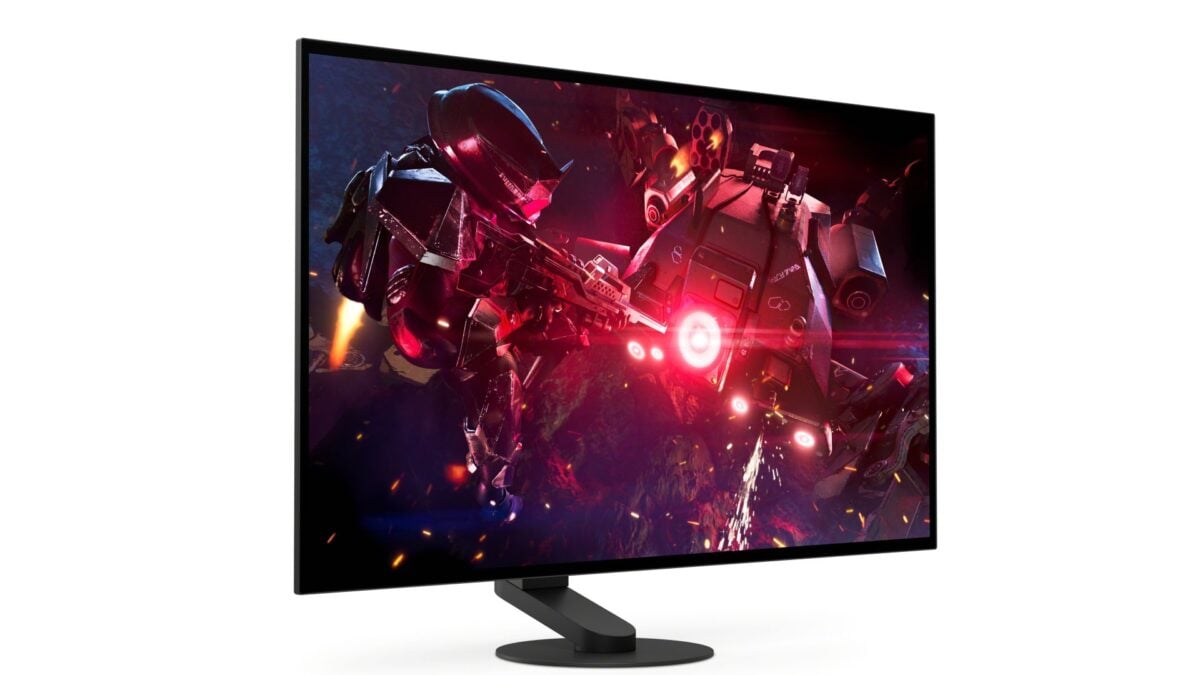
In the relentless pursuit of competitive advantage, every millisecond counts. For years, gamers have chased higher refresh rates, believing that smoother visuals translate directly into faster reaction times and superior performance. Sony, a titan in consumer electronics and gaming, has just thrown down the gauntlet with its new 27-inch Inzone M10S II monitor, boasting an astonishing 720Hz refresh rate. This isn't just an incremental step; it's a monumental leap that promises to redefine the visual experience for the most hardcore PC players, particularly in fast-paced esports titles. However, this groundbreaking speed comes with a significant caveat: the monitor is locked at a 1080p (Full HD) resolution. This design choice sparks a critical debate: has Sony correctly identified the ultimate priority for competitive gamers, or is the sacrifice of visual fidelity too great, even for peak performance?
The Unprecedented Leap: 720Hz and Its Impact
To understand the significance of 720Hz, one must first grasp the concept of refresh rate. A monitor's refresh rate dictates how many times per second the display updates its image. Standard office monitors typically operate at 60Hz, while gaming monitors have steadily climbed from 144Hz to 240Hz, 360Hz, and even 540Hz. Each increase aims to reduce motion blur, improve responsiveness, and provide a clearer picture of fast-moving objects. At 720Hz, the Inzone M10S II refreshes its image 720 times every second, theoretically reducing input lag and motion blur to near-imperceptible levels. This level of fluidity is designed to give players an almost instantaneous visual feedback loop, allowing for quicker target acquisition and more precise movements in games where fractions of a second determine victory or defeat.
The benefits are particularly pronounced in genres like first-person shooters (FPS) and fighting games, where rapid camera movements and split-second reactions are paramount. Imagine tracking an enemy player across your screen; at 720Hz, their movement would appear incredibly smooth and continuous, making it easier to predict their trajectory and land a shot. For professional esports athletes, who train for thousands of hours to shave off milliseconds from their reaction times, a 720Hz monitor could be the ultimate training tool and competitive edge. It's not just about what you see; it's about how quickly your brain can process that information and translate it into action.
The 1080p Conundrum: Resolution vs. Refresh Rate
The most striking aspect of the Inzone M10S II, beyond its blistering refresh rate, is its adherence to a 1080p resolution. In an era where 1440p (QHD) and 4K (UHD) displays are becoming increasingly common, especially for premium gaming experiences, opting for Full HD might seem counterintuitive. However, this decision is a deliberate engineering trade-off. Pushing 720 frames per second at higher resolutions, such as 1440p or 4K, would require an astronomical amount of processing power from both the graphics card and the monitor's internal scaler. The bandwidth requirements for such a feat would be immense, making the technology prohibitively expensive and potentially pushing current display interface standards (like DisplayPort) to their absolute limits.
Sony's strategy here is clear: prioritize raw speed and responsiveness above all else for a specific, performance-driven niche. For competitive gamers, especially those involved in esports, the ability to see and react faster often outweighs the desire for ultra-sharp textures and detailed environments. In many competitive titles, graphical settings are often lowered to maximize frame rates anyway, making the visual fidelity of a higher resolution less critical. A professional player might prefer a slightly blurrier image if it means they can spot an enemy a millisecond sooner or track a fast-moving projectile with greater precision. This monitor is not designed for immersive, single-player cinematic experiences; it is a precision instrument built for competitive dominance.
Historical Context: The Evolution of Gaming Displays
The journey to 720Hz has been a long and fascinating one. For decades, cathode ray tube (CRT) monitors, with their inherent ability to display variable refresh rates and virtually no input lag, were the gold standard for competitive gaming. As LCD technology matured, it brought higher resolutions and thinner form factors but initially lagged in refresh rate and response time. Early LCD gaming monitors struggled to break the 60Hz barrier, leading to noticeable motion blur and ghosting. The introduction of 120Hz and 144Hz panels marked a turning point, making LCDs viable for serious gaming.
From there, the race intensified. Nvidia's G-Sync and AMD's FreeSync technologies revolutionized adaptive sync, eliminating screen tearing and stuttering by synchronizing the monitor's refresh rate with the GPU's frame output. This paved the way for even higher refresh rates, as the display could dynamically adjust to maintain smoothness. We've seen a rapid escalation from 240Hz to 360Hz, then 540Hz, and now 720Hz. Each iteration has pushed the boundaries of human perception and technological capability. Sony's Inzone M10S II is the latest, and perhaps most extreme, manifestation of this ongoing quest for ultimate speed, harking back to the low-resolution, high-refresh philosophy of CRTs but with modern panel technology.
Expert Analysis and Market Implications
Industry analysts are keenly watching how the market responds to Sony's bold move. "This monitor is a clear statement of intent from Sony," says Dr. Evelyn Reed, a leading expert in display technology. "They're targeting the absolute pinnacle of competitive gaming, where every frame is a potential advantage. It's a niche product, certainly, but one that could set a new benchmark for esports displays." She adds, "The 1080p resolution is a necessary compromise to achieve that refresh rate with current technology. As GPU power and display interfaces evolve, we might see 720Hz at higher resolutions, but for now, this is where the cutting edge is."
For consumers, the Inzone M10S II represents a significant investment, both in the monitor itself and the high-end PC hardware required to consistently push 720 frames per second in demanding titles. A powerful CPU and a top-tier graphics card (like an NVIDIA RTX 4090 or AMD RX 7900 XTX) will be essential to fully utilize this monitor's capabilities. This isn't a monitor for the casual gamer; it's for those who live and breathe competitive play, who scrutinize every setting and seek every possible advantage.
The monitor also features a high-brightness OLED panel, which, despite the 1080p resolution, will offer incredible contrast, true blacks, and vibrant colors, enhancing the overall visual experience even within the confines of Full HD. The combination of OLED's near-instantaneous pixel response times with a 720Hz refresh rate creates a display that is not only fast but also visually stunning in terms of color and contrast, mitigating some of the perceived drawbacks of the lower resolution.
The Future of Gaming Monitors: A Fork in the Road?
Sony's Inzone M10S II highlights a growing divergence in the gaming monitor market. On one hand, we have the pursuit of ultimate visual fidelity and immersion, characterized by large, high-resolution (4K, 8K), high-dynamic-range (HDR) displays with moderate refresh rates (120Hz-240Hz) for single-player, graphically intensive games. On the other, there's the relentless drive for raw speed and responsiveness, exemplified by monitors like the M10S II, which prioritize refresh rate and low input lag above all else, often at the expense of resolution, for competitive esports.
This bifurcation suggests that gamers will increasingly need to choose their primary use case when investing in a monitor. While some may hope for a future where both extreme resolution and extreme refresh rates coexist without compromise, the current technological landscape dictates trade-offs. The Inzone M10S II is a bold statement from Sony, firmly planting its flag in the competitive esports arena. It challenges the notion that higher resolution is always better, proving that for a specific segment of the gaming population, speed remains the undisputed king. As the esports industry continues its meteoric rise, monitors like the Inzone M10S II will undoubtedly play a crucial role in shaping the next generation of competitive play, pushing the boundaries of what's possible and forcing players to adapt to an even faster, more responsive digital battlefield.
Stay Informed
Get the world's most important stories delivered to your inbox.
No spam, unsubscribe anytime.
Comments
No comments yet. Be the first to share your thoughts!