Stalin's Strategic Truce: DMK to Observe Vijay's TVK Government for Six Months in Tamil Nadu
In a surprising political maneuver, outgoing Tamil Nadu Chief Minister MK Stalin has announced that the DMK will allow C Joseph Vijay's TVK to form the next government, pledging a six-month period of observation without interference. This decision, aimed at averting a constitutional crisis and fresh elections, signals a calculated political pause in the state's often tumultuous political landscape. Analysts are dissecting the implications of this 'watch and wait' strategy for both parties and the future of Tamil Nadu's governance.
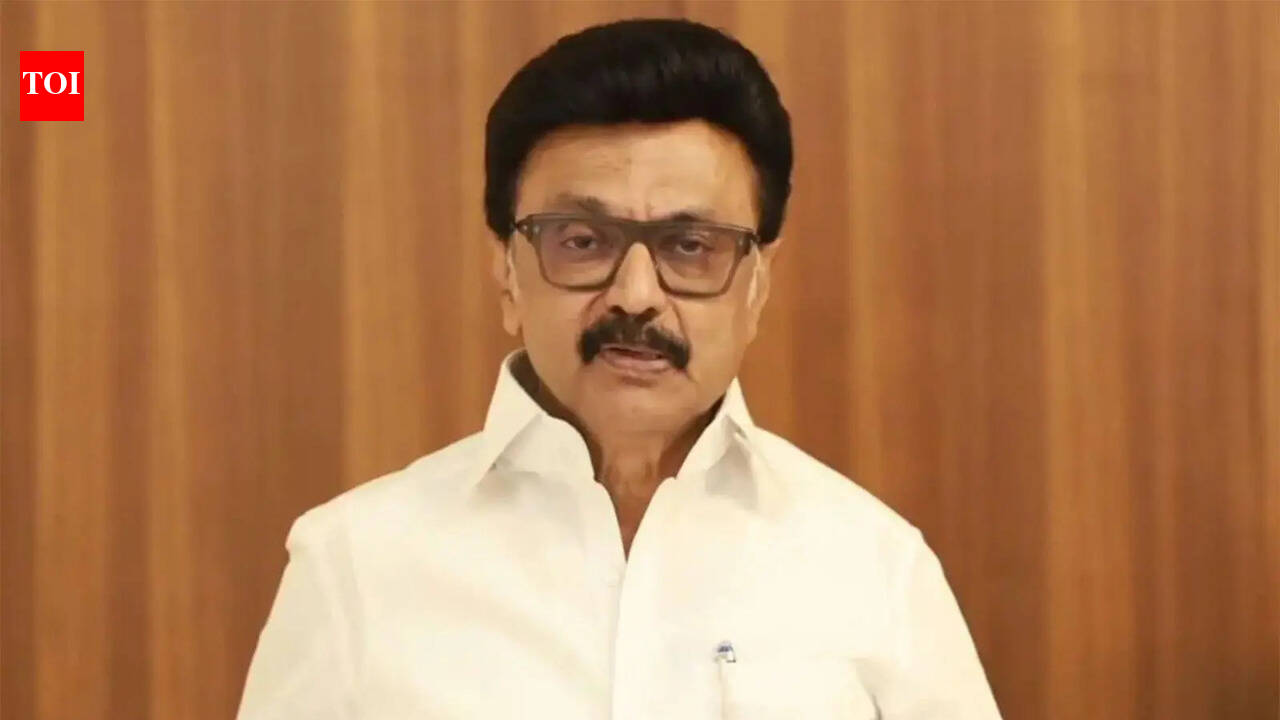
The political landscape of Tamil Nadu, a state renowned for its vibrant and often dramatic electoral battles, has taken an unexpected turn. Outgoing Chief Minister MK Stalin, leader of the Dravida Munnetra Kazhagam (DMK), has declared a strategic truce, announcing that his party will allow C Joseph Vijay, head of the Tamilaga Vetri Kazhagam (TVK), to form the new government. In a statement that has sent ripples across Indian politics, Stalin affirmed that the DMK would "watch without disturbing for six months," a move designed to prevent a constitutional crisis and the immediate prospect of fresh elections.
This declaration, made to the Times of India, is more than just a concession; it's a meticulously calculated political gambit. Tamil Nadu's politics are historically dominated by two Dravidian giants, the DMK and the AIADMK, with other parties often playing supporting roles. The emergence of TVK, led by the popular actor C Joseph Vijay, represents a significant shift, and Stalin's response indicates a pragmatic approach to a new political reality.
Averting Crisis: The Immediate Rationale
Stalin's primary stated motivation is to avoid a constitutional impasse. In India's parliamentary democracy, a hung assembly or a deeply fractured mandate can lead to instability, requiring either complex coalition negotiations or, in extreme cases, President's Rule or re-elections. The DMK, having just completed a term, likely seeks to avoid the immediate financial and administrative burden of another election cycle, especially if the electoral outcome was not decisively in its favor or created a complex power-sharing scenario. By offering a six-month grace period, Stalin effectively passes the onus of governance and stability onto the TVK, allowing them to demonstrate their administrative capabilities and political acumen. This period also provides the DMK with valuable time to regroup, analyze the new political dynamics, and strategize for future engagements.
Historically, such gestures of political restraint are rare in Tamil Nadu, where political rivalries are often fierce and uncompromising. The state has witnessed periods of intense political maneuvering, floor-crossing, and coalition instability. Stalin's move, therefore, stands out as an attempt to project statesmanship and a commitment to democratic stability, even if it comes with a clear underlying political agenda.
The Rise of TVK and Vijay's Political Debut
C Joseph Vijay, a superstar of Tamil cinema, officially launched his political party, Tamilaga Vetri Kazhagam (TVK), in February 2024. His entry into politics has been long anticipated, following in the footsteps of other iconic actors like M.G. Ramachandran and J. Jayalalithaa, who successfully transitioned from screen to political power. Vijay's immense popularity, particularly among the youth, has been a significant factor in his party's rapid ascent. The TVK has positioned itself as an alternative to the established Dravidian parties, promising clean governance, social justice, and development.
His political ideology, while still evolving, appears to blend elements of Dravidianism with a focus on anti-corruption and welfare schemes. The six-month window provided by Stalin will be crucial for Vijay to translate his cinematic charisma into effective governance. This period will test his administrative team, his policy proposals, and his ability to navigate the complex bureaucratic and political machinery of a large state like Tamil Nadu. For the TVK, this is both an opportunity and a significant challenge; the honeymoon period will be short, and public expectations will be high.
DMK's Strategic Calculation: A Long Game?
For the DMK, this 'watch and wait' strategy is far from passive. It's a calculated move to potentially expose the inexperience or shortcomings of the nascent TVK government. If Vijay's administration struggles with governance, fails to deliver on promises, or faces internal dissent, the DMK will be well-positioned to capitalize on public dissatisfaction. The six-month period allows the DMK to act as a vigilant opposition, scrutinizing every move of the new government without the immediate burden of power.
Furthermore, this approach could serve to neutralize the anti-incumbency sentiment that often plagues ruling parties. By stepping back, the DMK allows the public's focus to shift entirely to the new government. If the TVK fails to meet expectations, the DMK can present itself as a more experienced and stable alternative in future elections. This strategy also allows the DMK to gauge the true strength and longevity of Vijay's political appeal beyond his cinematic stardom. Is his support base solid, or is it merely a transient wave of enthusiasm?
Another angle to consider is the potential for internal consolidation within the DMK. A period out of power can be used for introspection, organizational restructuring, and strengthening the party's grassroots presence. It allows for a refresh of leadership and policy positions, preparing the party for a renewed push for power. This is particularly relevant in a state where political narratives and public sentiment can shift rapidly.
Implications for Tamil Nadu and Indian Politics
This political development has significant implications. For Tamil Nadu, it ushers in an era of political uncertainty but also potential renewal. The state has long been a bastion of regional politics, often defying national trends. The rise of TVK and the DMK's response could reshape the state's political architecture, potentially leading to a multi-polar contest in future elections, moving beyond the traditional DMK-AIADMK binary.
For Indian politics at large, Stalin's decision offers a case study in strategic political management. In an era where immediate power grabs and aggressive opposition are common, this measured approach stands out. It highlights the complexities of regional politics and the need for adaptability in the face of new political forces. The next six months will be a critical test for both the TVK's ability to govern and the DMK's patience and strategic foresight. The political drama in Tamil Nadu, it seems, has only just begun, with the first act setting the stage for a compelling and unpredictable narrative of power, performance, and political survival. The coming months will undoubtedly reveal whether this truce is a stepping stone to stability or merely a prelude to another intense political confrontation.
Stay Informed
Get the world's most important stories delivered to your inbox.
No spam, unsubscribe anytime.
Comments
No comments yet. Be the first to share your thoughts!