Starmer Under Fire: Sacked Official Alleges 'Political Pressure' in Mandelson US Appointment
A former senior civil servant has accused Prime Minister Keir Starmer's office of exerting "political pressure" to approve Peter Mandelson's controversial appointment as UK ambassador to Washington. The explosive claims, made by the official responsible for the approval process, have ignited a fresh political storm, challenging the government's commitment to civil service impartiality. This revelation comes as Starmer faces a parliamentary showdown, raising serious questions about the integrity of high-level diplomatic postings.
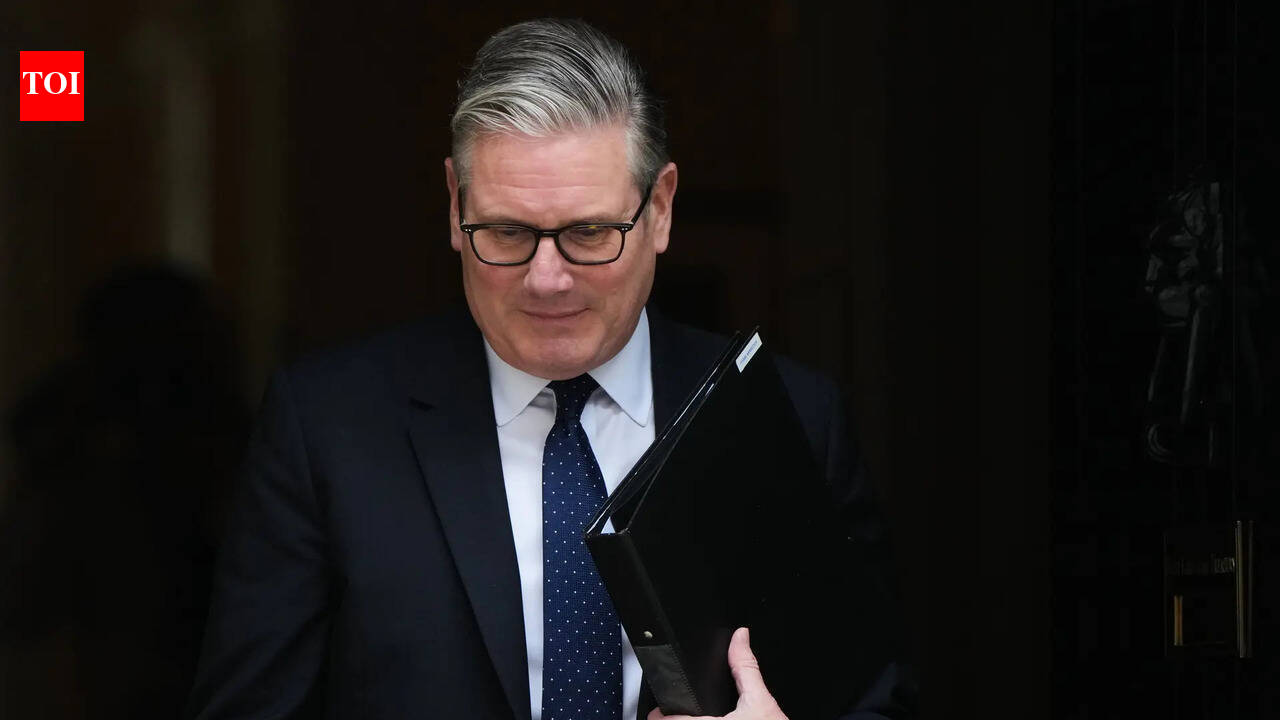
The hallowed halls of Westminster are once again reverberating with accusations of political interference, this time centering on the highly sensitive appointment of Peter Mandelson as Britain's ambassador to Washington. A former senior civil servant, speaking under condition of anonymity but identified as having overseen the approval process, has delivered an explosive testimony, alleging direct "political pressure" from Prime Minister Keir Starmer's office. This revelation, coming just as Starmer prepares to face a parliamentary showdown on the issue, threatens to engulf his administration in a significant credibility crisis, challenging the very bedrock of impartial civil service appointments.
The controversy surrounding Mandelson's posting has been simmering for weeks, fueled by his long and often polarizing career as a Labour grandee. Critics argue that his appointment, perceived by many as a political reward rather than a meritocratic selection, undermines the principle of a neutral diplomatic corps. The former official's testimony, however, elevates these concerns from mere speculation to concrete allegations of undue influence, suggesting a deliberate circumvention of established protocols designed to safeguard the independence of such crucial roles.
The Anatomy of an Allegation: Unpacking the 'Political Pressure'
The former civil servant detailed a series of communications and directives emanating from 10 Downing Street that, in their view, amounted to explicit pressure to expedite and approve Mandelson's candidacy despite potential reservations. While the exact nature of these communications remains under wraps, the official described a climate where dissent or even rigorous questioning of the proposed appointment was subtly, yet effectively, discouraged. "It became clear," the official stated, "that the Prime Minister's office had a preferred candidate, and the process was expected to facilitate that outcome, rather than objectively assess all candidates." This sentiment points to a potential blurring of lines between political prerogative and administrative due process, a tension that has historically plagued governments of all stripes.
The official's account suggests a pattern where the normal checks and balances of the civil service appointment process were either bypassed or overridden. Typically, such high-profile diplomatic roles involve a rigorous selection process, including independent panels, security clearances, and a thorough assessment of a candidate's suitability, often with input from the Foreign, Commonwealth and Development Office (FCDO). The implication here is that Mandelson's political weight and connections may have short-circuited this standard procedure, leading to an appointment driven by political expediency rather than diplomatic expertise.
Historical Precedent and the Erosion of Impartiality
This isn't the first time a British government has faced accusations of politicizing appointments. From Margaret Thatcher's era to Tony Blair's 'sofa government,' the delicate balance between ministerial authority and civil service independence has always been a contentious area. The 'Haldane Principle,' which posits that civil servants should advise ministers neutrally and implement policies impartially, forms the cornerstone of the UK's administrative tradition. Any perceived deviation from this principle can have profound implications for public trust and governmental effectiveness.
Indeed, the history of UK ambassadors to Washington is replete with figures of significant political standing, from Lord Cromer to Lord Harlech. However, these appointments have traditionally been justified by their unique skills or experience, often following a period of cooling off from active partisan politics. Mandelson's ongoing prominent role within Labour circles, even if retired from frontline politics, makes his appointment particularly sensitive and vulnerable to charges of cronyism. The current allegations, if substantiated, would represent a significant breach of the spirit, if not the letter, of the conventions governing these appointments.
Implications for Starmer's Administration and UK Diplomacy
For Prime Minister Keir Starmer, these allegations arrive at a critical juncture. Having campaigned on a platform of restoring integrity and trust in politics, the accusation of political interference in a key diplomatic posting strikes at the heart of his brand. A parliamentary showdown, anticipated to be fierce, will test his ability to defend his government's actions and reassure a skeptical public and opposition. The opposition parties are expected to seize on this opportunity to question the transparency and fairness of his administration's decision-making processes.
Beyond domestic politics, the controversy could have broader implications for UK diplomacy. The perception of a politically appointed ambassador, rather than a career diplomat, might affect how the UK is viewed on the international stage, particularly by a critical ally like the United States. While Mandelson's experience and connections could be seen as an asset, the cloud of controversy surrounding his appointment risks overshadowing any potential benefits. It could also demoralize career diplomats within the FCDO, who dedicate their lives to ascending through the ranks based on merit and experience.
The Path Forward: Transparency and Accountability
The immediate challenge for Starmer's government is to address these allegations with utmost transparency. A thorough and independent investigation into the claims of political pressure may be necessary to restore confidence. Failure to do so could lead to a protracted period of scrutiny and undermine public faith in the impartiality of the civil service. The government must demonstrate that appointments to such vital roles are made on the basis of merit and national interest, free from undue political influence.
Looking ahead, this episode underscores the perennial tension between political will and administrative independence. It serves as a stark reminder of the importance of robust institutional safeguards and clear ethical guidelines for all public appointments. As the UK navigates a complex global landscape, ensuring that its diplomatic representatives are chosen through an unimpeachable process is not merely a matter of good governance, but a strategic imperative. The Mandelson affair, regardless of its ultimate resolution, will undoubtedly leave a lasting mark on Starmer's premiership and the future of civil service relations in Britain.
Stay Informed
Get the world's most important stories delivered to your inbox.
No spam, unsubscribe anytime.
Comments
No comments yet. Be the first to share your thoughts!