EU Faces Internal Pressure: Ireland, Spain Push for Suspension of Israel Deal Amid Human Rights Concerns
A growing chorus within the European Union, led by Ireland and Spain, is advocating for the suspension of the EU-Israel Association Agreement. Citing grave human rights concerns in the context of ongoing conflict, these nations are pushing for stronger diplomatic and economic measures. This move highlights deep divisions within the bloc and raises questions about the future of EU foreign policy and its commitment to international law.
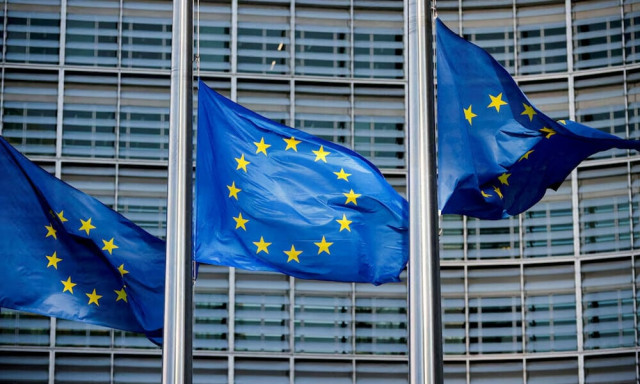
In a significant diplomatic maneuver, Ireland and Spain are leading a charge within the European Union to suspend the EU-Israel Association Agreement, citing profound human rights concerns stemming from the ongoing conflict. This concerted effort underscores a deepening rift within the 27-member bloc over its stance on the Israeli-Palestinian conflict, pushing the EU to confront its foundational values and the efficacy of its foreign policy.
The call for action gained momentum with Irish Foreign Minister Helen McEntee's unequivocal statement, describing Israel as a "country that is very clearly violating human rights." Her Belgian counterpart, Hadja Lahbib, echoed these sentiments, labeling Israel's actions as "totally unacceptable" and urging stronger EU measures, including potential sanctions. This bold stance by several member states signals a potential shift in the EU's traditionally cautious approach, moving beyond mere condemnations to concrete diplomatic and economic leverage.
The EU-Israel Association Agreement: A Cornerstone Under Scrutiny
The EU-Israel Association Agreement, signed in 1995 and effective since 2000, is the primary legal framework governing relations between the European Union and Israel. It establishes a free trade area for industrial products, liberalizes trade in agricultural products, and includes provisions for cooperation in various fields such as science, technology, and culture. Crucially, Article 2 of the agreement states that "relations between the Parties, as well as all the provisions of the Agreement itself, shall be based on respect for human rights and democratic principles, which guides their internal and international policy and constitutes an essential element of this Agreement."
It is this very Article 2 that Ireland, Spain, and others are now invoking. They argue that Israel's actions, particularly in the Gaza Strip and the West Bank, constitute a clear violation of human rights and international humanitarian law, thereby breaching the "essential element" of the agreement. Suspending the agreement, or even parts of it, would send a powerful message, potentially impacting Israel's economic ties with its largest trading partner.
Historical Context: EU's Evolving Stance on the Conflict
The European Union has historically maintained a complex and often divided position on the Israeli-Palestinian conflict. While generally advocating for a two-state solution and providing significant humanitarian aid to Palestinians, the bloc has struggled to present a united front on punitive measures against Israel. Member states like Germany, Hungary, and the Czech Republic have traditionally maintained strong pro-Israel stances, often prioritizing security cooperation and historical ties. Conversely, countries such as Ireland, Sweden, Belgium, and Spain have frequently been more critical of Israeli policies, particularly regarding settlement expansion and actions in Palestinian territories.
This internal divergence has often led to the EU adopting carefully worded, consensus-based statements that, while expressing concern, stop short of strong condemnatory language or concrete sanctions. The current push, however, represents a more assertive challenge to this status quo, driven by the perceived scale and severity of the humanitarian crisis and alleged human rights abuses.
The Humanitarian Crisis and International Law
The backdrop to this diplomatic pressure is the devastating humanitarian situation in Gaza, exacerbated by the ongoing conflict. International organizations and human rights groups have consistently reported on widespread civilian casualties, displacement, and the destruction of critical infrastructure. Concerns about potential war crimes and violations of international humanitarian law have been raised by numerous bodies, including the United Nations.
* Civilian Casualties: Reports indicate tens of thousands of Palestinian casualties, a significant portion of whom are women and children. * Displacement: Over 80% of Gaza's population has been displaced, facing severe shortages of food, water, medicine, and shelter. * Infrastructure Damage: Hospitals, schools, and residential areas have suffered extensive damage, leading to a collapse of essential services. * Access to Aid: Restrictions on humanitarian aid entry have led to a looming famine, according to UN agencies.
These grim statistics and reports are fueling the arguments of countries like Ireland and Spain, who believe the EU has a moral and legal obligation to act decisively in defense of human rights and international law. They contend that continued engagement under the current agreement, without addressing these violations, undermines the EU's credibility on the global stage.
Economic and Diplomatic Implications
Should the EU proceed with suspending the Association Agreement, the implications for both sides would be substantial. For Israel, the EU is its largest trading partner, accounting for approximately one-third of its total trade. A suspension could lead to tariffs on Israeli goods, impacting its economy significantly. Beyond trade, cooperation in research, cultural exchanges, and political dialogue would also be affected.
For the EU, such a move would signal a more robust and principled foreign policy, potentially enhancing its standing as a defender of human rights. However, it also carries risks, including potential retaliation from Israel, strain on transatlantic relations (given the US's strong support for Israel), and further internal divisions within the bloc. The decision would require a qualified majority vote among member states, which, given the historical divisions, would be a challenging hurdle to overcome.
Looking Ahead: A Test of EU Unity and Values
The push by Ireland and Spain, supported by Belgium and other like-minded nations, represents a critical juncture for the European Union. It forces the bloc to reconcile its economic interests and geopolitical considerations with its stated commitment to human rights and international law. The debate is not merely about trade; it is about the very identity of the EU as a normative power on the world stage.
Whether the EU ultimately decides to suspend the agreement, impose targeted sanctions, or pursue other diplomatic avenues, the pressure from within is undeniable. This internal dissent highlights a growing impatience with the status quo and a demand for more decisive action. The outcome will not only shape the future of EU-Israel relations but also serve as a barometer for the EU's capacity to act as a unified and principled actor in complex global conflicts. The world watches to see if the EU can translate its collective values into concrete policy, or if internal divisions will once again dilute its potential impact.
Stay Informed
Get the world's most important stories delivered to your inbox.
No spam, unsubscribe anytime.
Comments
No comments yet. Be the first to share your thoughts!