Strait of Hormuz Crisis Escalates: Iran Closes Vital Shipping Lane Amid Accusations of Ceasefire Breach
The Strait of Hormuz has been closed again to commercial vessels by Iran, which warns that any approaching ship will be targeted. Tehran attributes this drastic measure to a perceived US blockade, claiming it violates a recent ceasefire agreement. This move follows reports of attacks on ships in the vicinity, including a tanker, dramatically escalating tensions in the critical global chokepoint and raising fears of wider regional conflict and economic disruption.
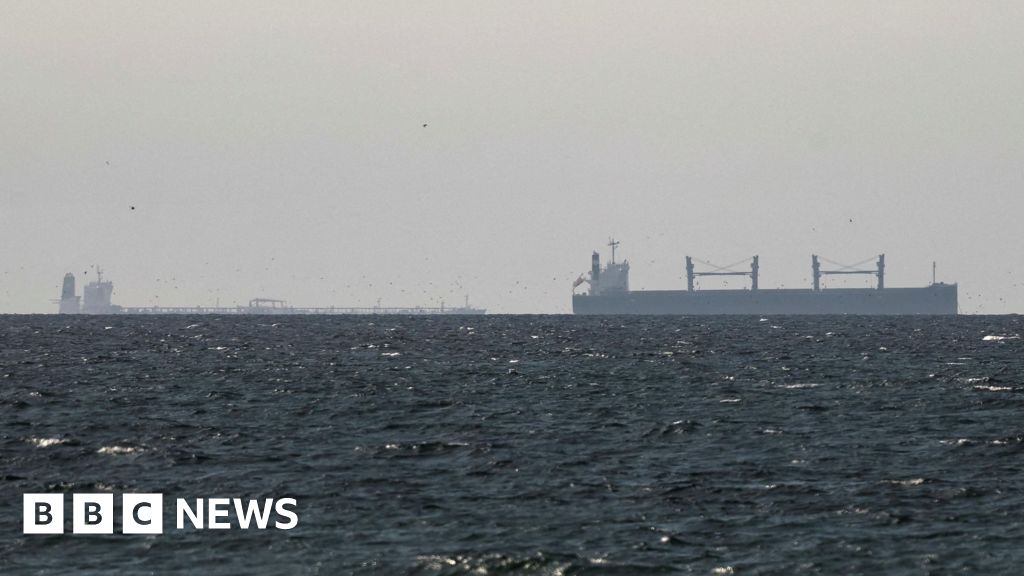
The Strait of Hormuz, a narrow waterway through which a significant portion of the world's oil supply passes, has once again become the epicenter of escalating geopolitical tensions. Iran announced its decision to close the strait to commercial vessels, issuing a stark warning that any ship attempting to navigate its waters would be targeted. This declaration, made amidst reports of recent attacks on commercial shipping in and around the strait, including a tanker, marks a dangerous new phase in the long-standing standoff between Tehran and Western powers, particularly the United States.
Tehran has explicitly blamed a US blockade for its actions, asserting that such measures constitute a direct breach of a recently agreed ceasefire. This accusation adds a complex layer to an already volatile situation, transforming what might appear as a localized incident into a potential violation of international agreements and a direct challenge to global maritime security. The implications of such a closure are profound, threatening to disrupt global energy markets, destabilize regional alliances, and potentially ignite a broader conflict.
A Chokepoint Under Siege: The Strategic Importance of Hormuz
The Strait of Hormuz is not merely a geographical feature; it is a geopolitical linchpin. Connecting the Persian Gulf with the Arabian Sea and beyond, it is the only sea passage from the Persian Gulf to the open ocean. Approximately 20% of the world's petroleum liquids and a significant portion of its liquefied natural gas (LNG) transit through this 21-mile-wide channel daily. For major oil producers like Saudi Arabia, Iraq, UAE, Kuwait, and Iran itself, it is the primary export route. Any disruption here sends immediate shockwaves through global energy markets, leading to soaring oil prices and economic uncertainty.
Historically, Iran has repeatedly threatened to close the strait in response to perceived threats or sanctions, viewing it as a strategic lever against international pressure. These threats have often been dismissed as rhetoric, but the current declaration, coupled with alleged attacks on vessels, suggests a more resolute and immediate intent. The closure, if enforced, would effectively cut off a critical artery of global trade, impacting not just oil and gas but also a vast array of goods and services that rely on maritime shipping.
The Ceasefire and Its Alleged Breach: Unpacking Iran's Rationale
Iran's justification for its actions hinges on the claim of a US blockade violating a ceasefire. While the specifics of this ceasefire and the alleged blockade remain subject to international scrutiny and debate, Iran's narrative frames its actions as a defensive response rather than an unprovoked aggression. The concept of a blockade, particularly one impacting a sovereign nation's trade, is a highly contentious issue under international law and could be interpreted by Iran as an act of economic warfare.
For years, Iran has been subjected to stringent international sanctions, primarily led by the United States, aimed at curbing its nuclear program and regional influence. These sanctions have severely impacted Iran's economy, leading to widespread hardship. From Tehran's perspective, any measure that further restricts its access to international markets, even if not explicitly termed a
Stay Informed
Get the world's most important stories delivered to your inbox.
No spam, unsubscribe anytime.
Comments
No comments yet. Be the first to share your thoughts!