Syria, Libya, and the Shadow of Failed Diplomacy: A Decade of Global Paralysis
The early 21st century witnessed devastating conflicts in Syria and Libya, leaving a legacy of instability and human suffering. These crises exposed the profound limitations and paralysis of global diplomacy, particularly within the United Nations Security Council, where geopolitical rivalries often overshadowed humanitarian imperatives. Examining these interventions reveals critical lessons about international responsibility and the enduring challenges to collective security in a multipolar world.
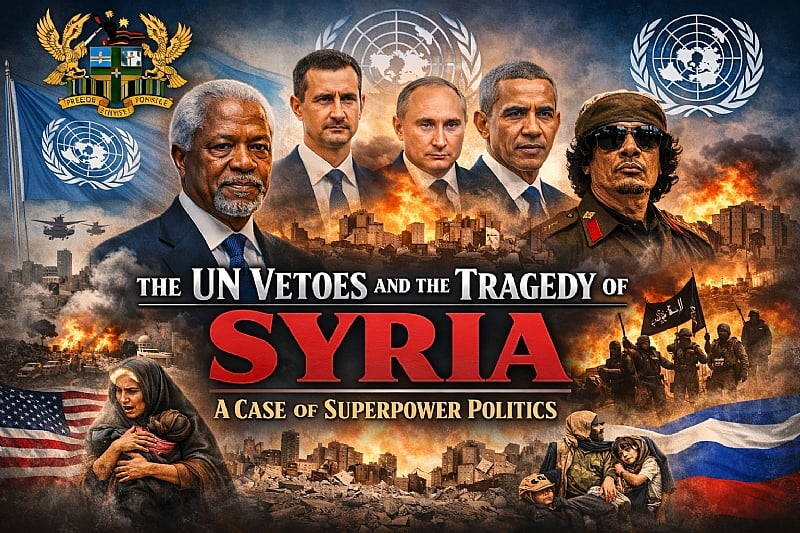
The dawn of the 21st century promised a new era of global cooperation, yet it quickly became a crucible for conflicts that would redefine international relations and expose the deep fissures within the global diplomatic architecture. Among the most scarring of these were the Syrian Civil War, which erupted in 2011, and the NATO-led intervention in Libya the same year. Both events, though distinct in their origins and trajectories, share a common, tragic thread: they laid bare the paralysis of global diplomacy and the devastating consequences when international bodies fail to act decisively or, conversely, act without a clear, sustainable post-intervention strategy. The reverberations of these decisions continue to shape the geopolitical landscape, reminding us of the immense human cost of political impasse.
The Libyan Intervention: A Precedent and Its Perils
In March 2011, the United Nations Security Council (UNSC) passed Resolution 1973, authorizing a no-fly zone over Libya and “all necessary measures” to protect civilians from Muammar Gaddafi's forces. This resolution, largely driven by the principle of Responsibility to Protect (R2P), saw NATO launch an air campaign that quickly evolved beyond civilian protection to actively supporting rebel forces aiming to overthrow Gaddafi. While initially hailed by some as a successful humanitarian intervention, the aftermath painted a starkly different picture. Gaddafi's regime fell, but the country plunged into a protracted civil war, becoming a haven for extremist groups, a major transit point for human trafficking, and a battleground for regional and international proxies. The state apparatus crumbled, leaving a security vacuum that persists to this day. Critics argue that the intervention lacked a robust post-conflict stabilization plan, and its expansive interpretation of Resolution 1973 alienated key UNSC members, particularly Russia and China, who felt their concerns were ignored.
The Erosion of Trust and the R2P Doctrine
The Libyan experience significantly damaged the already fragile consensus around the R2P doctrine. Russia and China, who abstained from Resolution 1973, later expressed profound regret, viewing the intervention as a pretext for regime change rather than genuine civilian protection. This perception cemented their resolve to prevent similar actions in the future, particularly in the context of Syria. The intervention became a cautionary tale, demonstrating how the perceived overreach of humanitarian intervention could undermine the very principles it sought to uphold and deepen geopolitical mistrust. The UNSC, designed to be the ultimate arbiter of international peace and security, found itself increasingly gridlocked, its permanent members wielding their veto power as a shield against perceived national interests rather than a tool for collective security.
Syria: The Unfolding Catastrophe and Diplomatic Deadlock
As Libya descended into chaos, Syria was just beginning its own tragic spiral. What started as peaceful protests against Bashar al-Assad's regime in March 2011 quickly escalated into a brutal civil war. Unlike Libya, however, the international community's response to Syria was characterized by a profound and enduring diplomatic stalemate. Russia, a staunch ally of Assad, and China consistently vetoed any UNSC resolutions that could have authorized military intervention or imposed significant sanctions on the regime. Their argument was clear: Syria was not Libya, and the lessons learned from the previous intervention dictated a non-interventionist approach to avoid exacerbating the conflict and risking another regime change operation.
The Cost of Inaction: A Humanitarian Disaster
The consequences of this diplomatic paralysis in Syria have been catastrophic. Over 500,000 lives have been lost, millions displaced internally and externally, creating the largest refugee crisis since World War II. Cities like Aleppo and Homs were reduced to rubble, and the conflict became a breeding ground for extremist groups like ISIS, which exploited the power vacuum and humanitarian despair. The use of chemical weapons, barrel bombs, and systematic human rights abuses became hallmarks of the conflict, yet the UNSC remained largely impotent, issuing condemnations but unable to enforce meaningful action. The conflict drew in regional and global powers, transforming Syria into a complex proxy battleground involving Iran, Turkey, Saudi Arabia, the United States, and Russia, each with their own strategic interests.
Geopolitical Rivalries and the Veto Power
The Syrian and Libyan crises vividly illustrate how geopolitical rivalries among the permanent members of the UNSC – the United States, Russia, China, France, and the United Kingdom – can cripple the body's ability to respond effectively to mass atrocities. Russia's strategic interests in Syria, including its naval base at Tartus and its desire to maintain influence in the Middle East, made it unwilling to countenance any action that could lead to Assad's overthrow. Similarly, China's consistent stance on non-interference in internal affairs, coupled with its aversion to Western-led interventions, aligned with Russia's position. This dynamic effectively rendered the UNSC incapable of fulfilling its primary mandate: maintaining international peace and security. The veto power, originally conceived to prevent the UN from being drawn into conflicts against the will of major powers, has frequently been used to protect national interests at the expense of human lives and international norms.
The Legacy and Lessons Learned
The twin tragedies of Syria and Libya offer sobering lessons for global governance. They highlight:
* The Double-Edged Sword of Intervention: While intervention can, in theory, prevent atrocities, poorly conceived or executed interventions can lead to greater instability and unintended consequences. * The Fragility of International Consensus: The R2P doctrine, once a beacon of hope for preventing genocide and mass atrocities, has been severely undermined by divergent interpretations and geopolitical mistrust. * The Need for Post-Intervention Planning: Any intervention, whether military or diplomatic, must be accompanied by robust, long-term strategies for stabilization, governance, and reconstruction. * The Imperative for UNSC Reform: The current structure of the UNSC, particularly the veto power, makes it vulnerable to paralysis in the face of great power competition. Calls for reform, including expanding permanent membership and re-evaluating the veto, have grown louder. * The Rise of a Multipolar World: The conflicts underscore a shift from a unipolar moment to a more complex multipolar order, where emerging powers challenge traditional Western dominance, making consensus-building even more arduous.
In conclusion, the early 21st century's interventions and non-interventions in Libya and Syria stand as stark reminders of the profound challenges facing global diplomacy. The paralysis witnessed in these crises is not merely a failure of individual states but a systemic issue within the international framework designed to prevent such suffering. Moving forward, the international community must confront these uncomfortable truths, seeking innovative pathways to overcome geopolitical divides and ensure that the principle of protecting vulnerable populations does not remain an empty promise. The human cost of inaction, and indeed of ill-conceived action, is simply too high to ignore. Rebuilding trust and finding common ground on shared humanitarian values will be paramount for preventing future catastrophes and restoring faith in the efficacy of global governance.
Stay Informed
Get the world's most important stories delivered to your inbox.
No spam, unsubscribe anytime.
Comments
No comments yet. Be the first to share your thoughts!