The iPad's Existential Crisis: Is Apple's Tablet Facing Redundancy in a Folding Future?
Apple's once-revolutionary iPad faces an uncertain future as rumors of a folding iPhone and touchscreen MacBook gain traction. This comprehensive analysis explores whether the tablet, which has seen limited innovation, can carve out a distinct purpose amidst a converging product ecosystem. We delve into its historical significance, current market challenges, and potential paths forward in an increasingly competitive landscape.
In the ever-evolving landscape of consumer technology, few companies have shaped our digital lives as profoundly as Apple. Yet, even titans face moments of introspection. Whispers are growing louder, echoing through the tech sphere, about the imminent arrival of two highly anticipated devices: the fabled folding iPhone and a touchscreen MacBook. These innovations, while exciting, cast a long, potentially ominous shadow over one of Apple's most iconic, yet recently stagnant, products: the iPad. Is this the beginning of an existential crisis for Apple's tablet, or merely a challenging chapter in its storied history?
Launched in 2010, the iPad was initially hailed as a revolutionary device, bridging the gap between smartphones and laptops. It offered a new paradigm for content consumption, casual computing, and even creative work, captivating millions with its intuitive interface and sleek design. For years, it enjoyed a relatively uncontested reign, defining the tablet category. However, in recent times, the iPad has struggled to find a compelling narrative, especially with its core functionality increasingly encroached upon by more versatile devices. The question isn't just about innovation; it's about relevance in a world where device categories are blurring at an unprecedented pace.
The Looming Threat: Folding Phones and Touchscreen Laptops
The prospect of a folding iPhone presents a significant challenge to the iPad's portable niche. Imagine a device that offers the compact convenience of a smartphone, yet unfolds into a screen size comparable to a small tablet. This form factor could potentially absorb many of the use cases currently attributed to the iPad mini or even the standard iPad. For users who value portability and a single device for all their needs, a folding iPhone could be the ultimate convergence device, rendering a separate tablet unnecessary for many daily tasks.
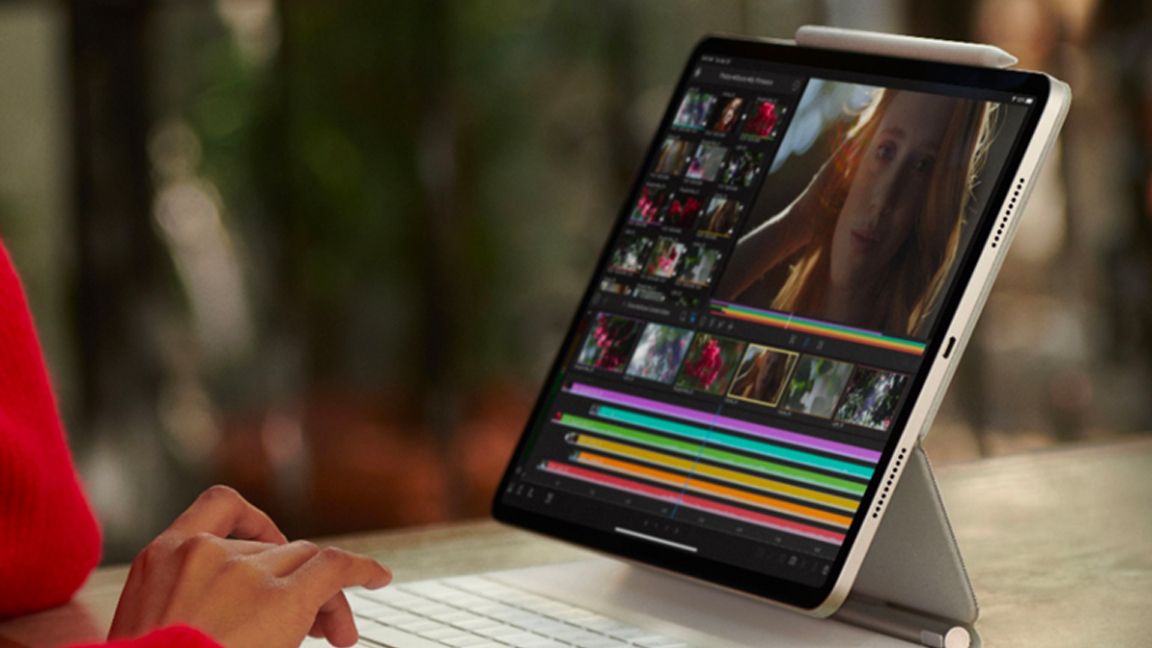
Similarly, a touchscreen MacBook directly targets the iPad's professional and productivity aspirations. Apple has long resisted integrating touch capabilities into its macOS laptops, arguing that the traditional laptop form factor is best suited for keyboard and trackpad input. However, with Windows laptops and Chromebooks successfully incorporating touch for years, and the iPad Pro increasingly blurring the lines with its Magic Keyboard and Apple Pencil, the move towards a touchscreen MacBook seems almost inevitable. Such a device would offer the full power and versatility of macOS, combined with the intuitive touch interface that has been the iPad's hallmark. This could significantly diminish the iPad Pro's appeal as a laptop replacement, especially for users who require desktop-grade software and multitasking capabilities.
A Decade of Dominance: The iPad's Historical Context
To understand the iPad's current predicament, it's crucial to look back at its origins and evolution. When Steve Jobs unveiled the iPad, it was positioned as a third category of device, distinct from both smartphones and laptops. It excelled at tasks like web browsing, email, photo viewing, video consumption, and gaming, all within a more immersive and tactile experience than a phone, and a more portable one than a laptop. Its success was immediate and profound, creating a massive new market segment.
Over the years, Apple iterated on the iPad, introducing: * iPad Mini: Offering enhanced portability. * iPad Air: Balancing power and thinness. * iPad Pro: Aimed at creative professionals and those seeking a laptop alternative, with features like the Apple Pencil and Magic Keyboard.
Despite these advancements, the core user experience has remained largely consistent. While the hardware has become incredibly powerful, and iPadOS has introduced features like improved multitasking and external display support, the iPad still often feels like a device between two worlds, rather than a definitive leader in its own right. Sales figures, while still substantial, have shown signs of stagnation, and the excitement surrounding new iPad models has waned compared to the early days.
The Redundancy Conundrum: Where Does the iPad Fit?
The central question is whether the iPad can justify its existence as a separate product category when other devices are increasingly capable of performing its functions, often with added benefits. If a folding iPhone offers a large screen on demand and a touchscreen MacBook provides a full desktop OS with touch input, what unique value proposition does the iPad retain?
* Content Consumption: While excellent for media, large-screen phones and laptops also excel here. * Casual Gaming: Again, phones are dominant, and laptops offer more complex experiences. * Creative Work: The iPad Pro, with the Apple Pencil, remains a strong contender for digital art and design. However, a touchscreen MacBook could offer a similar experience with full desktop applications. * Education: iPads have found a strong foothold in educational settings due to their simplicity and app ecosystem. This niche might be more resilient.
One could argue that the iPad's strength lies in its simplicity and the focused experience it offers. It's less distracting than a laptop and provides a larger canvas than a phone without the full complexity of a desktop OS. However, this argument becomes harder to make as iPadOS continues to add features that make it more like macOS, and as phones become more powerful and versatile.
Expert Analysis and Apple's Strategic Dilemma
Analysts are divided on the iPad's future. Some believe Apple will need to fundamentally reimagine the iPad, perhaps by giving it a truly unique operating system experience that differentiates it from both iOS and macOS. Others suggest that the iPad might evolve into a more specialized device, perhaps focusing exclusively on specific niches like education, augmented reality, or as a dedicated smart home hub.
Apple's current strategy seems to be pushing the iPad Pro closer to a laptop replacement, while keeping the standard iPad as an affordable entry point. However, this strategy is precisely what puts it in direct competition with the rumored touchscreen MacBook. The company faces a delicate balancing act: how to innovate across its product lines without cannibalizing its own offerings.
One potential path for the iPad could be to lean heavily into augmented reality (AR). With its large screen and powerful processors, the iPad could become a premier platform for immersive AR experiences, offering something truly distinct from smaller phone screens or traditional laptops. Another avenue could be to embrace a more modular design, allowing users to customize its functionality more extensively.
The Road Ahead: Adaptation or Obsolescence?
The iPad's journey is far from over, but it is undoubtedly at a crossroads. The tech industry thrives on innovation and disruption, and sometimes, even the most beloved products must adapt or risk fading into obscurity. Apple has a history of reinventing itself and its products, from the iPod's evolution into the iPhone to the Mac's transition to Apple Silicon. The challenge for the iPad is to find its next act, a compelling reason for existence that transcends its current identity as a 'middle ground' device.
Whether it's through a radical redesign, a shift in its operating system's philosophy, or a focus on emerging technologies like AR, the iPad must demonstrate a clear, indispensable value proposition. Otherwise, as the boundaries between phones and laptops continue to blur, and new form factors emerge, the once-unquestioned king of tablets might find itself relegated to a niche product, or worse, an anachronism in Apple's sleek, folding future. The coming years will be crucial in determining if the iPad can once again redefine its purpose and secure its place in the pantheon of essential tech.
Stay Informed
Get the world's most important stories delivered to your inbox.
No spam, unsubscribe anytime.
Comments
No comments yet. Be the first to share your thoughts!