The Spectacle of Power: Navigating the Age of Hyperpolitics
In an era where politics permeates every facet of life yet struggles to effect tangible change, Belgian theorist Anton Jäger's concept of 'hyperpolitics' offers a critical lens. This phenomenon, characterized by aesthetic performance and consumption over substantive action, reshapes our understanding of civic engagement. We delve into its origins, manifestations, and profound implications for democracy and societal progress in the digital age.
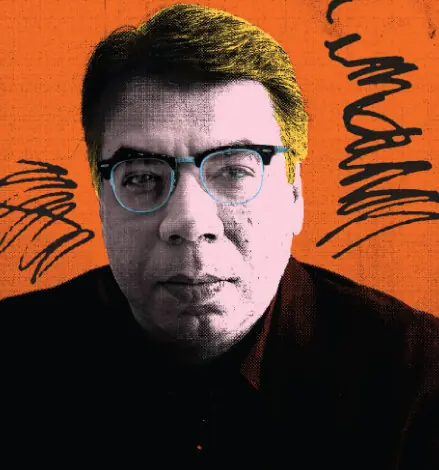
In an age saturated with information and constant digital connectivity, it often feels as though politics is an omnipresent force, seeping into every conversation, every product, and every personal identity. Yet, despite this pervasive presence, a growing sense of disillusionment suggests that genuine, transformative change remains elusive. This paradox is at the heart of a compelling concept coined by Belgian political theorist Anton Jäger in the early 2020s: hyperpolitics. Jäger observed that while politics appears to be everywhere, it frequently fails to catalyze the kind of meaningful societal shifts that were once the hallmark of ideological movements. Instead, it has become a performance, an aesthetic, a commodity to be consumed, rather than a vehicle for collective action.
The Genesis of Hyperpolitics: From Ideology to Image
The traditional understanding of politics was firmly rooted in ideology and collective movements. Whether it was the struggle for workers' rights, civil liberties, or national independence, political engagement was often driven by deeply held beliefs and organized efforts to reshape society according to a particular vision. Parties had clear platforms, unions mobilized masses, and social movements challenged the status quo with coherent, articulated demands. The political arena, though often contentious, was a space where ideas clashed, and policies were forged through debate and compromise, or revolutionary action.
However, the latter half of the 20th century and the dawn of the 21st witnessed a gradual but profound shift. The decline of traditional political parties, the rise of mass media (and later social media), and the increasing individualization of society began to erode the foundations of this older political order. As Jäger suggests, politics began to detach from its ideological anchors. It transformed from a battle of ideas into a battle of images, brands, and personalities. The focus shifted from what a political movement stands for to how it looks and feels. This is not merely a superficial change; it represents a fundamental reorientation of how power is understood, exercised, and perceived by the populace.
Consider the rise of celebrity politicians, the meticulously crafted campaigns designed more for viral moments than policy debates, and the increasing importance of 'optics' over substance. Political discourse often devolves into soundbites and emotionally charged rhetoric, designed to provoke a reaction rather than foster understanding. This aestheticization of politics means that engagement often becomes a form of consumption – liking, sharing, commenting – rather than active participation in policy-making or community organizing. The 'political' becomes a lifestyle choice, a brand affiliation, rather than a commitment to a shared future.
The Digital Echo Chamber and the Performance of Dissent
Nowhere is hyperpolitics more evident than in the digital realm. Social media platforms, designed to maximize engagement through immediate gratification and algorithmic curation, have become fertile ground for this new political paradigm. Here, political action can often be reduced to a performative act: changing a profile picture to support a cause, sharing a passionate (but often uninformed) post, or engaging in online debates that rarely translate into real-world impact. This isn't to say that online activism is entirely without merit; it can raise awareness and mobilize resources. However, the ease with which one can 'participate' online often creates an illusion of efficacy, masking a deeper political inertia.
The digital echo chamber further exacerbates this issue. Algorithms prioritize content that aligns with users' existing views, creating insulated bubbles where dissenting opinions are rarely encountered. This fosters a sense of constant political engagement within one's own ideological sphere, but simultaneously diminishes the capacity for cross-ideological dialogue and consensus-building. The 'outrage cycle' becomes a self-perpetuating mechanism, where each new controversy fuels further online performance, yet the underlying systemic issues remain unaddressed. The sheer volume of political content, from news analyses to memes, creates a constant hum that can be both overwhelming and ultimately desensitizing. We are constantly exposed to 'politics,' but its meaning and potential for impact are diluted.
The Paradox of Pervasiveness and Powerlessness
One of the most unsettling aspects of hyperpolitics is this paradox: politics is everywhere, yet it feels increasingly powerless to effect real change. This isn't necessarily because politicians are inherently less capable, but because the very nature of political engagement has shifted. When politics is primarily about aesthetics and consumption, the incentive structure changes. Leaders may prioritize maintaining a favorable public image or generating viral content over tackling complex, long-term problems that require difficult compromises and sustained effort. The focus shifts from governance to optics management.
This leads to a phenomenon where pressing issues – climate change, economic inequality, public health crises – are discussed endlessly, often with great emotional intensity, but concrete, decisive action remains elusive. Policies are debated, initiatives are launched, but the needle of progress seems to move agonizingly slowly, if at all. This can breed profound cynicism among the populace, who witness constant political activity without corresponding improvements in their daily lives. The result is a vicious cycle: disillusionment leads to disengagement from traditional political processes, which further empowers the performative aspects of hyperpolitics, leading to even less substantive change.
Reclaiming Agency: Beyond the Spectacle
Understanding hyperpolitics is the first step towards navigating it. For citizens, it requires a conscious effort to look beyond the surface, to question the aesthetic, and to seek out substantive information and engagement. This means differentiating between performative activism and genuine, impactful action. It involves critically evaluating political messages, scrutinizing policy proposals rather than just catchy slogans, and demanding accountability from leaders that extends beyond their public persona.
For political actors and institutions, it necessitates a return to substance and ideology, not in a rigid, dogmatic sense, but as a framework for coherent action and a basis for collective identity. It means fostering environments where genuine debate and compromise are possible, and where the long-term well-being of society takes precedence over short-term electoral gains or viral moments. This could involve strengthening local political structures, investing in civic education, and creating platforms for deliberative democracy that encourage thoughtful engagement over reactive consumption.
Ultimately, the age of hyperpolitics challenges us to redefine what it means to be politically engaged. It's a call to move beyond the passive consumption of political spectacle and towards active, informed participation. It demands that we reclaim the power of collective action, grounded in shared values and a commitment to tangible progress, rather than being content with the illusion of omnipresent, yet ultimately impotent, political activity. The future of democracy may well depend on our ability to distinguish between the noise of performance and the quiet, persistent work of change.
Stay Informed
Get the world's most important stories delivered to your inbox.
No spam, unsubscribe anytime.
Comments
No comments yet. Be the first to share your thoughts!