Trump Demands Kimmel Firing Over 'Expectant Widow' Sketch: A Deep Dive into Political Satire and Presidential Power
Former President Donald Trump has reignited a past controversy, calling for ABC to fire Jimmy Kimmel over a 2017 sketch where the comedian referred to then-First Lady Melania Trump as an "expectant widow." This demand underscores the persistent tension between political figures and late-night satire, raising questions about freedom of speech, media responsibility, and the weaponization of humor in the political arena. The incident highlights the delicate balance between comedic expression and perceived disrespect, especially when involving presidential families.
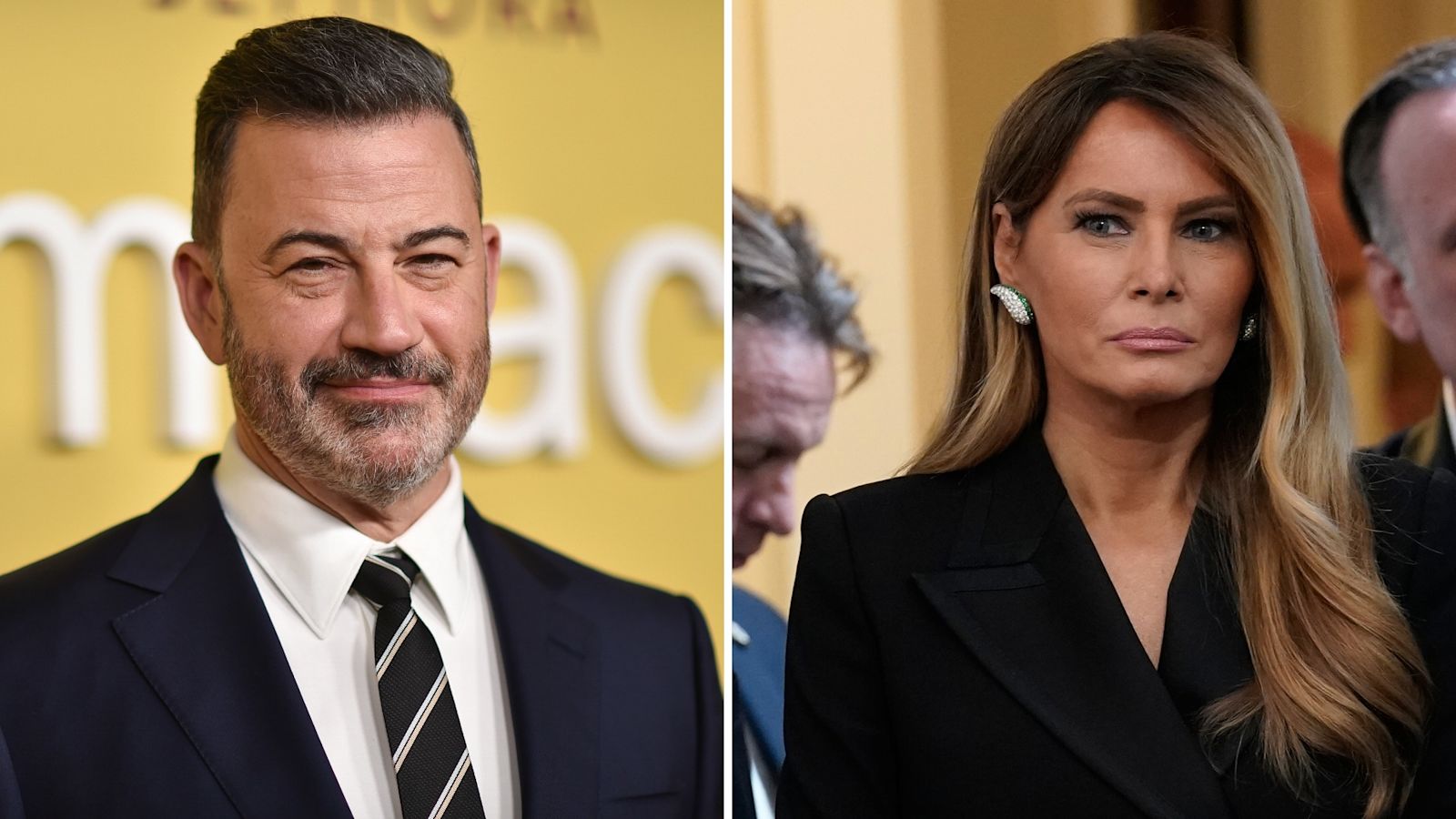
In the volatile landscape where politics and entertainment frequently collide, former President Donald Trump has once again thrust late-night comedian Jimmy Kimmel into the spotlight, demanding his immediate termination from ABC. The controversy centers on a sketch that aired in 2017, just days before a tragic shooting incident at a Washington hotel, in which Kimmel described the then-First Lady Melania Trump as an "expectant widow." This seemingly innocuous, albeit dark, comedic jab has been resurrected by Trump, sparking a renewed debate about the boundaries of political satire, the role of media in public discourse, and the enduring power of a former president to influence public opinion and corporate decisions.
The incident, originally broadcast on Kimmel's show, Jimmy Kimmel Live!, involved a segment where the comedian joked about Melania Trump's reaction to her husband's presidency. While the specific context of the joke might have been lost to time for many, its re-emergence now, years later, serves as a potent reminder of the often-fraught relationship between political figures and the comedians who lampoon them. Trump's recent pronouncements, made on his Truth Social platform, did not mince words, labeling Kimmel as "incompetent" and a "loser," and accusing him of having "no talent." Such strong condemnations from a figure of Trump's stature inevitably send ripples through the media industry and beyond.
The Anatomy of a Controversy: Satire, Sensitivity, and Timing
The initial sketch in question predated a shooting incident at the Trump International Hotel in Washington D.C. by a mere few days. While Kimmel's joke was not directly related to the shooting, the timing of its re-invocation by Trump is crucial. The former president's argument implies that the joke, in hindsight, was not just tasteless but potentially dangerous or insensitive given the subsequent events. This framing attempts to elevate the critique beyond mere political disagreement to an issue of moral failing and media irresponsibility. However, it's important to differentiate between the intent of the joke and an unforeseen, unrelated event. Comedians often push boundaries, and the "expectant widow" trope, while morbid, is a well-worn piece of dark humor in various contexts, often used to comment on the perceived stresses or dangers associated with powerful positions.
Historically, political satire has served as a vital safety valve and a form of public accountability. From the biting caricatures of the 18th century to the late-night monologues of today, humor has been a tool to critique power, expose hypocrisy, and offer a different perspective on serious matters. Figures like Jon Stewart, Stephen Colbert, and indeed, Jimmy Kimmel, have carved out significant niches by blending news commentary with comedic relief. Yet, the line between sharp critique and perceived disrespect is constantly shifting, especially when it involves the families of public figures. For many, jokes about a spouse, particularly one who is not an elected official, cross a personal boundary, regardless of the political context. Trump's reaction taps into this sentiment, portraying Kimmel's humor as a personal attack rather than political commentary.
Presidential Power and the Media Landscape
Donald Trump's calls for Kimmel's firing are not isolated incidents but rather part of a consistent pattern throughout his public life, both as a businessman and as president, of using his platform to directly challenge and attempt to control media narratives and personnel. During his presidency, he frequently targeted journalists, news organizations, and entertainers he deemed critical, labeling them "fake news" or "enemies of the people." This approach has had a profound impact on the media landscape, fostering an environment where criticism is often met with calls for censorship or dismissal rather than engagement or rebuttal.
Such demands from a former president, particularly one who remains a dominant figure in American politics, carry significant weight. While ABC is unlikely to cave to such pressure, the public nature of the demand creates a chilling effect and forces media organizations to defend their editorial independence. It also energizes a segment of the population that views mainstream media and late-night comedy as inherently biased and deserving of rebuke. This dynamic further polarizes public discourse, making it harder for nuanced conversations about freedom of expression and media ethics to take place. The incident also highlights the weaponization of social media platforms, where a single post from a high-profile individual can instantly amplify a grievance and mobilize supporters against a perceived adversary.
The Broader Implications for Free Speech and Satire
The debate surrounding Kimmel's sketch and Trump's reaction extends beyond the immediate personalities involved; it touches upon fundamental principles of free speech and the health of democratic discourse. In a society that values robust public debate, the ability to satirize political figures, even provocatively, is often seen as a cornerstone of a free press. However, this freedom is not absolute and is often balanced against considerations of taste, public safety, and the potential for incitement. The challenge lies in defining these boundaries without stifling legitimate criticism or artistic expression.
For comedians, the pressure is immense. They operate in a space where their job is to make people laugh, often by pushing societal norms and challenging authority. When a joke is deemed offensive, especially by a powerful figure, it can lead to public outcry, boycotts, and even threats. This creates a dilemma: should comedians self-censor to avoid controversy, or should they continue to push boundaries in the name of artistic integrity and political commentary? The Kimmel incident suggests that the latter often prevails, but not without significant backlash.
Moreover, this episode underscores the increasing difficulty in distinguishing between genuine outrage and politically motivated attacks designed to silence critics. When a former president calls for a comedian's job, it's not just a critique of a joke; it's an attempt to exert power and control over the narratives that shape public perception. This constant pressure can lead to a more cautious media environment, where outlets might shy away from controversial content to avoid becoming targets.
Moving Forward: Navigating the Intersection of Power, Humor, and Media
The ongoing saga between Donald Trump and Jimmy Kimmel is more than just a celebrity feud; it's a microcosm of the larger battles being waged over truth, media credibility, and the very nature of public discourse in the digital age. As we move forward, several key considerations emerge. Firstly, media organizations must continue to uphold their editorial independence, resisting pressure from political figures while also remaining accountable to their audiences for the content they produce. Secondly, the public must engage critically with both political commentary and comedic satire, understanding the intent and context behind the messages they consume.
Finally, the incident serves as a reminder that humor, while powerful, is also subjective and can be easily misinterpreted or weaponized. The challenge for comedians, journalists, and the public alike is to navigate this complex terrain with a commitment to open dialogue, even when opinions diverge sharply. The "expectant widow" sketch, in its unexpected resurgence, forces us to confront these enduring questions about the limits of satire and the responsibilities of those who wield influence in the public sphere. The debate will undoubtedly continue, reflecting the deeply divided nature of contemporary society and the ongoing struggle to define the boundaries of acceptable speech in a hyper-connected world. The resilience of late-night comedy, despite such pressures, will be a testament to its enduring role in American culture.
Stay Informed
Get the world's most important stories delivered to your inbox.
No spam, unsubscribe anytime.
Comments
No comments yet. Be the first to share your thoughts!