UK-France Channel Deal: A New Era in Migration Control or a Temporary Fix?
The UK and France have inked a landmark three-year agreement aimed at significantly curbing undocumented migrant crossings in the English Channel. This deal introduces a novel performance-based funding mechanism, where UK payments to France are contingent on achieving specific targets for stopping migrants. Experts are divided on whether this marks a sustainable solution or simply a more robust short-term deterrent to a complex humanitarian issue.
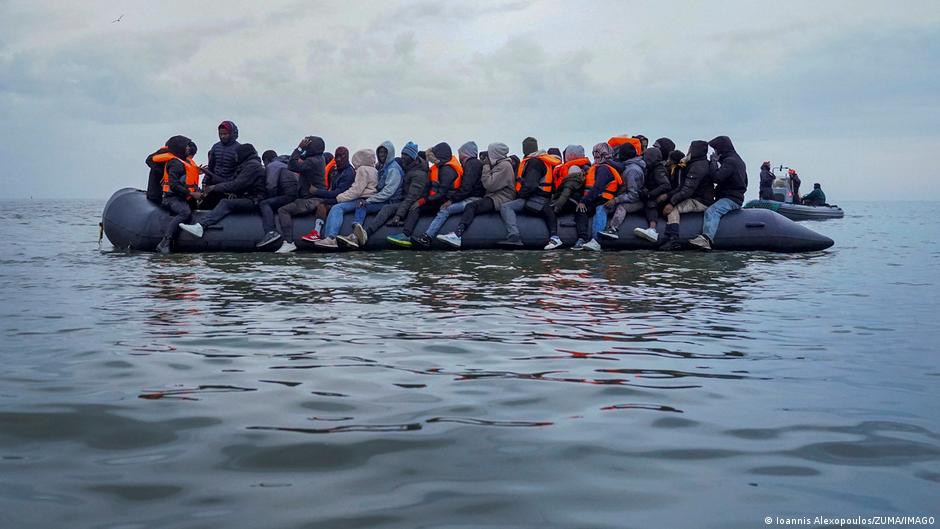
The tumultuous waters of the English Channel, a narrow strip separating the United Kingdom from mainland Europe, have become a focal point of a complex and often tragic humanitarian crisis. For years, the perilous journey undertaken by thousands of undocumented migrants attempting to reach British shores has strained diplomatic relations, sparked heated political debate, and claimed countless lives. Now, in a significant diplomatic breakthrough, the United Kingdom and France have forged a new three-year agreement, signaling a renewed, and arguably more stringent, approach to stemming these crossings. This deal, unprecedented in its scope and its innovative performance-based funding model, seeks to fundamentally alter the dynamics of migration control in one of Europe's busiest maritime corridors.
A Paradigm Shift in Bilateral Cooperation
At the heart of this new accord lies a crucial innovation: for the first time, a portion of the UK's financial contributions to France will be directly tied to measurable outcomes in preventing migrant crossings. This performance-based funding mechanism is a stark departure from previous agreements, which often involved lump-sum payments without explicit, enforceable targets. The agreement stipulates that if France fails to meet its agreed-upon benchmarks for stopping migrants, British funding could be halted after the first year. This clause introduces a powerful incentive for French authorities to intensify their efforts, transforming what was once a cooperative endeavor into a results-driven partnership with clear accountability.
Under the terms of the deal, France has committed to a substantial increase in its operational capacity along its northern coastline. This includes boosting the number of officers patrolling the beaches and coastal areas by more than 50%. Such an increase is expected to enhance surveillance, intercept more small boats before they launch, and dismantle smuggling networks operating on French soil. Furthermore, the agreement outlines increased intelligence sharing between the two nations, aiming to disrupt the sophisticated criminal organizations that facilitate these dangerous journeys. The goal is not merely to deter individual crossings but to dismantle the entire illicit infrastructure that profits from human desperation.
Historical Context: A Persistent Challenge
The phenomenon of Channel crossings by undocumented migrants is not new, but its scale has escalated dramatically in recent years. Historically, migrants attempting to reach the UK often did so via lorries and ferries, hiding in cargo or vehicles. However, increased security measures at ports and the Channel Tunnel have pushed many towards the more dangerous route of small boats, often inflatable dinghies, which are ill-suited for the treacherous waters of the Channel. This shift has led to a surge in crossings, particularly since 2018, transforming a sporadic issue into a regular, high-profile challenge.
Previous agreements between the UK and France have largely focused on providing financial aid to France to bolster its border security. While these efforts yielded some results, they often faced criticism for not being sufficiently effective or transparent. The Le Touquet Treaty of 2003, for instance, established juxtaposed controls, allowing UK border officials to operate on French soil and vice versa. While effective for lorry traffic, it did not fully anticipate the rise of small boat crossings. The current deal acknowledges these past limitations and seeks to address them with a more robust, integrated, and accountable framework. The political pressure on both sides, particularly in the UK, to “stop the boats” has been immense, making this agreement a critical test of political will and diplomatic efficacy.
Expert Analysis and Potential Implications
Experts are divided on the long-term efficacy of this new agreement. Proponents argue that the performance-based funding is a game-changer, providing France with the necessary resources and incentives to make a significant dent in the number of crossings. They point to the increased patrols and intelligence sharing as concrete steps that will undoubtedly make the journey more difficult for migrants and more risky for smugglers. The deterrent effect of enhanced enforcement, they contend, will eventually lead to a decrease in attempts.
However, critics voice concerns that while the deal may reduce crossings in the short term, it fails to address the root causes of migration. They argue that simply making one route more difficult often pushes migrants towards even more dangerous alternatives or forces them into deeper hiding within France, creating new humanitarian challenges. Organizations like Médecins Sans Frontières and Amnesty International have consistently highlighted that these policies criminalize vulnerable individuals seeking asylum, rather than offering safe and legal pathways. Furthermore, there are questions about the ethical implications of tying humanitarian efforts to financial penalties and the potential for France to be unfairly penalized if external factors, such as geopolitical crises, lead to an unforeseen surge in migrant flows.
Another point of contention is the definition of
Stay Informed
Get the world's most important stories delivered to your inbox.
No spam, unsubscribe anytime.
Comments
No comments yet. Be the first to share your thoughts!