UN Watchdog Sounds Alarm: North Korea's Nuclear Ambitions Escalate Dramatically at Yongbyon
The International Atomic Energy Agency (IAEA) has issued a stark warning regarding a "very serious increase" in North Korea's nuclear activities, particularly at its Yongbyon complex. This alarming escalation suggests Pyongyang is rapidly enhancing its capacity to produce nuclear weapons, raising grave concerns about regional and global security. The report highlights intensified operations, including the suspected production of weapons-grade plutonium and enriched uranium, challenging international non-proliferation efforts.
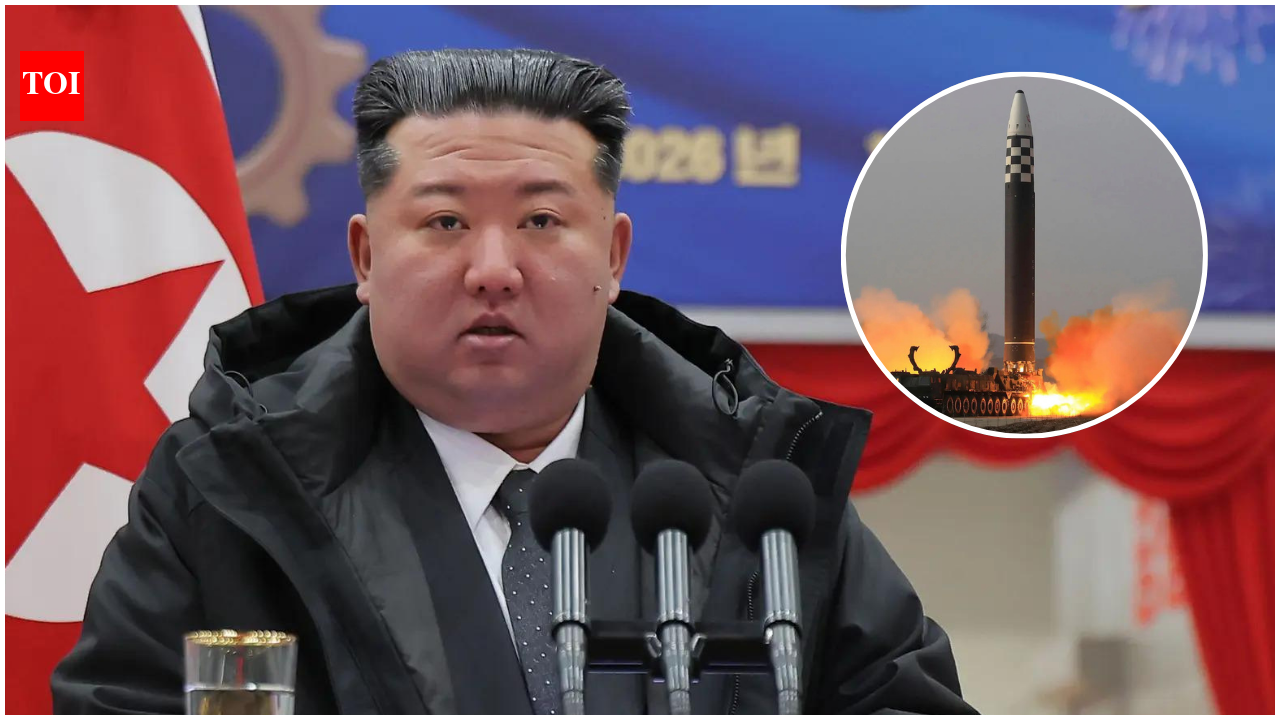
The international community finds itself once again grappling with the escalating nuclear ambitions of North Korea, as the head of the International Atomic Energy Agency (IAEA), Rafael Grossi, issues a dire warning. Grossi has declared a "very serious increase" in Pyongyang's ability to produce nuclear weapons, citing heightened activity at key facilities, most notably the notorious Yongbyon nuclear complex. This pronouncement sends a chilling message, indicating that despite years of sanctions and diplomatic efforts, North Korea is not only continuing its illicit nuclear program but is accelerating its development at an alarming pace.
A Troubling Trajectory: Yongbyon's Renewed Activity
The Yongbyon Nuclear Scientific Research Center, located north of Pyongyang, has long been the heart of North Korea's nuclear program. It houses facilities crucial for producing fissile material, including a 5-megawatt (MW) reactor and a reprocessing plant used to extract plutonium from spent fuel rods. Recent satellite imagery and intelligence assessments, which form the basis of the IAEA's concerns, suggest a significant uptick in operations at this site. Grossi's statement underscores that the scale and intensity of these activities are unprecedented in recent memory, pointing to a concerted effort by North Korea to expand its nuclear arsenal.
Specifically, the IAEA's observations hint at the continuous operation of the 5-MW reactor, which is capable of producing weapons-grade plutonium. Furthermore, there are indications of ongoing activity at the Yongbyon uranium enrichment plant, suggesting the parallel production of highly enriched uranium (HEU) – another pathway to nuclear weapons. The dual-track approach to fissile material production significantly enhances North Korea's capabilities, allowing it to diversify its nuclear warhead designs and potentially increase the size of its stockpile more rapidly. This development is particularly concerning given North Korea's history of conducting nuclear tests and ballistic missile launches, often in defiance of UN Security Council resolutions.
Historical Context: A Pattern of Provocation
North Korea's nuclear program dates back to the 1960s, but its pursuit of nuclear weapons intensified after the collapse of the Soviet Union. The country withdrew from the Nuclear Non-Proliferation Treaty (NPT) in 2003 and conducted its first nuclear test in 2006. Since then, Pyongyang has systematically advanced its capabilities, conducting a total of six nuclear tests, with the most recent and powerful one in September 2017. Each test has demonstrated increased sophistication, leading experts to believe that North Korea possesses the technology to miniaturize warheads for delivery on ballistic missiles.
Diplomatic efforts to denuclearize North Korea have been fraught with challenges. From the Six-Party Talks in the early 2000s to the high-stakes summits between Kim Jong Un and former U.S. President Donald Trump, negotiations have repeatedly stalled or collapsed. North Korea has consistently demanded sanctions relief in exchange for denuclearization steps, while the international community has insisted on verifiable and irreversible denuclearization first. This fundamental disagreement has created a persistent stalemate, allowing Pyongyang to continue its weapons development largely unimpeded.
Expert Analysis and Implications
Security analysts and non-proliferation experts are unanimous in their assessment that this reported increase in activity at Yongbyon represents a grave setback for global security. Dr. Evelyn Park, a senior fellow at the East Asia Institute, notes, "The 'very serious increase' isn't just about more plutonium; it signals a strategic decision by Pyongyang to accelerate its nuclear program, likely in response to perceived external threats and to solidify its status as a nuclear power." She adds, "This makes future denuclearization talks even more complex, as North Korea will negotiate from a position of greater strength and a larger arsenal."
Key implications include:
* Increased Regional Instability: The enhanced nuclear capability directly threatens South Korea and Japan, potentially triggering an arms race in Northeast Asia. Both nations rely heavily on U.S. extended deterrence, but a more robust North Korean arsenal could challenge that dynamic. * Challenges to Non-Proliferation: North Korea's continued development undermines the global non-proliferation regime, sending a dangerous message that nuclear weapons can be acquired and maintained despite international condemnation. * Greater Bargaining Power for Pyongyang: A larger and more sophisticated nuclear arsenal strengthens Kim Jong Un's hand in any future negotiations, making it harder for the international community to extract meaningful concessions. * Risk of Miscalculation: With more fissile material and potentially more warheads, the risk of miscalculation or accidental escalation in the highly tense Korean Peninsula increases significantly.
The Role of Sanctions and International Response
For years, the international community, led by the United Nations Security Council, has imposed a wide array of sanctions on North Korea, targeting its nuclear and ballistic missile programs. These sanctions aim to cut off funding and access to materials necessary for weapons development. However, the effectiveness of sanctions has been a subject of ongoing debate. While they have undoubtedly impacted North Korea's economy, they have not halted its nuclear ambitions.
China, North Korea's primary economic partner, plays a crucial role in the enforcement of sanctions. While Beijing has supported some UN resolutions, its commitment to fully isolating Pyongyang has often been questioned, particularly when it comes to humanitarian concerns or maintaining regional stability. The current geopolitical landscape, marked by increased tensions between major powers, further complicates a unified international response to North Korea's provocations.
A Path Forward: Diplomacy or Deterrence?
The IAEA's stark warning forces the international community to re-evaluate its strategy toward North Korea. The options remain largely the same, but the urgency has intensified. Diplomacy, though repeatedly challenged, remains the preferred path to a peaceful resolution. However, any future diplomatic engagement would need to be robust, comprehensive, and backed by a credible threat of further consequences if North Korea fails to comply.
Simultaneously, deterrence strategies, primarily led by the United States and its allies, will likely be reinforced. This includes military exercises, missile defense systems, and the deployment of strategic assets to the region. The goal is to signal to Pyongyang that any use of nuclear weapons would result in devastating retaliation.
Ultimately, addressing North Korea's escalating nuclear threat requires a delicate balance of pressure and engagement. The "very serious increase" flagged by the UN watchdog is not merely a technical observation; it is a profound geopolitical challenge that demands renewed international resolve and a coherent, long-term strategy to prevent a nuclear catastrophe on the Korean Peninsula and beyond. The clock is ticking, and the stakes could not be higher.
Stay Informed
Get the world's most important stories delivered to your inbox.
No spam, unsubscribe anytime.
Comments
No comments yet. Be the first to share your thoughts!