Xi Bolsters Russia Ties Amidst Global Turmoil: A New Axis in the Making?
Chinese President Xi Jinping has reaffirmed and pledged deeper coordination with Russia, signaling a robust and stable relationship despite escalating global tensions. This move, highlighted during Russian Foreign Minister Sergei Lavrov's visit, comes as the Middle East conflict intensifies, raising questions about the geopolitical implications of this strengthening alliance for international stability and the existing world order. Analysts are closely watching how this partnership will navigate the complex challenges of a multipolar world.
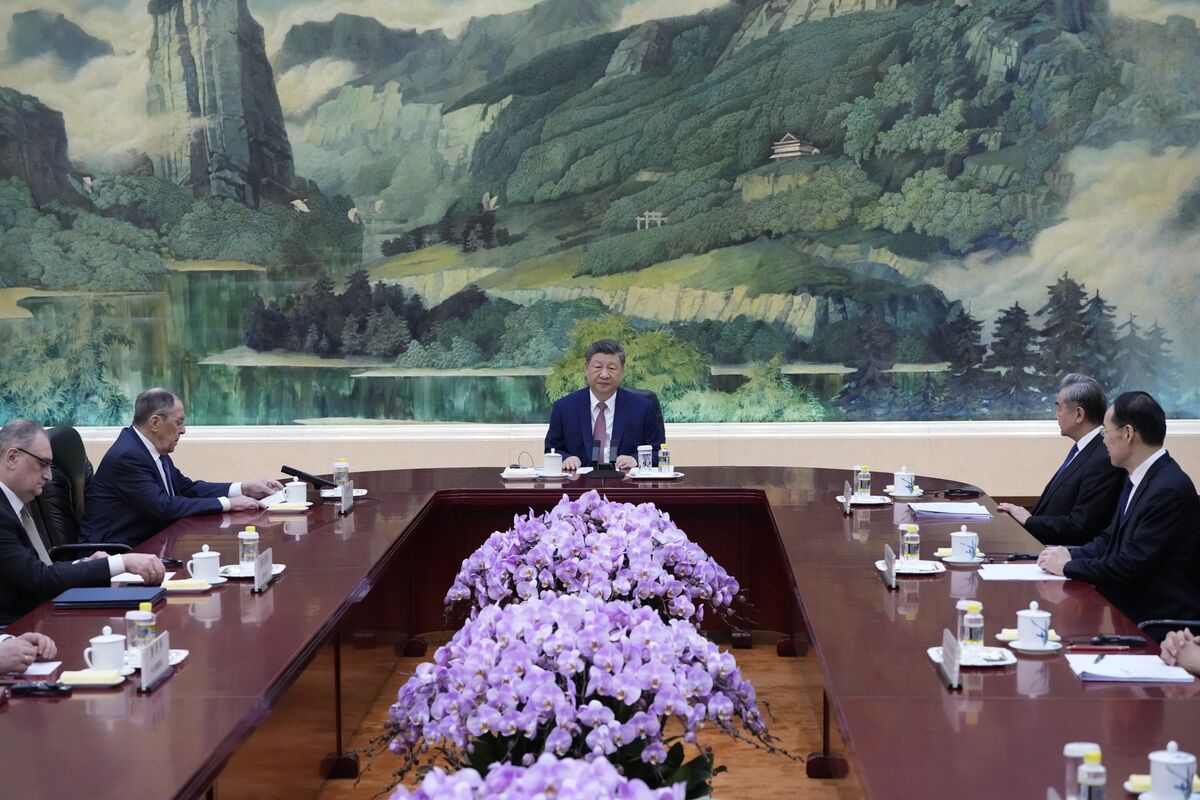
In a world increasingly defined by geopolitical flux and regional conflicts, a recent high-level meeting in Beijing has sent ripples across international capitals. Chinese President Xi Jinping, during talks with visiting Russian Foreign Minister Sergei Lavrov, unequivocally reaffirmed the stability of ties with Moscow and pledged deeper bilateral coordination. This declaration, made as the conflict in the Middle East extends into its seventh week, underscores a strategic alignment that continues to defy Western pressure and reshape the global power landscape.
The meeting, which saw Lavrov convey a message from Russian President Vladimir Putin, was not merely a diplomatic formality. It was a powerful statement of intent, signaling Beijing's unwavering commitment to its strategic partnership with Moscow. For PulseWorld readers, understanding the nuances of this relationship is crucial, as it holds significant implications for everything from global trade routes to regional security dynamics and the future of international governance.
The Enduring Sino-Russian Entente
The relationship between China and Russia has evolved significantly over the past two decades, transforming from a pragmatic partnership of convenience into a "no-limits" friendship, as declared by Xi and Putin just weeks before Russia's full-scale invasion of Ukraine in February 2022. This alliance is rooted in a shared vision of a multipolar world, one that challenges the perceived hegemony of the United States and its Western allies. Both nations view NATO expansion and Western sanctions as direct threats to their national interests and sovereignty.
Historically, the two giants have navigated periods of both cooperation and rivalry. The Sino-Soviet split of the mid-20th century is a stark reminder of past ideological differences. However, the post-Cold War era has seen a remarkable convergence of interests. Economically, Russia has become a crucial energy supplier to China, while China offers a vast market for Russian resources and military technology. Militarily, they conduct joint exercises, enhancing interoperability and signaling a united front against perceived external threats. Politically, they often align on key international issues, frequently exercising veto power in the UN Security Council to block resolutions critical of their respective actions or those of their allies.
The current global climate, marked by the ongoing war in Ukraine, persistent tensions in the South China Sea, and now the escalating conflict in the Middle East, provides fertile ground for this alliance to deepen further. For Beijing, Moscow represents a vital partner in its long-term strategy to counter American influence and establish a new international order where non-Western powers have a more prominent voice.
Strategic Calculus Amidst Middle East Turmoil
The timing of Lavrov's visit and Xi's pronouncements is particularly noteworthy, occurring as the Middle East grapples with an intensifying conflict. While China and Russia have distinct interests in the region, their shared goal is to limit Western, particularly American, influence. Both nations have called for de-escalation and a two-state solution in the Israeli-Palestinian conflict, often framing the crisis through a lens that critiques perceived Western double standards and historical interventions.
For Russia, the Middle East conflict serves as a strategic distraction, diverting global attention and resources away from the war in Ukraine. It also provides an opportunity to further cultivate relationships with regional players who may feel alienated by Western policies. Russia's long-standing ties with Syria and its growing engagement with Iran are testaments to this strategy.
China, on the other hand, has significant economic interests in the Middle East, particularly regarding energy supplies. Stability in the region is paramount for its economic growth. However, Beijing also seeks to position itself as a neutral mediator, offering an alternative to Western-led diplomatic efforts. This approach allows China to enhance its soft power and expand its influence without directly confronting established powers, at least not overtly. The recent brokering of a détente between Saudi Arabia and Iran demonstrated China's growing diplomatic ambitions in the region.
Economic and Military Dimensions of Coordination
Beyond political rhetoric, the "deeper coordination" pledged by Xi translates into tangible actions across economic and military spheres. Economically, both countries are working to reduce their reliance on the U.S. dollar, promoting bilateral trade in their national currencies. This move is a direct response to Western sanctions and an effort to build a more resilient financial system insulated from external pressures. Trade between China and Russia has surged, with China becoming Russia's largest trading partner, absorbing much of the energy and raw materials that once went to Europe.
Militarily, joint exercises are becoming more frequent and sophisticated. These drills, often involving naval forces and air defense systems, are designed to enhance interoperability and demonstrate a combined capability to project power. They also serve as a deterrent, signaling to potential adversaries the strength of their combined forces. The transfer of advanced military technology, though often shrouded in secrecy, is another critical aspect of their coordination. China benefits from Russian expertise in certain areas, while Russia gains access to Chinese manufacturing capabilities and potentially dual-use technologies.
Furthermore, both nations are investing heavily in cybersecurity cooperation and information warfare capabilities. They share concerns about Western intelligence gathering and aim to develop robust defenses and offensive tools in the digital domain. This often involves collaboration on developing independent internet infrastructures and reducing reliance on Western technology platforms.
Implications for the Global Order
The deepening Sino-Russian coordination carries profound implications for the existing global order. It represents a formidable challenge to the unipolar moment that followed the Cold War and accelerates the shift towards a multipolar world. Key implications include:
* Erosion of Western Influence: The alliance provides an alternative pole of power, offering developing nations and those wary of Western dominance a different path. This could weaken the effectiveness of Western-led institutions and alliances. * Increased Geopolitical Volatility: A more assertive Sino-Russian axis could lead to increased tensions and proxy conflicts, particularly in regions where their interests clash with those of the West. * Economic Realignments: The push for de-dollarization and alternative trade routes could fragment the global economy, creating distinct economic blocs. * Challenges to International Norms: Both China and Russia have shown a willingness to challenge established international norms regarding sovereignty, non-intervention, and human rights, potentially leading to a more permissive environment for authoritarian regimes. * Arms Race and Military Modernization: The joint military exercises and technology sharing could fuel an arms race, particularly in advanced weaponry, as other nations seek to counter their combined capabilities.
The Path Ahead
As the world watches the Middle East conflict unfold and the war in Ukraine continues, the strategic alignment between China and Russia will remain a central theme in international relations. President Xi's pledge for deeper coordination is not a fleeting statement but a reflection of a long-term strategic vision. It signifies a deliberate effort to build a robust counterweight to Western power, one that is resilient to external pressures and capable of shaping global events.
For international observers, the focus will be on the practical manifestations of this coordination: how will they jointly respond to future crises? What new economic and military initiatives will emerge? And how will their combined diplomatic weight be leveraged in international forums? The answers to these questions will undoubtedly define the geopolitical landscape for years to come, marking a pivotal moment in the ongoing reordering of global power dynamics. The world is witnessing the consolidation of an alliance that seeks to redefine the rules of engagement, presenting both challenges and opportunities for a truly multipolar future.
Stay Informed
Get the world's most important stories delivered to your inbox.
No spam, unsubscribe anytime.
Comments
No comments yet. Be the first to share your thoughts!