Xi Jinping Deepens Russia Ties Amidst Global Turmoil: A New Axis Emerges?
Chinese President Xi Jinping has reaffirmed and pledged deeper coordination with Russia, signaling a strengthened strategic partnership amidst escalating global conflicts, particularly in the Middle East. This move underscores Beijing's commitment to Moscow, challenging Western geopolitical dominance and reshaping the international order. Analysts are scrutinizing the long-term implications for global stability and power dynamics.
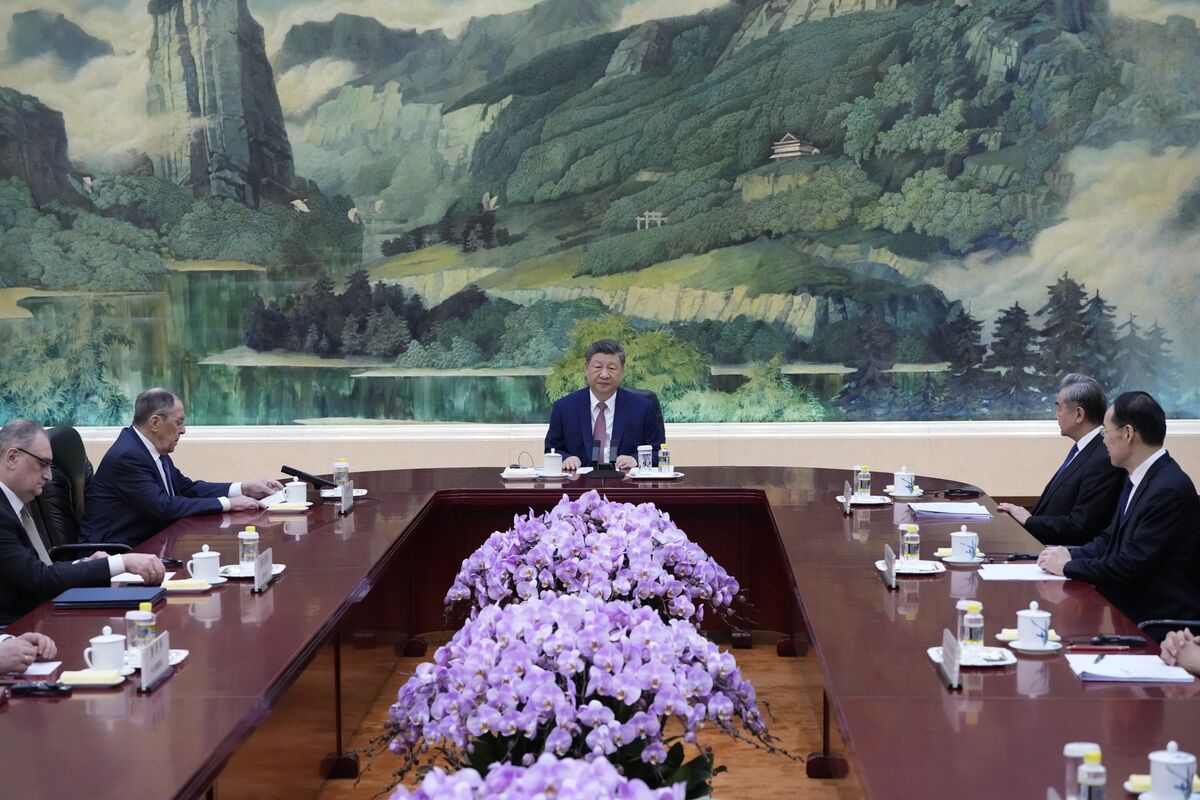
In a world increasingly defined by geopolitical fault lines and escalating conflicts, a recent development in Beijing has sent ripples across international chancelleries. Chinese President Xi Jinping, meeting with Russian Foreign Minister Sergei Lavrov, not only reaffirmed the stability of ties with Moscow but also pledged deeper bilateral coordination. This declaration, coming as the Middle East conflict enters its seventh week, is more than a diplomatic courtesy; it signals a deliberate and strategic alignment that could redefine the global power balance.
For decades, the international system has largely operated under a unipolar or, more recently, a loosely multipolar framework dominated by Western powers. However, the burgeoning partnership between China and Russia, often described as a 'no-limits' friendship, presents a formidable challenge to this established order. This latest pronouncement from Beijing suggests a hardening of this stance, moving beyond mere economic cooperation to a more integrated geopolitical strategy aimed at counterbalancing perceived Western hegemony.
The Context: A World in Flux
The timing of Xi's statement is crucial. The Middle East is ablaze, with the Israel-Hamas conflict threatening to engulf the wider region. Global supply chains remain fragile, and economic uncertainties persist. In this volatile environment, China and Russia are presenting a united front, advocating for a multipolar world order where their influence can grow unchecked by Western norms and sanctions. Russia, isolated by Western sanctions following its invasion of Ukraine, finds a critical economic and diplomatic lifeline in China. For Beijing, Moscow represents a strategic partner in its broader ambition to reshape global governance and challenge U.S. primacy.
This isn't a new phenomenon. The relationship has been steadily strengthening since Russia's annexation of Crimea in 2014, accelerating significantly after the full-scale invasion of Ukraine in February 2022. China has consistently refused to condemn Russia's actions in Ukraine, instead offering diplomatic support and boosting trade, particularly in energy. This economic lifeline has been vital for Russia, allowing it to circumvent some of the most stringent Western sanctions.
Pillars of the Partnership: Economy, Energy, and Security
The deepening coordination between China and Russia rests on several key pillars:
* Economic Integration: Bilateral trade has soared, with China becoming Russia's largest trading partner. Russia supplies China with vast quantities of oil and gas, while China exports manufactured goods and technology. This economic interdependence creates a buffer against Western pressure. * Energy Security: Russia offers China a reliable and geographically proximate source of energy, reducing Beijing's reliance on potentially vulnerable sea lanes controlled by Western navies. * Military and Security Cooperation: Joint military exercises have become more frequent and sophisticated, signaling a growing interoperability and shared strategic outlook. Both nations view NATO expansion and U.S. military presence in Asia as threats to their respective spheres of influence. * Technological Collaboration: While China is more advanced in many technological fields, there's a growing push for collaboration in areas like aerospace, artificial intelligence, and cybersecurity, aiming to reduce dependence on Western technology. * Diplomatic Alignment: Both countries frequently align their positions in international forums like the UN Security Council, often vetoing resolutions that are critical of either nation or that promote Western agendas.
This multifaceted partnership is not merely transactional; it is ideological. Both regimes share a skepticism towards liberal democratic values and a preference for state-centric governance. They see a common interest in challenging the existing international architecture, which they perceive as being biased towards the West.
Implications for Global Stability
The implications of this deepening alliance are profound and far-reaching. Firstly, it complicates Western efforts to isolate Russia. China's continued support provides Moscow with the resilience needed to sustain its military operations and withstand economic pressure. Secondly, it emboldens both nations to pursue their strategic objectives more assertively. For China, this could mean increased pressure on Taiwan and more aggressive posturing in the South China Sea. For Russia, it reinforces its posture in Eastern Europe and its influence in regions like Africa and the Middle East.
Furthermore, this partnership fuels the narrative of a new Cold War, albeit one with different characteristics. Instead of a clear ideological divide between communism and capitalism, the current dynamic is more about competing visions of global order: a rules-based international system championed by the West versus a multipolar system where sovereignty and non-interference are paramount, as advocated by Beijing and Moscow.
Expert analysis from institutions like the Council on Foreign Relations suggests that while the partnership is strong, it is not without its internal dynamics. China remains the senior partner, with a significantly larger economy and greater global reach. Russia, while a powerful military force, is increasingly reliant on China. This power imbalance could lead to friction in the long run, but for now, their shared strategic interests outweigh any potential divergences.
The Road Ahead: A Test of Diplomacy and Resolve
The enhanced coordination between China and Russia presents a significant challenge to global stability and Western foreign policy. It necessitates a nuanced and robust response from democratic nations, one that combines diplomatic engagement with strategic deterrence. The ongoing conflicts in Ukraine and the Middle East serve as stark reminders of the fragility of peace and the interconnectedness of global security.
As Xi Jinping and Sergei Lavrov pledge to deepen their coordination, the world watches to see how this evolving axis will impact the trajectory of international relations. Will it lead to a more fragmented and confrontational world, or will it eventually pave the way for a new, albeit more complex, form of global cooperation? The answers will unfold in the coming months and years, shaping the geopolitical landscape for generations to come. The stability of this partnership, however, seems poised to endure, acting as a powerful force in the ongoing reordering of the international system.
Stay Informed
Get the world's most important stories delivered to your inbox.
No spam, unsubscribe anytime.
Comments
No comments yet. Be the first to share your thoughts!