China's Shifting Sands: Beijing's Delicate Dance in the Middle East and Its Ripple Effects
China's traditionally low-profile stance in the Middle East is facing unprecedented scrutiny amidst escalating regional conflicts, particularly between Iran, the US, and Israel. Beijing's recent strong condemnations of 'warmongering' signal a potential shift in its diplomatic strategy, moving beyond economic interests to a more vocal political role. This evolving dynamic not only redefines China's influence in a volatile region but also carries significant implications for its relationship with Taiwan, as global power balances are recalibrated.
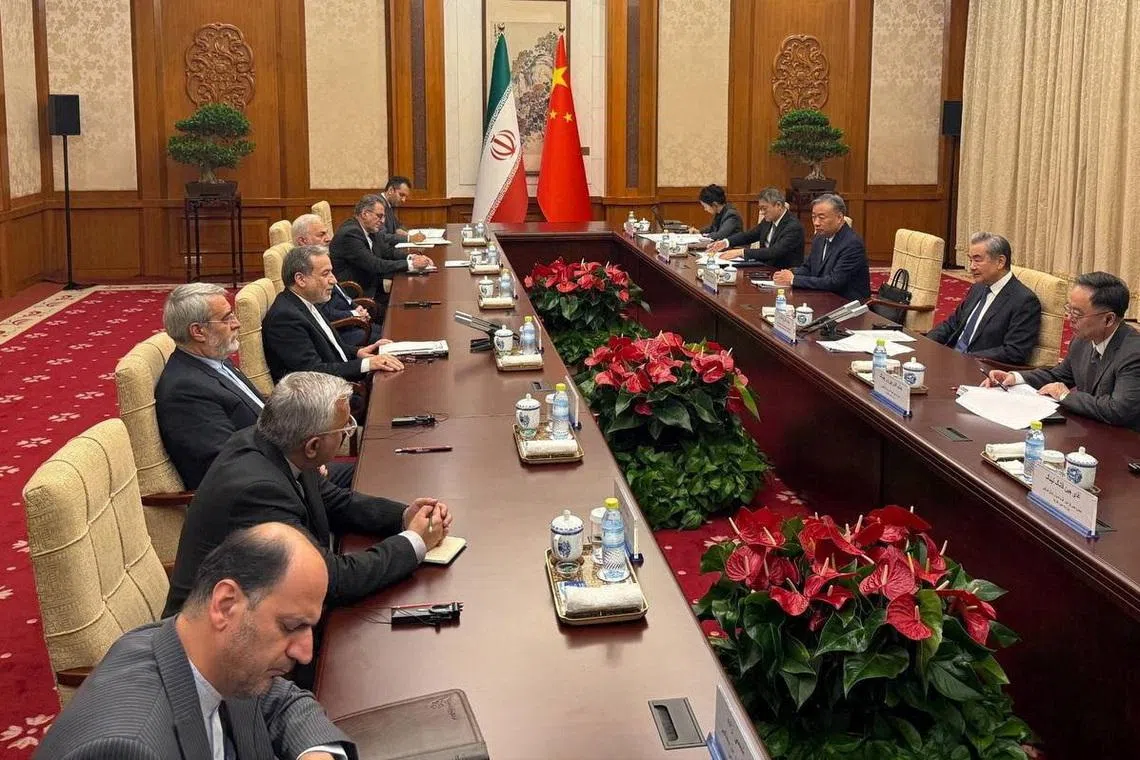
In the intricate tapestry of global geopolitics, China has long been a strategic observer, meticulously weaving its economic interests through the Middle East while largely maintaining a diplomatic distance from its incendiary conflicts. However, the current conflagration involving Iran, the United States, and Israel is forcing Beijing to recalibrate its approach, pushing it from the shadows of economic pragmatism into the spotlight of political intervention. This shift, marked by increasingly strong rhetoric from Chinese officials, signals a pivotal moment for China's regional influence and carries profound implications that extend far beyond the Levant, potentially reshaping its strategic calculus concerning Taiwan.
Beijing's Evolving Middle East Doctrine: From Non-Intervention to Vocal Condemnation
For decades, China's engagement in the Middle East has been characterized by a policy of non-interference in internal affairs, prioritizing stable energy supplies and lucrative infrastructure projects under its Belt and Road Initiative (BRI). This approach allowed Beijing to cultivate relationships with all regional players, from Saudi Arabia and the UAE to Iran and Israel, without being drawn into their historical animosities. However, the recent escalation of hostilities, particularly the direct confrontation between Iran and Israel, has made this neutral stance increasingly untenable. Chinese Foreign Minister Wang Yi's recent condemnation of "warmongering" – language unprecedented in its directness – marks a significant departure. This isn't merely diplomatic posturing; it reflects a growing recognition within Beijing that the stability of global energy markets and the security of its BRI investments are inextricably linked to regional peace. The Middle East, a critical artery for global trade and energy, is too vital for China to remain a passive bystander. Beijing's strategic interests now demand a more assertive, albeit carefully calibrated, diplomatic presence, aiming to position itself as a responsible global power capable of mediating complex disputes, even as it navigates its own complex relationship with the West.
Historically, China's interactions with Israel have been robust, particularly in areas of technology, agriculture, and defense. Israel, often seen as a gateway for advanced Western technology, became a significant partner for China, with bilateral trade soaring over the past two decades. However, the current conflict has strained these ties considerably. China's nuanced position, which often appears to lean towards the Palestinian cause in international forums while maintaining economic ties with Israel, has created friction. The perception in some Israeli circles is that Beijing's response to attacks on Israel has been muted compared to its condemnation of Israeli actions, leading to a growing sense of disillusionment. This diplomatic tightrope walk is becoming increasingly difficult to maintain as regional tensions intensify, forcing China to choose between its long-standing economic partnerships and its broader geopolitical aspirations as a champion of the Global South.
The Taiwan Conundrum: A Mirror to Middle Eastern Dynamics
The most intriguing aspect of China's evolving Middle East strategy is its potential ripple effect on its stance regarding Taiwan. Beijing views Taiwan as an integral part of its territory, a "core interest" that permits no foreign interference. The parallels between the Middle East's geopolitical volatility and the potential for conflict in the Taiwan Strait are not lost on Chinese strategists. The ongoing conflicts serve as a real-time case study for Beijing, offering insights into how global powers, particularly the United States, respond to regional crises and how international alliances are tested under pressure. For instance, the US's dual commitment to Israel's security and its broader strategic interests in the Middle East provides a template, albeit a complex one, for how Washington might react to a contingency involving Taiwan. China is meticulously observing the deployment of naval assets, the swiftness of diplomatic responses, and the efficacy of international sanctions in the Middle East, all of which could inform its own strategic planning for a potential Taiwan scenario.
Furthermore, the Middle East crisis highlights the fragility of global supply chains and the critical importance of energy security. A conflict in the Taiwan Strait, a vital shipping lane, would have catastrophic global economic consequences, far exceeding those of any Middle Eastern conflict. Beijing's efforts to de-escalate tensions in the Middle East, therefore, can be seen not just as an attempt to protect its immediate interests but also as a way to project an image of a responsible power that values stability – an image it hopes will temper international opposition should it ever decide to act on Taiwan. The principle of national sovereignty, frequently invoked by China in its defense of its claims over Taiwan, is also a recurring theme in its Middle East diplomacy, albeit applied selectively. This strategic ambiguity allows Beijing to maintain flexibility while advancing its long-term goals.
Economic Imperatives and Geopolitical Ambitions
China's deep economic ties to the Middle East are undeniable. The region supplies a significant portion of China's oil and gas, crucial for sustaining its industrial growth. The BRI has seen massive investments in ports, railways, and energy infrastructure across the region, making stability a paramount concern for Beijing. The current instability, characterized by Houthi attacks on shipping in the Red Sea and the broader threat of regional war, directly jeopardizes these investments and supply lines. This economic vulnerability compels China to adopt a more proactive diplomatic role, aiming to protect its assets and ensure the continued flow of resources. However, this proactive stance is not without its challenges. Balancing its economic interests with its desire to be seen as a global leader, particularly in the face of Western criticism, requires delicate maneuvering.
Beijing's geopolitical ambitions extend beyond mere economic security. It seeks to challenge the unipolar world order dominated by the United States and establish a multipolar system where China plays a central role. Its engagement in the Middle East, including brokering the rapprochement between Saudi Arabia and Iran, serves this larger objective. By demonstrating its capacity to resolve complex disputes where Western powers have struggled, China aims to enhance its diplomatic credibility and offer an alternative model of international relations. This strategy is particularly appealing to nations in the Global South that are wary of traditional Western interventions. The Middle East, therefore, becomes a crucial testing ground for China's aspirations to reshape global governance, with its successes and failures closely watched by nations worldwide, including those with a vested interest in the Taiwan Strait.
The Road Ahead: Navigating a Volatile Future
The path forward for China in the Middle East is fraught with complexity. Its efforts to mediate and de-escalate tensions will be met with skepticism from some quarters, particularly from the United States and its allies, who view China's growing influence with apprehension. Beijing's challenge will be to demonstrate genuine commitment to peace and stability, rather than merely advancing its own strategic interests. The credibility of its diplomatic initiatives will depend on its ability to engage all parties fairly and effectively, without appearing to favor one side over another. This is a difficult task in a region where historical grievances run deep and trust is a scarce commodity.
Looking ahead, China's evolving role in the Middle East will likely be characterized by a more assertive diplomacy, backed by its significant economic leverage. This will involve continued engagement with key regional players, efforts to promote multilateral dialogue, and potentially even a more prominent role in post-conflict reconstruction. The lessons learned from its Middle East engagement will undoubtedly inform its approach to other sensitive geopolitical issues, including Taiwan. The world is witnessing a cautious but determined shift in China's foreign policy, moving from a primarily economic giant to a more active geopolitical player. How successfully Beijing navigates these turbulent waters will not only determine its standing in the Middle East but also shape the future of global power dynamics for decades to come. The stakes are incredibly high, and the world watches intently as China seeks to define its place in a rapidly changing international order.
Stay Informed
Get the world's most important stories delivered to your inbox.
No spam, unsubscribe anytime.
Comments
No comments yet. Be the first to share your thoughts!